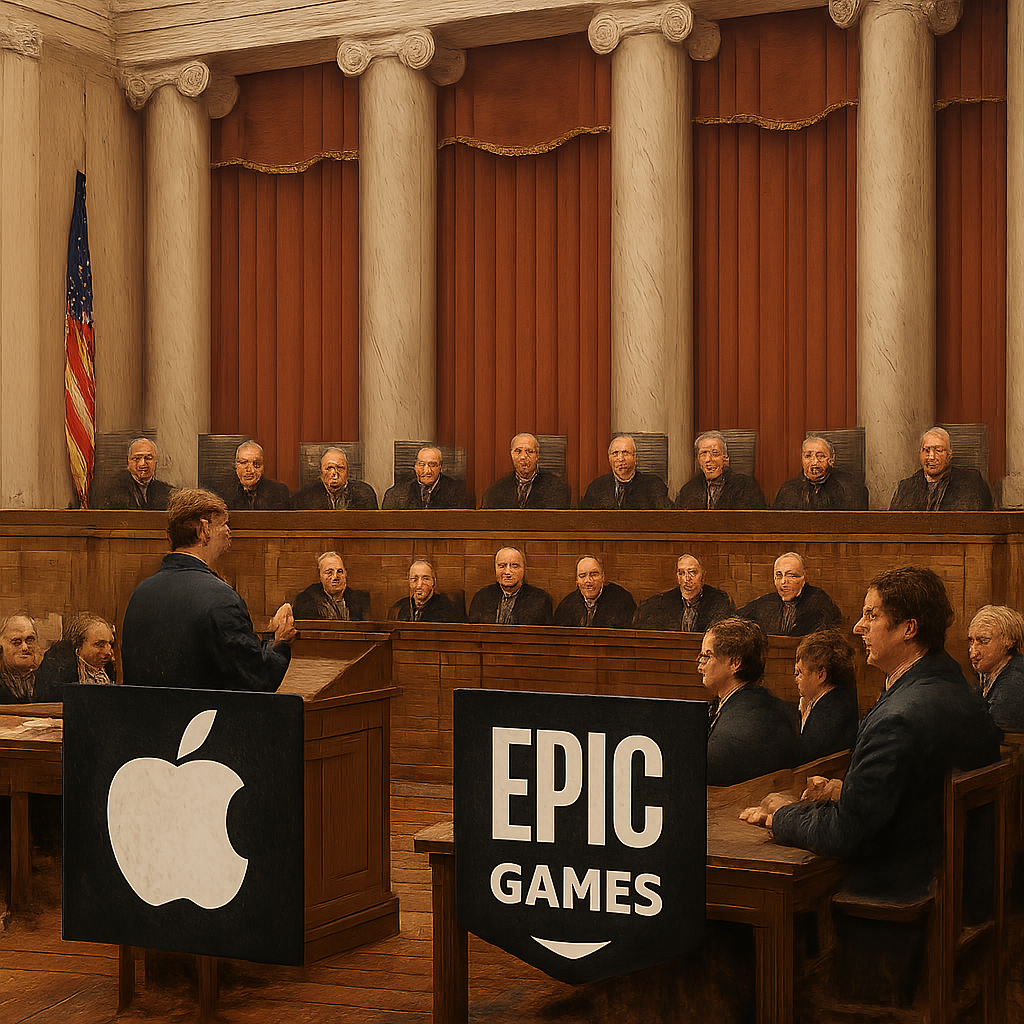
The United States Supreme Court has agreed to hear Apple’s appeal concerning a contempt ruling in its ongoing legal battle with Epic Games. This development marks a significant escalation in the dispute over App Store policies and developer fees.
In 2021, a district court ruled that Apple must allow developers to include external links in their apps, enabling users to make purchases outside of the App Store’s ecosystem. Apple responded by implementing a 27% commission on these external transactions, a move that was later deemed to violate the original injunction. The lower courts found Apple in contempt for this action, leading the company to seek a review from the Supreme Court.
Apple’s appeal focuses on the contempt finding, arguing that the original injunction did not explicitly prohibit the company from charging commissions on external purchases. The Supreme Court’s decision to hear this appeal indicates the case’s complexity and its potential implications for digital marketplaces and antitrust law.
Notably, the Supreme Court declined to consider a second issue raised by Apple, which challenged the scope of the injunction as being overly broad. This aspect of the case will remain as decided by the lower courts.
The outcome of this appeal could have far-reaching consequences for the tech industry, particularly concerning how platform owners manage their ecosystems and the fees they impose on developers. A ruling in favor of Apple might reinforce the company’s control over its App Store policies, while a decision against it could set a precedent for increased regulatory scrutiny and greater flexibility for developers in offering alternative payment methods.
As the Supreme Court prepares to hear arguments, stakeholders across the tech industry will be closely monitoring the proceedings. The case underscores the ongoing tension between platform operators and developers over control, revenue sharing, and the boundaries of antitrust regulations in the digital age.