Graphite, essential for the anodes in lithium-ion batteries powering everything from smartphones to electric vehicles (EVs), is overwhelmingly sourced from China. The country currently controls around 75% of the supply chain for battery-grade graphite and nearly 97% of global synthetic graphite production — a major strategic leverage point. A young U.S. company, Molten Industries, is betting it can disrupt that imbalance.
A New Plant in Oakland as Proof of Concept
Molten Industries has launched a demonstration facility in Oakland, aiming to show it can produce battery-quality graphite domestically. The facility targets cost parity with Chinese graphite once U.S. tariffs are considered, according to the company’s CTO. Its output will support testing in real battery cells, with an annual production goal of roughly 300 metric tons — enough for about 300 megawatt-hours of battery capacity, or around 4,300 EVs.
Plans are already underway for a scaled-up facility using the same core design. The Oakland plant functions not just as a production unit, but as a proof that the company’s process can be economically competitive in the face of China’s dominance.
Innovative Process: From Natural Gas to High-Grade Graphite
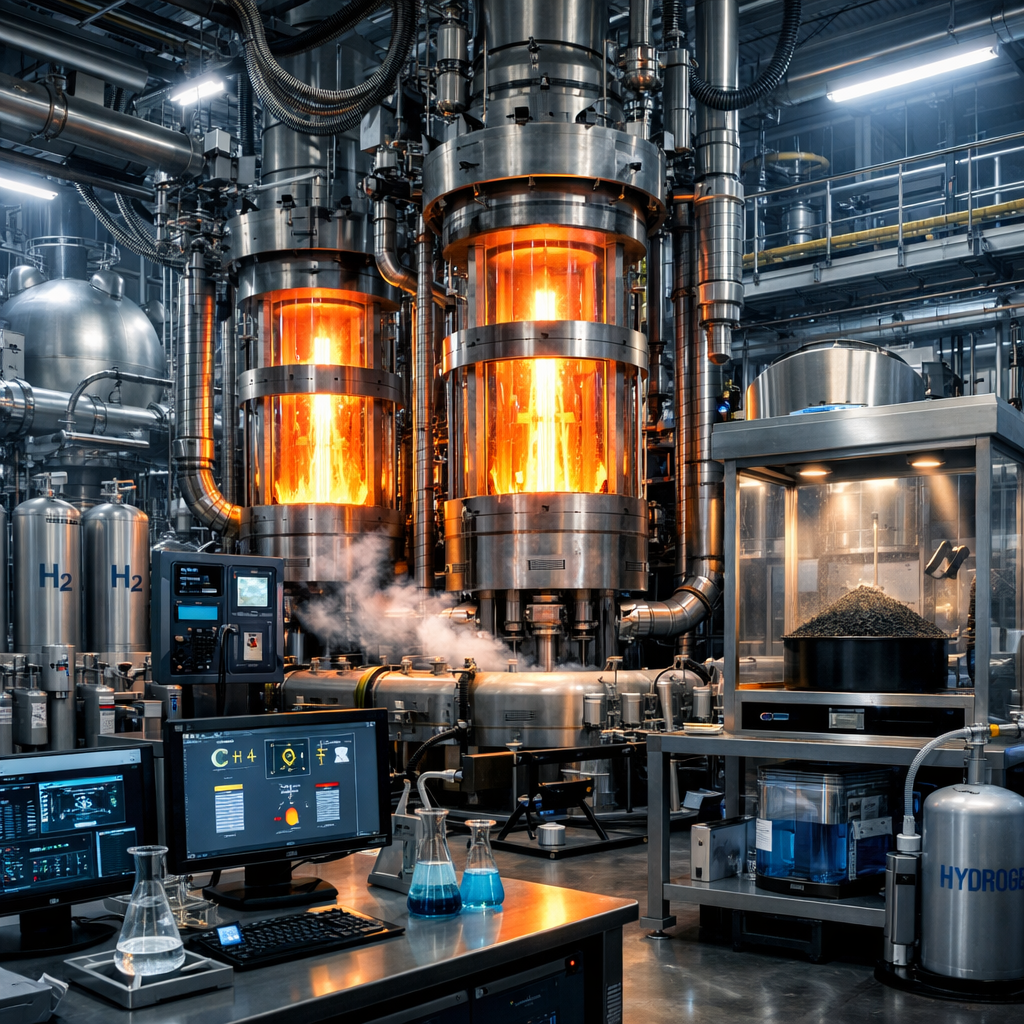
Molten’s founders, both materials science PhDs, developed a method using resistive electrical heating to split methane into carbon and hydrogen. The carbon is refined into graphite that meets the strict quality standards for battery anodes, while the hydrogen is sold to adjacent buyers. The method uses about a third of the electricity needed in traditional synthetic graphite techniques and runs on readily available, low-cost natural gas.
Graphite made via this route faces challenges that have beset earlier efforts: reactor fouling, low purity, or inconsistent material. But Molten claims to have solved those engineering hurdles, producing high-quality graphite at scale. Initially focused on clean hydrogen, the company shifted focus after discovering its graphite byproduct could meet battery-grade specs, transforming the business model.
If Molten succeeds at scale, it estimates it could supply the U.S. battery industry with not only 100% domestic graphite, but also provide about a third of the nation’s clean hydrogen needs. New applications — like thermal batteries — could further multiply demand for high-grade graphite.
Molten insists its Oakland plant marks a milestone not just for the startup, but for the global battery materials industry. It showcases a compelling alternative to import-dependent supply chains, offering potentially lower carbon intensity and reduced geopolitical risk.
The company says its technology gives it built-in advantages over simply replicating existing graphite production methods, particularly by leveraging abundant U.S. natural gas resources and reducing electricity use.
As the battery industry rapidly expands — with U.S. growth fueled by EV demand and incentives — securing local anode materials could become a competitive edge for battery manufacturers and automakers struggling with supply chain constraints. Molten’s next moves, including where and when its larger plants will arrive, will be key indicators of whether this is a niche experiment or the start of a major shift in global battery graphite production.
Analytical angle: The debut demonstration plant by Molten underscores a growing imperative: decoupling critical material supply chains from geopolitical risk. If Molten can deliver battery-grade graphite at or below China’s cost — even with tariffs — it opens the door for reshoring battery material production. For stakeholders, the question isn’t just if future Molten plants will scale, but whether the industry regulatory framework, environmental licensing, and investment capital will align quickly enough to support this kind of shift.