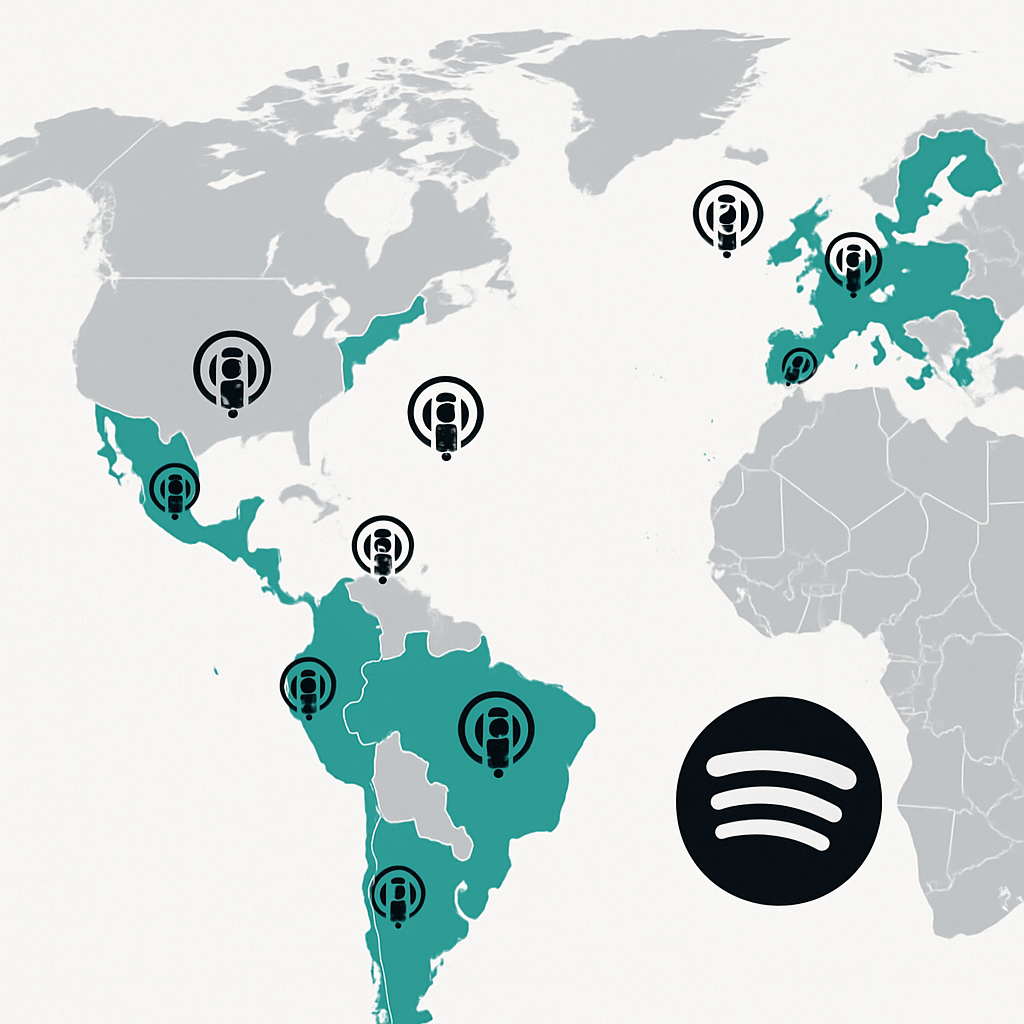
Spotify is significantly widening its Partner Program for podcasts this fall, making creators in 35 additional countries eligible to share in Premium and ad-based revenue. Among the new regions are Italy, Spain, Brazil, Mexico, Colombia, Poland, Chile, the Dominican Republic, and the Bahamas.
Members admitted to the program can monetize both audio and video podcasts. Revenue sources include video impressions from Premium users and ad revenue from free-tier listeners. Unlike some platforms, Spotify allows creators to distribute their work elsewhere and keeps any income from direct sponsorships.
What’s New & Expanded
This marks the largest geographical growth to date for Spotify’s Partner Program, which was previously confined to the United States, Europe, and Australia. The expansion reflects a broader push to capture podcast creators worldwide.
Spotify’s internal stats highlight a surge in video podcast engagement—consumption has jumped 140% since the feature’s introduction in 2022. As for payouts, what Spotify sends to podcast shows monthly has increased by about one-third since January of this year.
Updated Requirements for Earning from Video Podcasts
Earlier in 2026, Spotify tightened its eligibility rules for earning revenue from video podcasts. To qualify, a show must now have at least three published episodes, 2,000 consumption hours over the past 30 days, and a minimum of 1,000 engaged audience members in the same period. These changes appear to have boosted engagement on qualifying shows by an average of 45%.
This expansion presents a significant opportunity for creators in the newly included countries to tap into Spotify’s revenue-sharing tools. It also signals the service’s commitment to elevating video podcasting as part of its long-term strategy.
Why This Matters: For podcasters, gaining access to monetization via Spotify means broader audience reach and additional income streams—especially in regions previously shut out of such programs. For Spotify, extending the Partner Program globally aligns with efforts to diversify content formats and revenue, countering stiff competition from platforms like Apple and YouTube. Over the next year, the real test will be how many creators in these new markets can hit the eligibility thresholds—and whether Spotify continues refining the program in response to creator feedback.