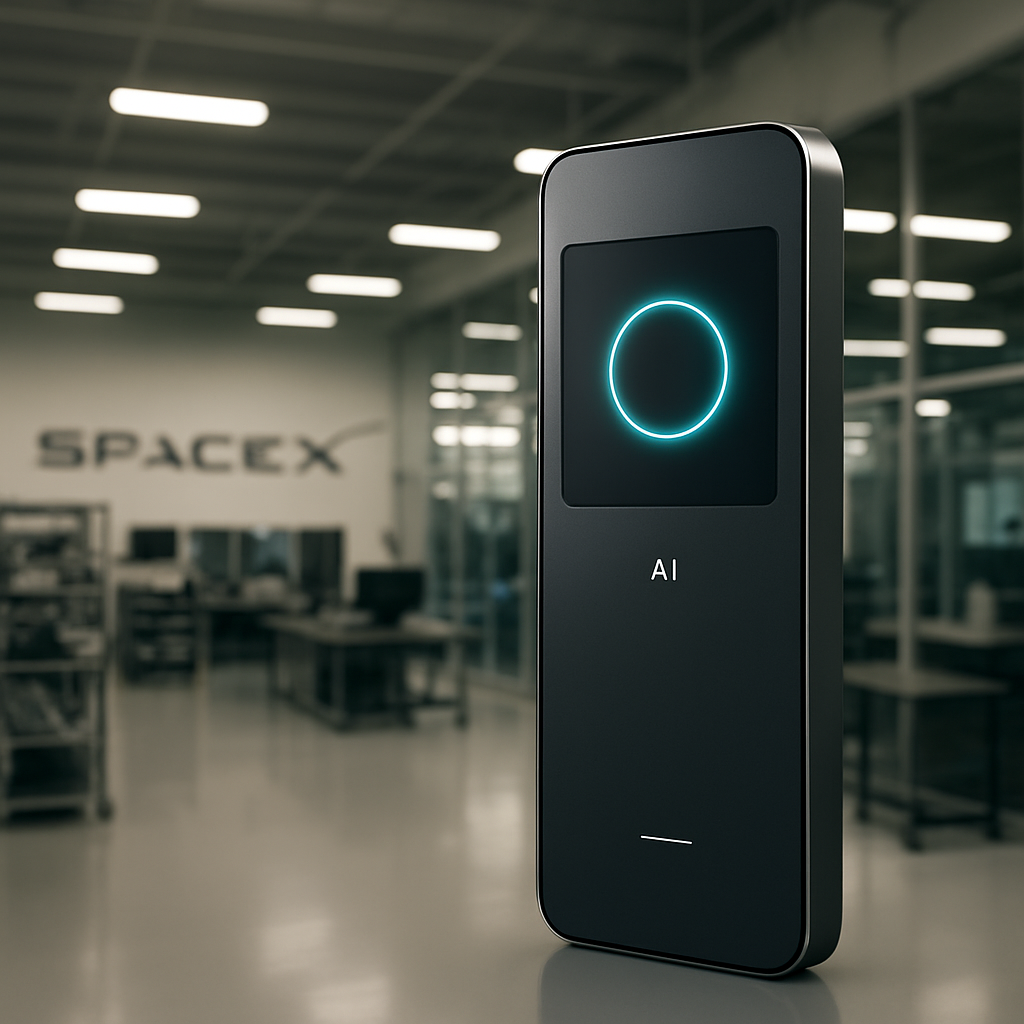
SpaceX, under the leadership of Elon Musk, has recently presented a prototype of a new AI-driven device to investors. This device, described as slimmer than an iPhone with a sleek design, operates on a proprietary operating system, utilizes a Qualcomm chipset, and incorporates artificial intelligence technology from SpaceX’s subsidiary, xAI.
The prototype appears to align with Musk’s previous discussions about creating an “everything app” similar to China’s WeChat, aiming to revolutionize human interaction with AI. The demonstration to investors and stakeholders was part of SpaceX’s preparations for its upcoming initial public offering (IPO). The project is still in its early stages, and the final design may undergo changes. It remains uncertain whether this device will eventually be released to the market.
Historically, Musk has expressed interest in developing a smartphone, particularly if his social media platform, X (formerly Twitter), were to be removed from major app stores like Apple’s App Store. In November 2025, he mentioned that while he was not inclined to create a phone, he would consider it if companies like Apple and Google engaged in actions he deemed as censorship. During a town hall meeting, Musk humorously remarked that the idea of making a phone “makes me want to die,” but acknowledged that one of his companies would produce a phone if necessary.
Earlier this year, Musk explicitly stated that SpaceX is not developing a phone. However, reports suggest that some investors in SpaceX and Tesla were informed that Musk has long envisioned a device serving as a platform for technologies from Tesla, SpaceX, and xAI. Musk has since denied these reports, labeling them as “utterly false.”
In the broader context, the tech industry is witnessing a surge in AI-integrated devices. For instance, OpenAI, in collaboration with former Apple designer Jony Ive, is working on a family of AI devices, including a smart speaker with an integrated camera, set for a 2027 release. This trend indicates a growing interest among tech giants to develop hardware that seamlessly integrates AI, potentially reshaping consumer interactions with technology.
SpaceX’s foray into AI hardware suggests a strategic expansion beyond its aerospace endeavors. If the company proceeds with this device, it could position itself as a competitor in the consumer tech market, challenging established players like Apple and Google. The success of such a venture would depend on the device’s functionality, user experience, and the ability to offer unique features that distinguish it from existing products.