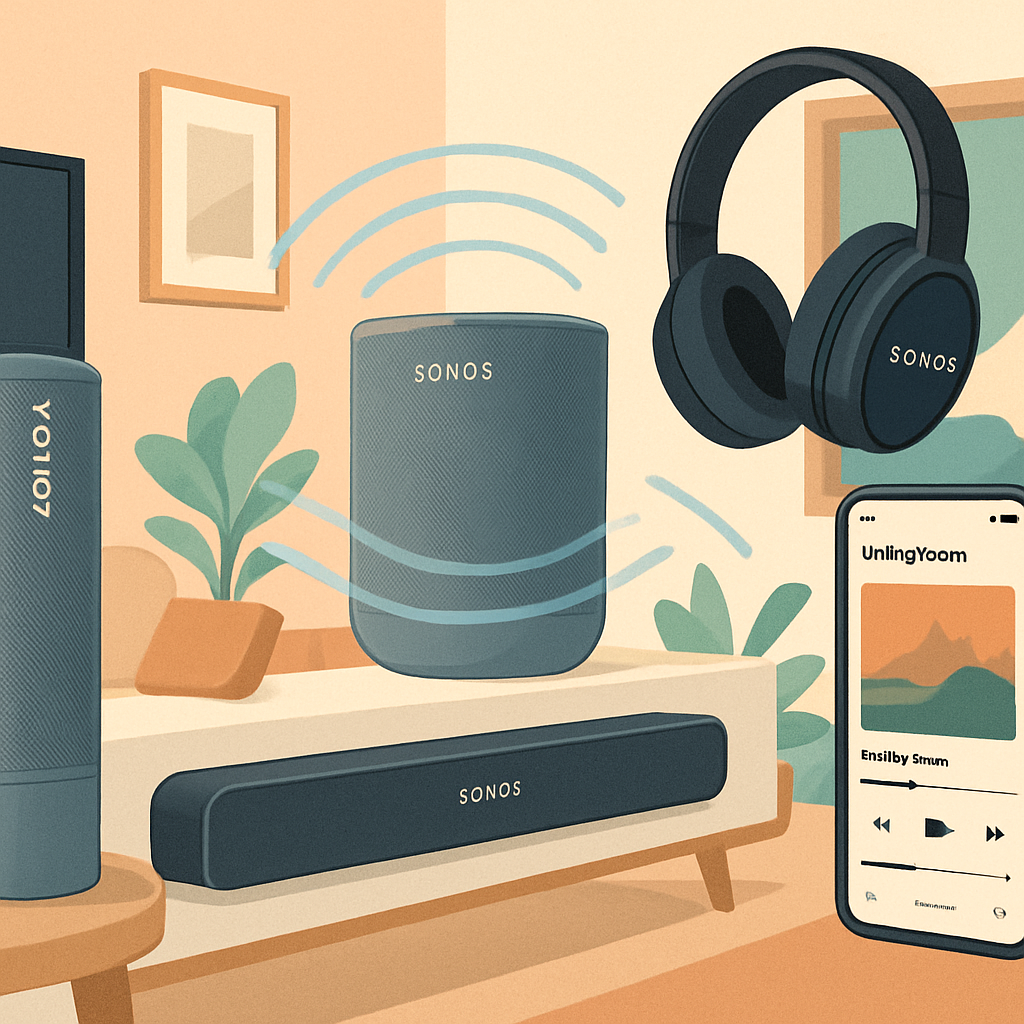
Sonos has officially released its “Sonos 27” app update, introducing a number of features that extend usability across its S2 hardware lineup, revamp the interface, and debut new AI capabilities. This marks the company’s move to align with broader platform versioning trends—think iOS 27—and bring more connected smart-home audio to users.
What’s New in Sonos 27
All Sonos S2 products are eligible for the new update, though not every feature works with every device. Among the changes available right now:
- Portable Surrounds:Two identical portable Sonos speakers (for example, Move 2 or Sonos Play) can now pair with a compatible soundbar as rear surround channels. When undocked from the soundbar setup, they revert back to normal use, adding flexibility without demanding a dedicated home theater setup.
- App Navigation Redesign:The app gets simplified navigation, new swipe gestures, and support for pinning rooms, with the goal of faster access and better overall control.
- Headphone Linking (Early Access):Users with Ace Ultra headphones can move audio between nearby speakers and their headphones seamlessly—no need to use a phone as the intermediary.
- Sonos 27 MCP (Multi-Assistant Capability, Early Access):Sonos is opening up the ecosystem to allow choice between AI assistants—ChatGPT, Claude, or others—instead of locking in a single voice assistant.
Features Coming Soon
Looking ahead, there are two significant capabilities on the way:
- Sonos 27 Voice:Debuting later this fall, this music‐focused assistant is Sonos’ own voice interface, designed to operate alongside other assistants and giving users choice in voice control.
- Sonos Custom Agents:Expected in 2027, this will allow users to create personalized voice agents—each with distinct model preferences, personas, and voices.
Why This Update Matters
This release represents more than just fresh features—it signals Sonos’ push into AI, adaptive user control, and flexible setups. Portable Surrounds in particular may change how people build multiroom or home theater systems using hardware they already have. Likewise, the commitment to supporting multiple AI assistants and customizable agents reflects a broader trend toward open ecosystems in smart devices.
Sonos is walking a tightrope: large redesigns have caused backlash in the past, especially from longtime users. The navigation changes here look more evolutionary than revolutionary, which may help soothe concerns. But there’s no getting around this: Sonos 27 is a foundation for much bigger things to come in 2027 and beyond.