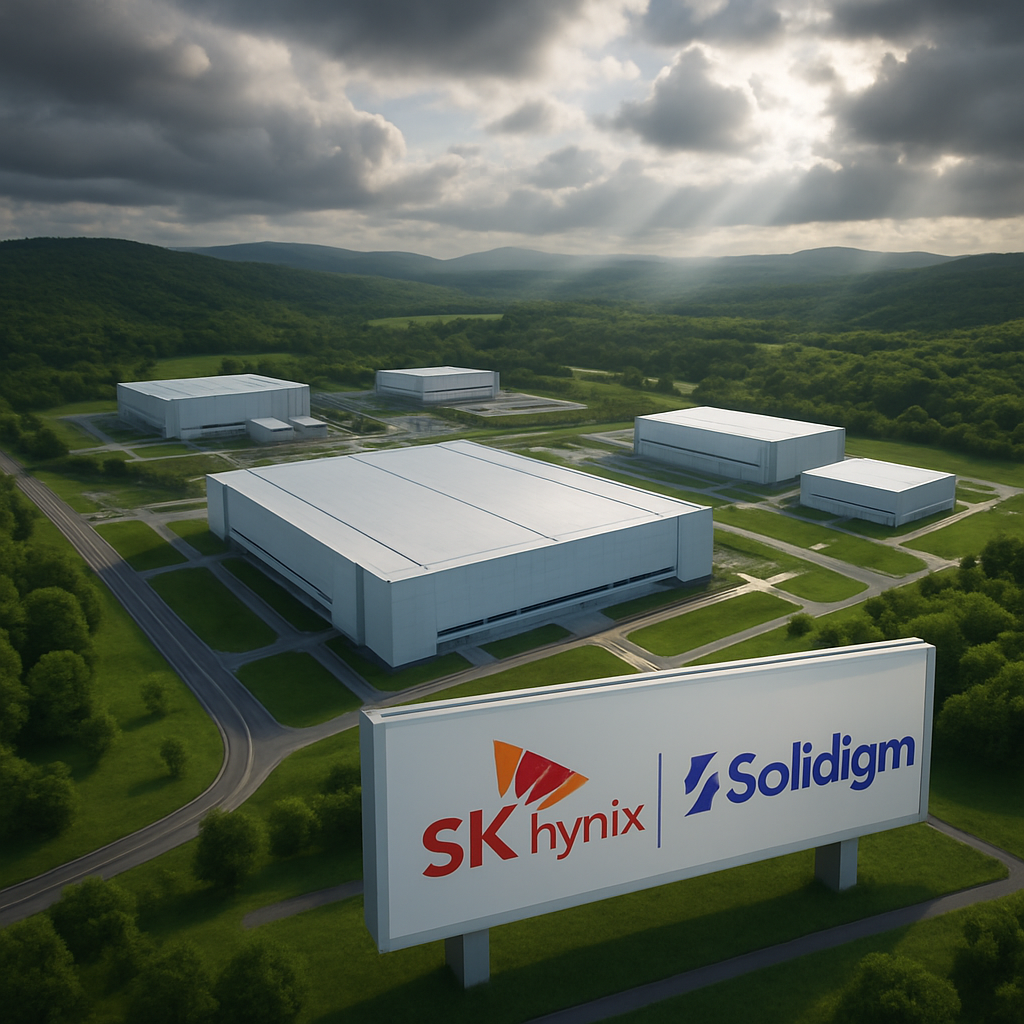
Solidigm, the U.S. NAND flash arm of SK hynix, is exploring the possibility of building its first production facility in the United States. Upstate New York has surfaced as a top contender. Multiple industry sources say the move would reduce the company’s dependence on its sole existing manufacturing site in Dalian, China.
What’s Driving the Move
Increased demand for high-capacity enterprise solid-state drives (eSSDs), especially among AI data centers, has pushed NAND flash into a period of heightened urgency. Alongside surging demand, Washington is pressing foreign chipmakers to localize production. Economically, having U.S.-based front-end manufacturing—for tasks like wafer fabrication—would complement SK hynix’s current back-end operations. A packaging facility in Indiana is already under way, with an investment exceeding US$4 billion.
In its current form, Solidigm retains its headquarters and R&D center stateside, but all its production happens overseas in China—namely in Dalian. No U.S. production base has yet been established. If plans move forward, this upcoming factory would represent Solidigm’s first in-country manufacturing line.
Separate from Intel Discussions
This proposed factory is distinct from ongoing talks between SK hynix and Intel about memory manufacturing at Intel’s facility in Ohio. Those discussions reportedly include leasing part of the Ohio site or forming joint ventures with cloud providers. But sources say the Solidigm factory under consideration is a separate initiative.
That said, major details—such as the timeline, investment size, and site selection—are still being hashed out. Nothing has been finalized, company representatives continue to say. Part of the calculus involves balancing U.S. production costs, which are typically higher than in South Korea, against strategic benefits such as tariff avoidance and supply chain resilience.
If Solidigm proceeds, the upside includes reduced exposure to trade tensions or export restrictions from both the U.S. and China. Local U.S. manufacturing also helps meet government pressure to reshore chipmaking. For its part, SK hynix is already implementing infrastructure changes—with the Indiana packaging fab among them—that reinforce its U.S. presence.
While still in exploratory stages, this development signals a potential shift in how NAND flash supply chains are distributed globally, especially for ECSSD and AI infrastructure. Whether such a factory goes up—and how fast—will depend on policy support, site logistics, cost structures, and continued momentum in AI-driven demand. Keep an eye on announcements regarding state incentives, production tech, and partner relationships.