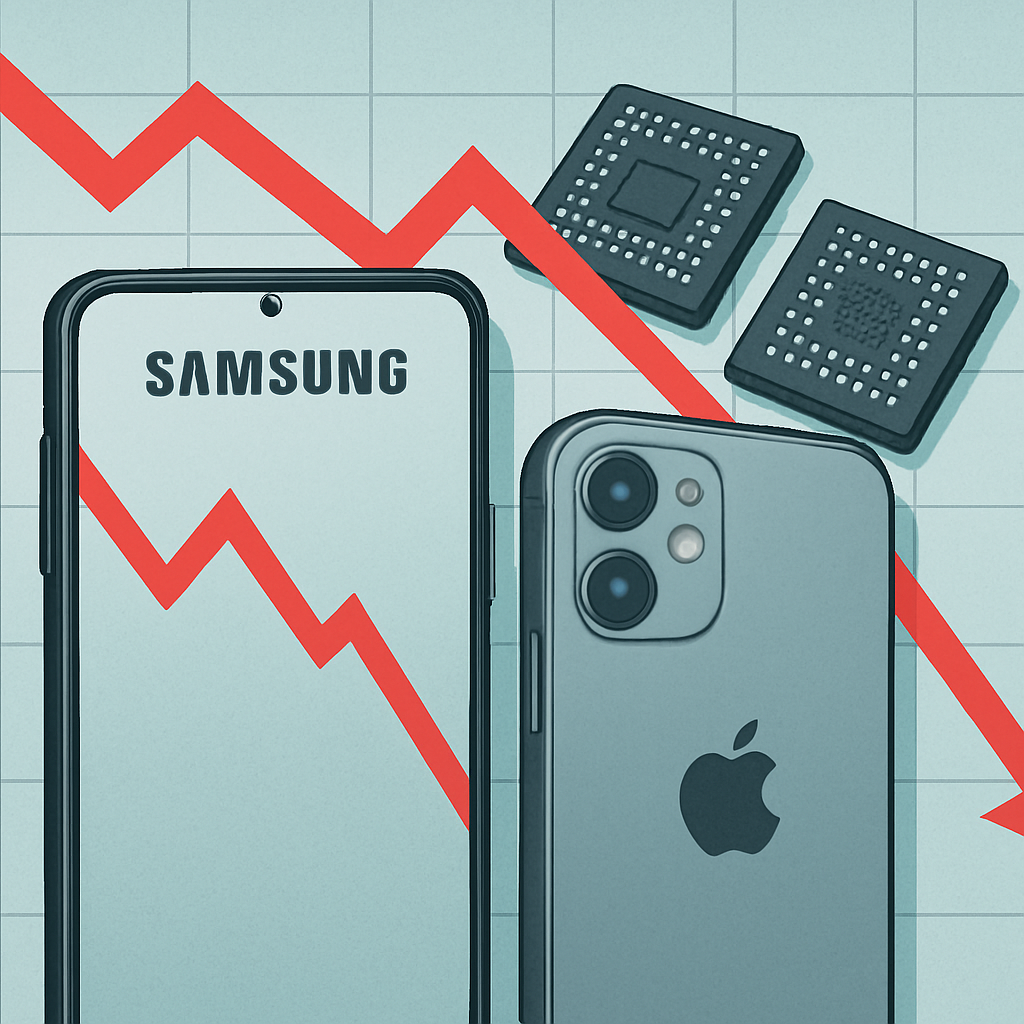
In the third quarter of 2026, global smartphone shipments plunged roughly 20% year-over-year—the lowest Q3 total seen since 2012. The contraction comes amid widespread shortages of memory components, rising prices, and shifting consumer behavior. Even so, Apple and Samsung widened their share of what remains a shrinking market.
Market Leaders and Key Players
Samsung holds onto the top spot with about 23% of global shipments, despite a roughly 3% drop in unit volume compared to the same period last year. Its Galaxy Z Fold8 series drove early demand, and its mid-range A-series maintained strength on the back of steadier supply.
Apple captured around 22% of global smartphone shipments—its highest share in any third quarter. However, its overall shipments declined year-over-year, a drop partly explained by the lack of a base iPhone 18 model, resulting in smaller channel fill during launch. Pro models for the iPhone 18 saw stronger initial sales, especially in India and China, helped by continuing demand for the iPhone 17 line.
Chinese brands didn’t fare as well. Xiaomi’s share dropped from double digits last year to about 10%, following a more than 30% fall in shipment volume. OPPO and vivo both posted steep declines—over 20%—lining up with a broader pullback in low- and mid-tier markets.
Underlying Pressures: Memory Crisis, Pricing, and Consumer Shift
Across the board, OEMs are grappling with shortages of DRAM and NAND memory. These constraints, paired with escalating costs, forced companies to increase retail prices—average device prices are up by about 20% year-to-date. OEMs are prioritizing profitability over sheer volume.
These pressures are also changing consumer behavior. Buyers are holding onto existing devices longer, considering refurbished phones, and leaning toward premium models over budget devices. Brands dominant in lower cost tiers have been hit hardest.
The slide in shipments places the industry in a precarious position. With tight component supply, shifting purchaser priorities, and rising costs, recovery won’t come easy. Analysts agree: without relief from memory supply constraints, global shipment volumes are unlikely to rebound significantly until the second half of 2027.
What this means:Market share may be gaining in raw terms for Apple and Samsung, but the pressure on the entire industry is real. Consumers face higher prices. Brands with exposure to entry-level segments risk being squeezed out. Keep watching how ASP (average selling price), memory supply chains, and base model launches (or lack thereof) shape who wins and who falls back. Market leadership isn’t just about units—it’s about managing the cash flow and margin risks in a tightening landscape.