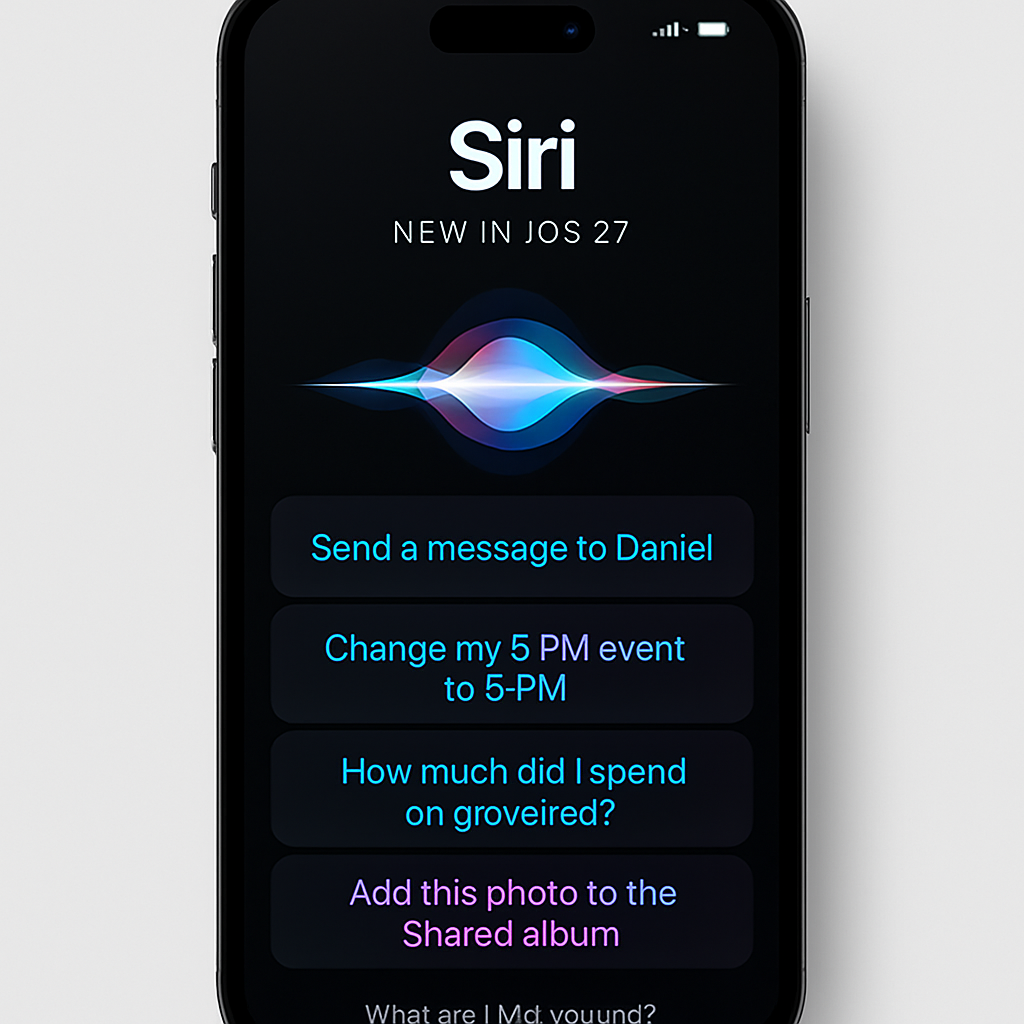
Apple’s voice assistant, Siri, has long been a staple of the iOS ecosystem, but its capabilities have often lagged behind competitors. With the release of iOS 27, Apple aims to change that narrative by introducing significant AI-driven enhancements to Siri.
In the latest episode of the 9to5Mac Overtime podcast, hosts Fernando Silva and Jeff Benjamin delve into the standout features of the iOS 27 beta, focusing particularly on Siri’s advancements. They discuss how these updates could redefine user interactions with Apple devices.
One of the most anticipated changes is Siri’s improved contextual understanding. This enhancement allows Siri to maintain the context of a conversation, enabling more natural and fluid interactions. For instance, users can ask follow-up questions without repeating the subject, making the experience more intuitive.
Another significant upgrade is the expansion of Siri’s offline capabilities. Previously, many of Siri’s functions required an internet connection, limiting its usability in areas with poor connectivity. With iOS 27, Siri can perform a broader range of tasks without relying on the internet, enhancing its reliability and speed.
Integration with third-party apps has also seen a boost. Siri can now interact more seamlessly with non-Apple applications, allowing users to execute commands and retrieve information from their favorite apps using voice commands. This development opens up new possibilities for app developers and users alike.
Furthermore, Siri’s voice recognition has been refined to better understand diverse accents and dialects. This inclusivity ensures a more personalized experience for users worldwide, addressing a longstanding limitation of voice assistants.
These enhancements are part of Apple’s broader strategy to position Siri as a more competitive and versatile voice assistant. By leveraging advanced AI technologies, Apple aims to provide users with a more responsive and intelligent assistant that can adapt to their needs.
As iOS 27 continues its beta phase, users and developers are encouraged to explore these new features and provide feedback. The success of these updates will depend on real-world usage and the ability to meet user expectations.
In conclusion, the improvements to Siri in iOS 27 signify a substantial step forward for Apple’s voice assistant. By focusing on contextual understanding, offline functionality, third-party integration, and inclusivity, Apple demonstrates its commitment to enhancing user experience through AI advancements. As these features roll out, it will be interesting to see how they impact daily interactions with Apple devices and whether they can set a new standard for voice assistants in the industry.