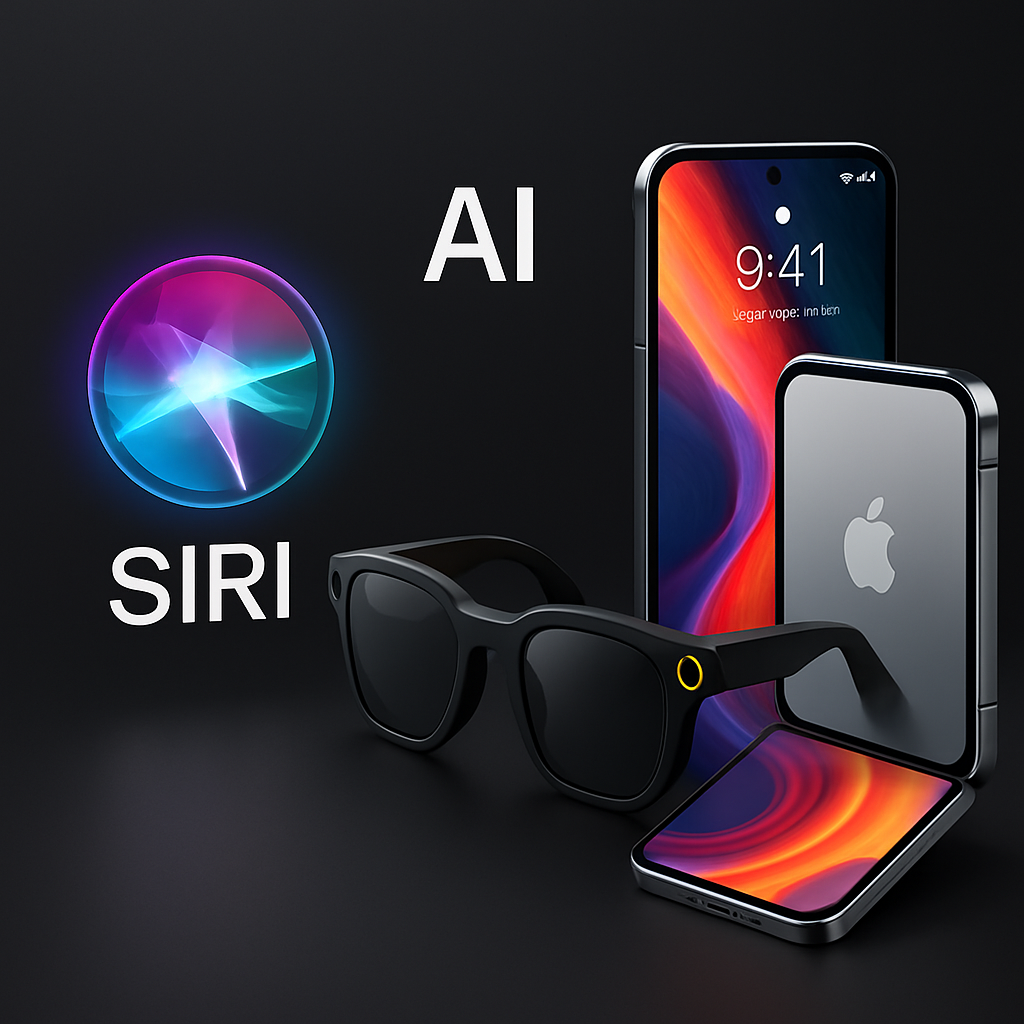
Apple’s virtual assistant, Siri, is undergoing significant enhancements with the integration of advanced artificial intelligence. This development aims to provide users with more accurate and context-aware responses, elevating the overall user experience. However, as with any AI system, there are instances where Siri’s performance may not meet expectations, highlighting the ongoing challenges in perfecting AI interactions.
In the realm of wearable technology, Snap Inc. has introduced the latest iteration of its Spectacles. These smart glasses are designed to seamlessly integrate augmented reality (AR) features, allowing users to overlay digital information onto their physical surroundings. This advancement signifies Snap’s commitment to pushing the boundaries of AR technology and enhancing user engagement through innovative hardware.
Meanwhile, the tech community is abuzz with rumors surrounding Apple’s potential entry into the foldable smartphone market. Speculation suggests that the company is developing an ‘iPhone Fold,’ aiming to combine the portability of a smartphone with the expansive display of a tablet. While details remain scarce, such a device could represent a significant shift in Apple’s product lineup and influence future smartphone designs.
These developments underscore the rapid pace of innovation in the tech industry. As companies like Apple and Snap continue to explore new frontiers in AI, AR, and hardware design, consumers can anticipate a wave of products that redefine how we interact with technology. Staying informed about these trends is crucial, as they have the potential to reshape our digital experiences in profound ways.