Apple’s recent unveiling of ‘Siri AI’ at the Worldwide Developers Conference (WWDC) 2026 marks a significant transformation of its voice assistant, positioning the company as a formidable contender in the artificial intelligence (AI) landscape. This overhaul introduces a suite of advanced features designed to enhance user interaction and system integration.
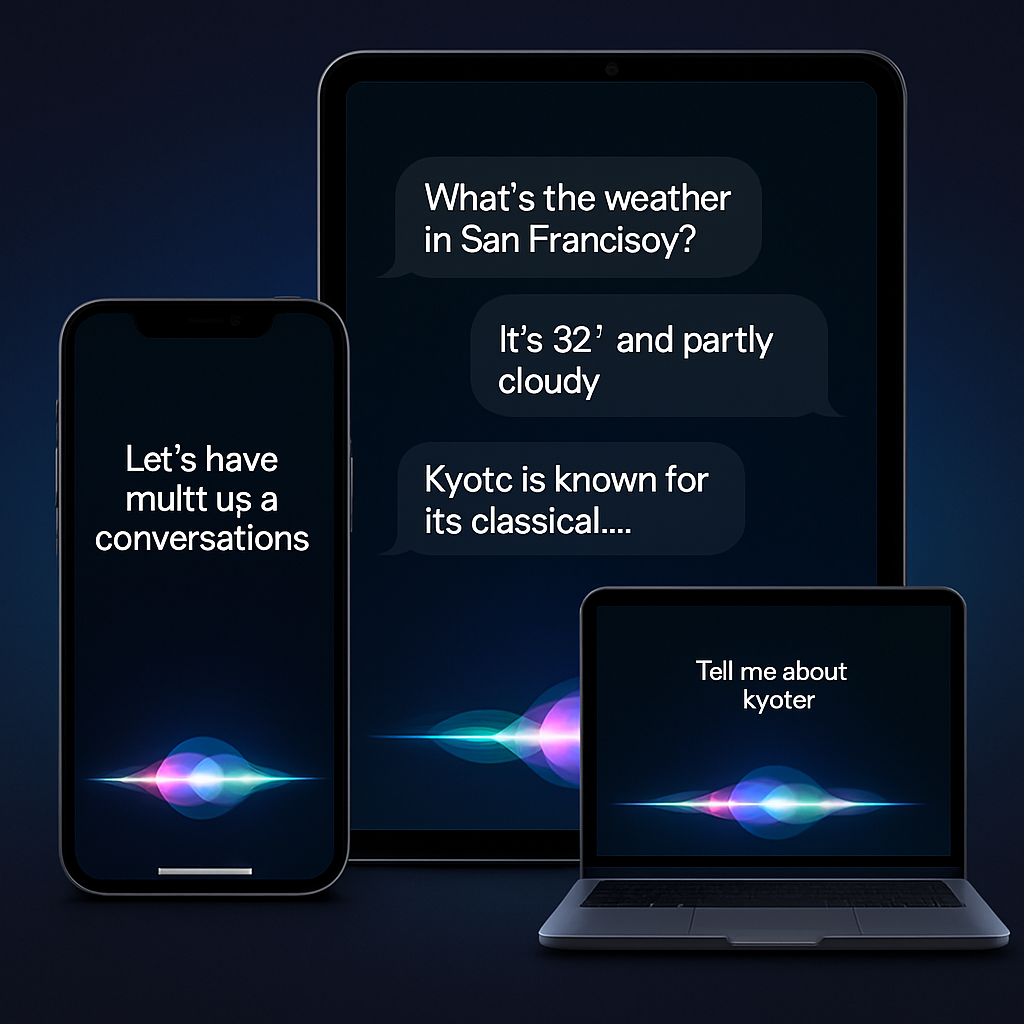
Central to this transformation is Siri’s newfound ability to engage in multi-turn conversations, allowing for more natural and context-aware dialogues. This advancement enables Siri to understand and respond to complex queries, providing users with more accurate and relevant information. Additionally, Siri now boasts real-time world knowledge, ensuring that responses are informed by the latest data and events.
Integration across Apple’s ecosystem has been significantly enhanced. Siri is now embedded directly into the Dynamic Island on iPhones, accessible through a simple swipe or voice command. On macOS, Siri resides within Spotlight, offering seamless access to its capabilities. This deep integration ensures that Siri is readily available across devices, enhancing user convenience.
The voice engine powering Siri has undergone a substantial upgrade, resulting in a more expressive and natural-sounding assistant. Users can customize voice settings during the initial setup, tailoring Siri’s voice to their preferences. This personalization extends to a dedicated Siri app, allowing users to manage and continue conversations across devices via iCloud synchronization.
Visual Intelligence is another notable addition, enabling Siri to interpret and interact with on-screen content. For instance, users can capture a photo of a meal, and Siri will provide nutritional information, or snap a receipt, and Siri will assist in splitting the bill. This feature leverages on-device AI to offer practical, real-time assistance.
Apple’s commitment to privacy remains steadfast with the introduction of Private Cloud Compute. This system ensures that data processing occurs on Apple’s servers using Google’s infrastructure, but in a manner that keeps user data inaccessible to both Apple and third parties. This approach balances advanced AI capabilities with robust privacy protections.
While Siri AI is set to launch in English later this year, with a waitlist for access, it will not be immediately available in the European Union or China. Some features, such as image generation, will have daily usage limits, with expanded access available through iCloud+ plans.
Apple’s strategic partnership with Google to co-develop the underlying Foundation Models for Siri AI underscores a collaborative approach to AI development. This alliance aims to leverage Google’s expertise to enhance Siri’s capabilities, reflecting a broader industry trend of tech giants joining forces to advance AI technologies.
In the context of the broader AI landscape, Apple’s methodical and privacy-centric approach to AI development sets it apart from competitors. By focusing on seamless integration, user privacy, and practical applications, Apple is not only enhancing its product offerings but also redefining user expectations for AI assistants. This positions Apple as a leader in the AI revolution, with Siri AI serving as a testament to the company’s commitment to innovation and user-centric design.