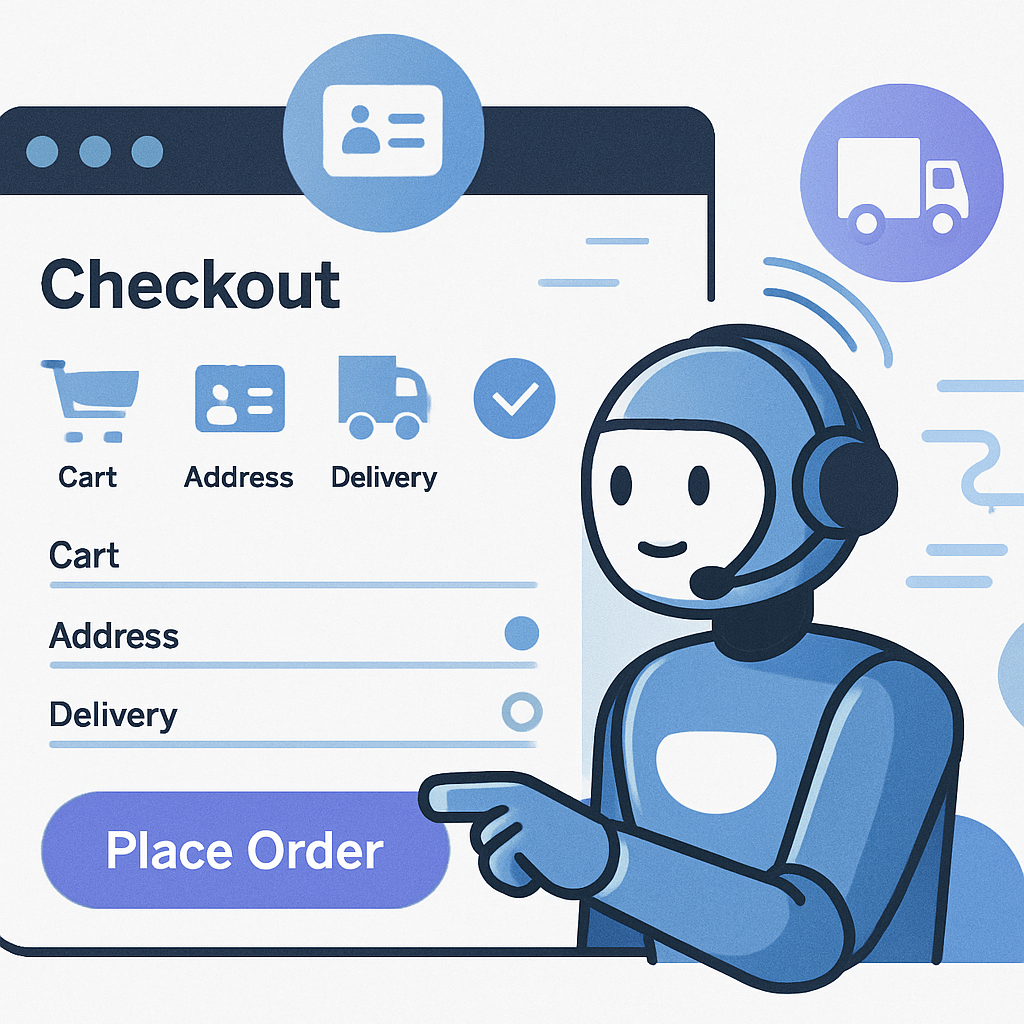
Shopify is expanding its browser-based AI agent capabilities by allowing agents to fully handle checkouts on merchants’ sites. This development builds on its existing tools that enabled agents to browse inventory and add items to shopping carts. Now, with support for Shopify’s Web Model Context Protocol (WebMCP), agents can also execute checkout steps — including reading, updating, and submitting orders — following explicit buyer authorization. All this operates without resorting to methods like screen scraping or working only with human-oriented HTML interfaces.
What’s New: Tools & Standards
The upgrade introduces three new APIs: get_checkout, update_checkout, and complete_checkout. These enable agents to inspect the checkout page’s contents, change details such as shipping address or delivery options, and complete the purchase when given permission.
This functionality is built into Shopify’s Universal Commerce Protocol (UCP). Agents using WebMCP operate inside the buyer’s browser, while its earlier Model Context Protocol (MCP) was for server-to-server operations. Both rely on UCP’s standards for searches, cart building, and transactions.
Shopify also made two noteworthy agent partnerships official. Muse and Instinct are among the AI agents that now integrate directly with Shopify for “agentic commerce.” Instinct’s collaboration was revealed alongside this update.
Rollout & Eligibility
The checkout support via WebMCP will be available to all merchants who meet Shopify’s eligibility criteria. While inventory browsing and cart additions were already possible, agents won’t be able to complete purchases unless the merchant is eligible and the buyer grants authorization per transaction.
To sum up, Shopify first allowed agents to view storefronts and manage carts; now they can handle the entire checkout flow when given explicit approval. This applies to integrations using Shop Pay and similar checkout paths.
This is a significant shift in how e-commerce platforms think about automated agents. By enabling in-browser agents to act with structured APIs rather than scraping or simulating human interactions, Shopify is leaning into a more controlled, secure, and scalable approach to AI shopping. It matters because it could redefine user expectations, streamline agent development, and raise new questions around trust and privacy. Watch for how merchant eligibility is determined, how agents gain consent from buyers, and what safeguards are built in — since those details will shape whether this move empowers users or stirs friction.