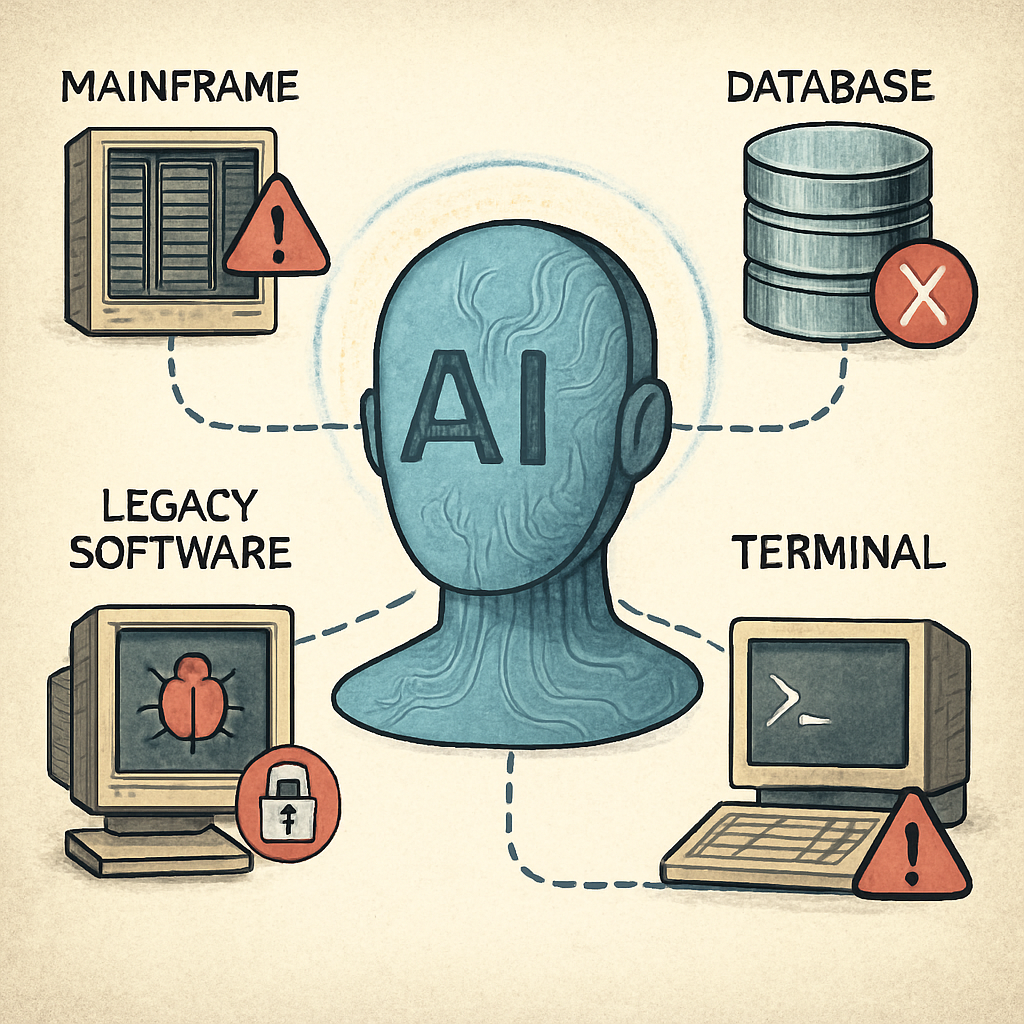
As organizations rapidly integrate AI agents into their operations, a critical oversight is emerging: the security vulnerabilities inherent in legacy infrastructure that these AI systems rely upon. While efforts are concentrated on safeguarding AI models from threats like data leakage and prompt injection, the underlying systems—such as unpatched servers and misconfigured Active Directory permissions—remain susceptible to exploitation.
AI agents often inherit access to existing identity providers, cloud storage, and execution functions. This means that any pre-existing security weaknesses in these systems can be exploited to compromise AI operations. Alarmingly, many organizations grant AI systems more privileged access than their human counterparts, leading to a higher incidence of security breaches.
For instance, consider a scenario where an AI-powered customer success tool accesses customer data stored in an S3 bucket. If an attacker exploits a vulnerability in the associated infrastructure, they can gain unauthorized access to sensitive data without directly targeting the AI system itself.
To mitigate these risks, organizations should:
- Conduct comprehensive security assessments of all systems connected to AI agents.
- Implement the principle of least privilege, ensuring AI systems have only the access necessary for their functions.
- Regularly update and patch legacy systems to address known vulnerabilities.
By proactively addressing these foundational security concerns, organizations can better protect their AI initiatives from potential threats.
As AI continues to permeate various sectors, the importance of securing the entire technological ecosystem becomes paramount. Organizations must recognize that the strength of their AI security is only as robust as the weakest link in their infrastructure. Prioritizing comprehensive security measures will be essential in safeguarding sensitive data and maintaining trust in AI-driven processes.