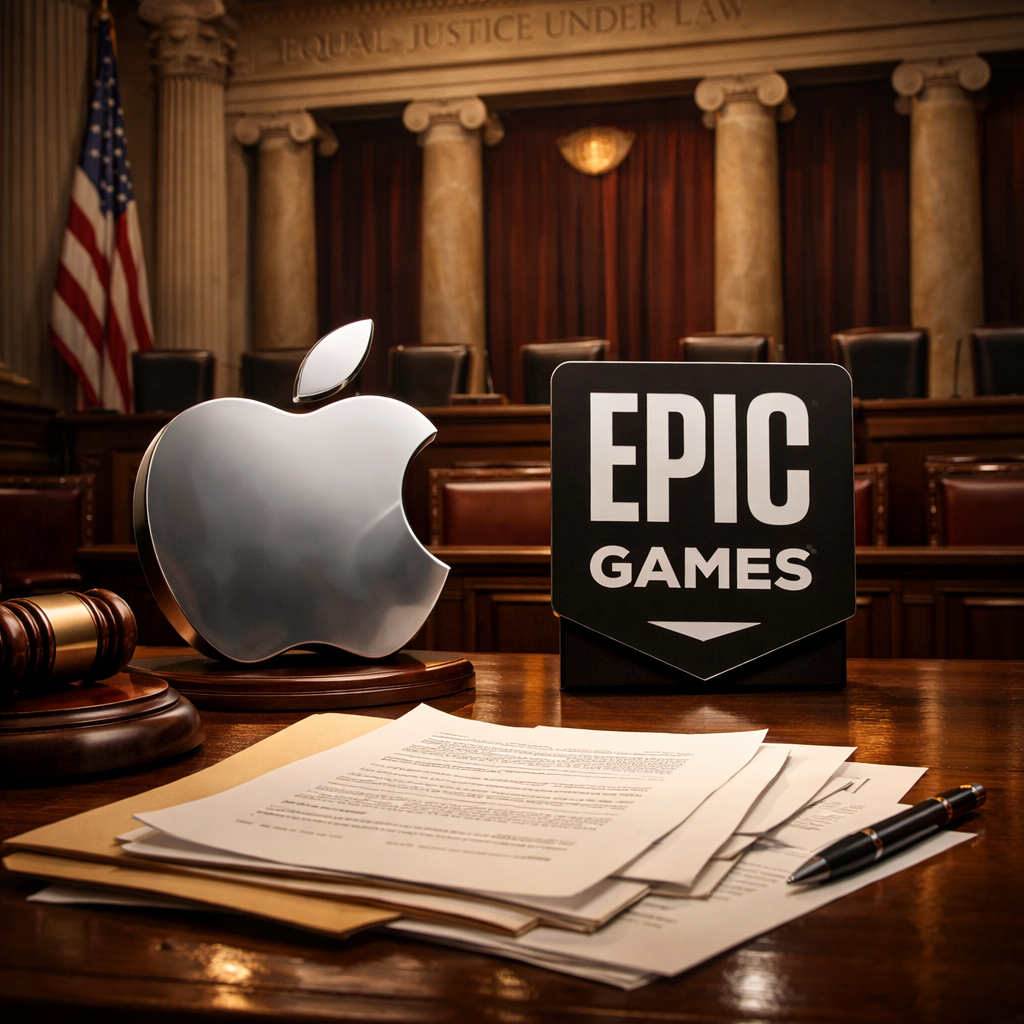
The U.S. Supreme Court has scheduled oral arguments for Apple’s appeal in its prolonged legal clash with Epic Games. The hearing will take place on January 11, 2027, marking a significant milestone in a dispute that’s shaped how app developers interact with Apple’s App Store ecosystem.
Background of the Dispute
The controversy began in 2020, when Epic Games sued Apple after Fortnite was kicked off the App Store. The downfall stemmed from Epic introducing an alternative payment system through a remote update, violating Apple’s rules. A year later, a federal judge ruled in favor of Epic in part, saying Apple could no longer forbid developers from steering users to payment methods outside the App Store. However, Apple was allowed to place limits on how those external links were presented and charged a commission—up to 27%—on purchases made outside the App Store.
Epic continued to contest Apple’s restrictions. In April 2025, Apple was found in civil contempt for failing to comply with earlier court orders—specifically for keeping barriers in place on how external purchase links are displayed, and for imposing fees on transactions processed outside Apple’s payment system.
Since then, Apple has permitted developers to include external payment options in the U.S. App Store without charging commissions. But the company has continued to fight the contempt ruling. After the Ninth Circuit upheld parts of the decision, Apple appealed to the Supreme Court. The justices agreed in June 2026 to review whether a company can be held in civil contempt for actions that violate the spirit—rather than the letter—of an injunction. Notably, the Supreme Court review pertains only to the civil contempt issue; it won’t address the broader question of how much or whether Apple can charge fees on external payments. That issue remains being litigated separately after the Ninth Circuit reversed a blanket ban on those commissions in December.
What’s Next
The official docket has set January 11, 2027 as the date for oral arguments. Leading up to this, both sides have already submitted major briefs. Apple’s opening argument claims that the contempt ruling is invalid because the original injunction did not explicitly ban Apple from levying fees on payments occurring outside the App Store. They cite legal precedents requiring clarity in injunctions before contempt can be imposed.
The U.S. Department of Justice and various industry and legal groups have filed briefs largely supporting Apple’s position. At the same time, the DOJ asserts that Apple’s display restrictions—such as standards for what the company calls “plain buttons”—violated parts of the injunction that should be upheld.
Key deadlines remain: Epic Games must respond to Apple’s brief by November 13, and Apple must send its reply by December 14.
This case carries wide implications for app storefront rules, antitrust enforcement, and how courts interpret what’s required by injunctions—especially when “spirit” versus “letter” becomes contested.
Why It Matters
The Supreme Court’s examination of civil contempt in this case will help clarify how explicit injunctions need to be to avoid unintended violations. For Apple and other platform operators, it may redefine the legal risk around indirect or restrained compliance. Developers, stimulus for alternatives, and consumers—who often face higher prices due to commissions—are closely watching. As platforms evolve, the boundaries between company policy and court oversight may be redrawn.
We’ll be tracking the arguments, the court’s take on injunction construction, and what’s next after January. The outcome could ripple well beyond this current dispute.