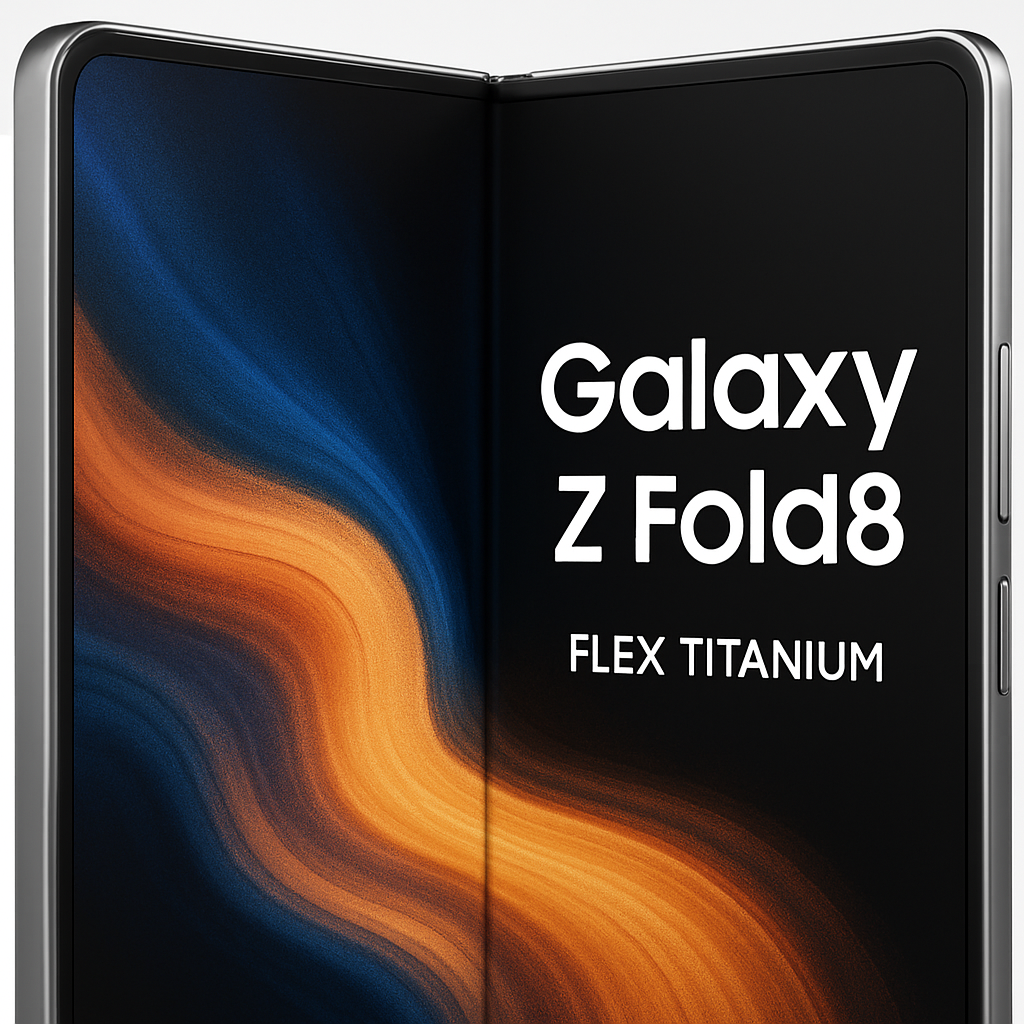
Samsung’s latest foldable smartphones, the Galaxy Z Fold 8 and Galaxy Z Fold 8 Ultra, have made remarkable strides in minimizing the display crease—a longstanding concern for foldable device users. Early hands-on experiences reveal that the once-prominent crease is now barely perceptible, even under direct lighting conditions.
Historically, Samsung’s foldable devices have faced criticism for the visible and tactile crease along the inner display. This issue has been a significant drawback, detracting from the immersive experience these devices aim to provide. With the eighth iteration of the Galaxy Z Fold series, Samsung appears to have effectively addressed this challenge.
The key to this improvement lies in Samsung’s introduction of the “Flex Titanium” display architecture. This innovative design incorporates a titanium-alloy film beneath the OLED panel, replacing traditional plastic components. The titanium material not only enhances the display’s structural integrity but also contributes to a thinner profile, measuring less than 30% the thickness of a human hair. This advancement results in a more seamless and durable display with significantly reduced crease visibility.
In addition to the Flex Titanium design, the Galaxy Z Fold 8 series features an anti-reflective layer on the inner display. This addition addresses another common issue with foldable screens—excessive glare and reflections—thereby improving visibility and user comfort in various lighting environments.
Samsung’s commitment to refining the foldable experience is evident in these enhancements. The combination of the Flex Titanium architecture and the anti-reflective coating represents a significant leap forward in foldable technology, offering users a more polished and immersive display experience.
As the foldable smartphone market continues to evolve, Samsung’s advancements set a new benchmark for competitors. The substantial reduction of the display crease and the introduction of anti-reflective technology not only enhance the aesthetic appeal of the devices but also improve their functionality and user experience. These developments may encourage wider adoption of foldable smartphones, as they address some of the primary concerns that have previously hindered their mainstream acceptance.