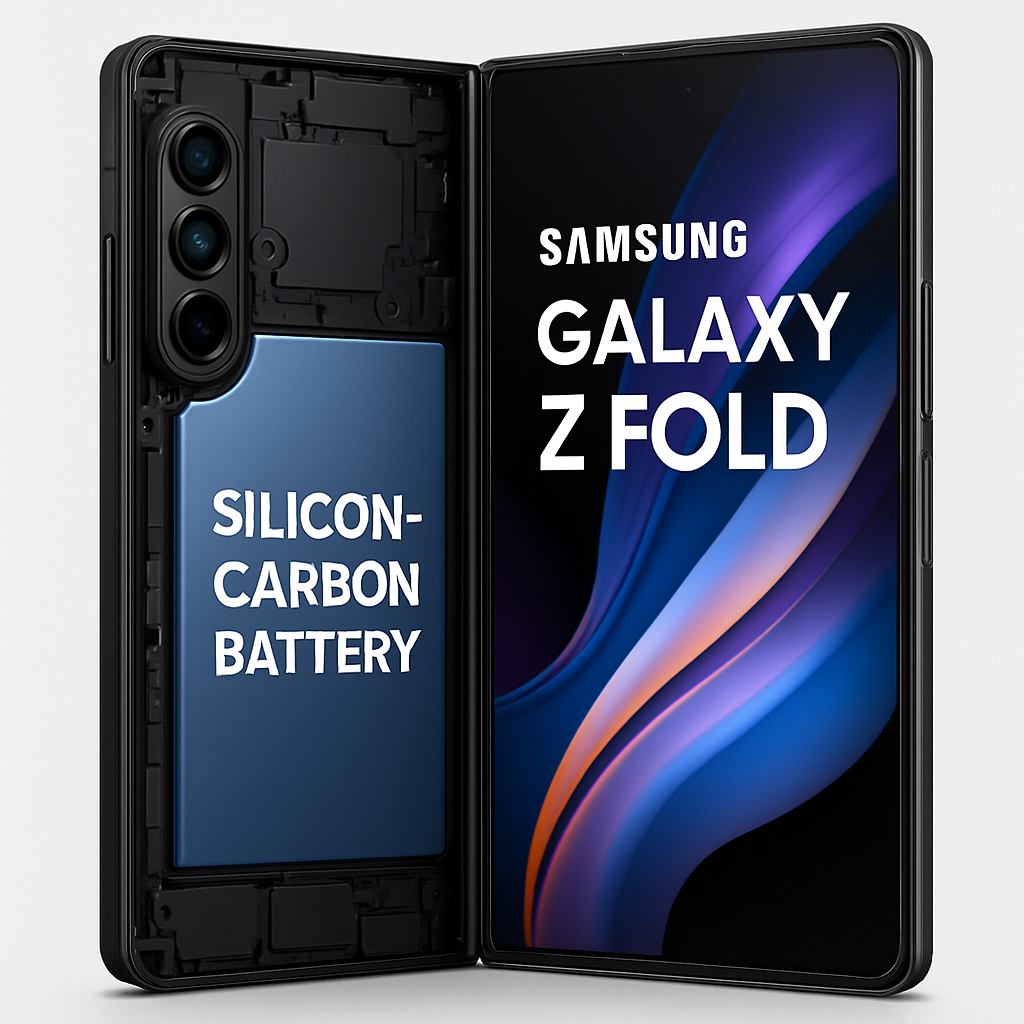
Samsung has integrated silicon-carbon battery technology into its latest foldable devices, including the Galaxy Z Fold 8, Z Fold 8 Ultra, and Z Flip 8. This advancement allows for higher battery capacities without increasing device thickness. However, recent European regulatory documents indicate that these new batteries are rated for approximately 1,200 charge cycles before their capacity diminishes to 80%, a notable decrease from the 2,000 cycles observed in previous models like the Galaxy Z Fold 7.
Silicon-carbon batteries offer the advantage of increased energy density, enabling larger capacities within the same physical space. This is particularly beneficial for foldable smartphones, where internal space is limited. Despite this, the reduced lifespan of these batteries is a concern. The inherent properties of silicon-carbon technology contribute to this shorter lifespan, as these batteries tend to expand over time, potentially affecting device performance and longevity.
Samsung has acknowledged these challenges, emphasizing that safety and longevity were primary considerations in the design of these new batteries. The company has opted for a moderate capacity increase to balance performance with durability. This approach aims to provide users with improved battery life while maintaining device reliability over time.
It’s important to note that, despite the reduced charge cycle rating, Samsung’s new foldables still surpass competitors like Google’s Pixel series and Apple’s iPhone, which typically offer around 1,000 charge cycles before reaching 80% capacity. This positions Samsung’s latest devices favorably in terms of battery longevity within the current market landscape.
As the smartphone industry continues to evolve, the adoption of silicon-carbon batteries represents a significant step forward in battery technology. However, manufacturers must address the trade-offs between capacity, device size, and battery lifespan. Consumers should consider these factors when evaluating the long-term value and performance of new devices.