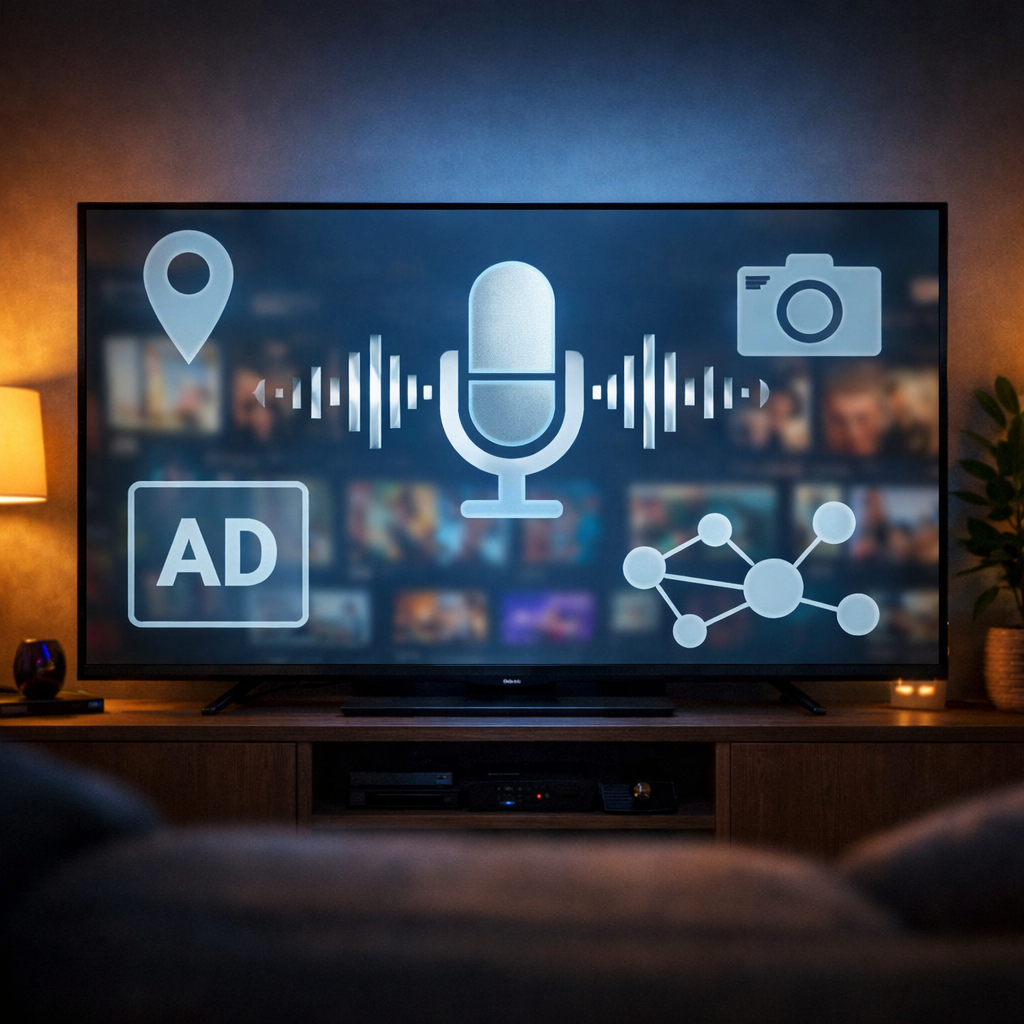
A cybersecurity researcher known as log4j claims to have gained root control over a 2025 Samsung Smart TV, revealing extensive tracking capabilities deeply embedded in its firmware. The discovery was triggered after the device delivered unusually specific advertisements that prompted further investigation. The researcher says Samsung’s Tizen operating system was locked with AES encryption, with no keys publicly available, necessitating hardware-based exploits to achieve root access. Screenshots shared of firmware code allegedly show systems that monitor users far beyond screen content.
Tracking features reportedly uncovered include automatic content recognition (ACR), periodic screenshot functionality, geolocation services, network mapping, and a customized advertising identifier (AID) linking TV behavior to other networked devices. A regional AI model reportedly keeps tabs on user habits such as which ads are skipped and how much of a video a viewer watches, contributing to personalized profiles.
Voice Monitoring & Diagnostic Access
The researcher says the firmware contains a component dubbed “always-on voice,” which tracks ambient sounds—such as a baby crying or dog barking—even on units without built-in microphones. These TVs allegedly detect connected devices like soundbars or Bluetooth mics and use them for audio capture. Another module, called rmdemon, appears designed to give support personnel short-lived diagnostic access to the device.
Third-party engineer tests showed that on a rooted TV, with privacy settings disabled, the microphone activates briefly then shuts off. That behavior, however, hasn’t been verified on stock devices under normal circumstances. Meanwhile, Samsung’s publicly stated options include disabling ACR via the Viewing Information Services menu under Privacy settings, though what that actually stops remains unclear.
Legal Pressure & Company Response
These revelations follow litigation in Texas. On December 15, 2025, the state sued multiple smart TV brands—including Samsung—for operating content recognition without informed consent. Earlier this year, Samsung entered into a settlement in which it agreed not to collect ACR data from Texas users without explicit permission. These cases don’t address all devices or features outlined in the new claims.
Publicly, the manufacturer hasn’t responded to these specific allegations. The researcher’s findings have not been replicated by independent third parties on an unmodified television. The company’s privacy disclosure states that it may share device information and advertisement interaction data with partners—about 400 of them, according to log4j.
Beyond the technical evidence, the researcher reports that OpenAI disabled his account over related reverse engineering work, citing “Cyber Abuse.” No indication that the cut came from violation tied to exploit development—though this tie adds tension to the broader discussion around researcher rights.
This case underscores ongoing concerns around privacy in connected devices. If accurate, the claims show that modern smart TVs can go far beyond passive display tools—they can act as surveillance hubs using voice, location, visual recognition, and network interactions. Users may believe turning off individual settings is enough, but behavior suggests otherwise.
It’s too soon to verify all allegations. What’s clear: smart TV manufacturers need to be far more transparent about how firmware, diagnostic modules, microphone access, and ACR systems function—and regulators must press enforcement. For consumers, the only full safeguard may be to control network access tightly and consider hardware cuts to microphone or audio paths.
This could mark a watershed moment for privacy law and device regulation—if regulators treat TV tracking like other pervasive monitoring. Watch for follow-up audits, firmware disclosures, and whether Samsung now updates policies, not just legal blame shifting. Regulators in other states or at the federal level may use this as a template for expanding consent law beyond voice assistants and phones to every screen in the home.