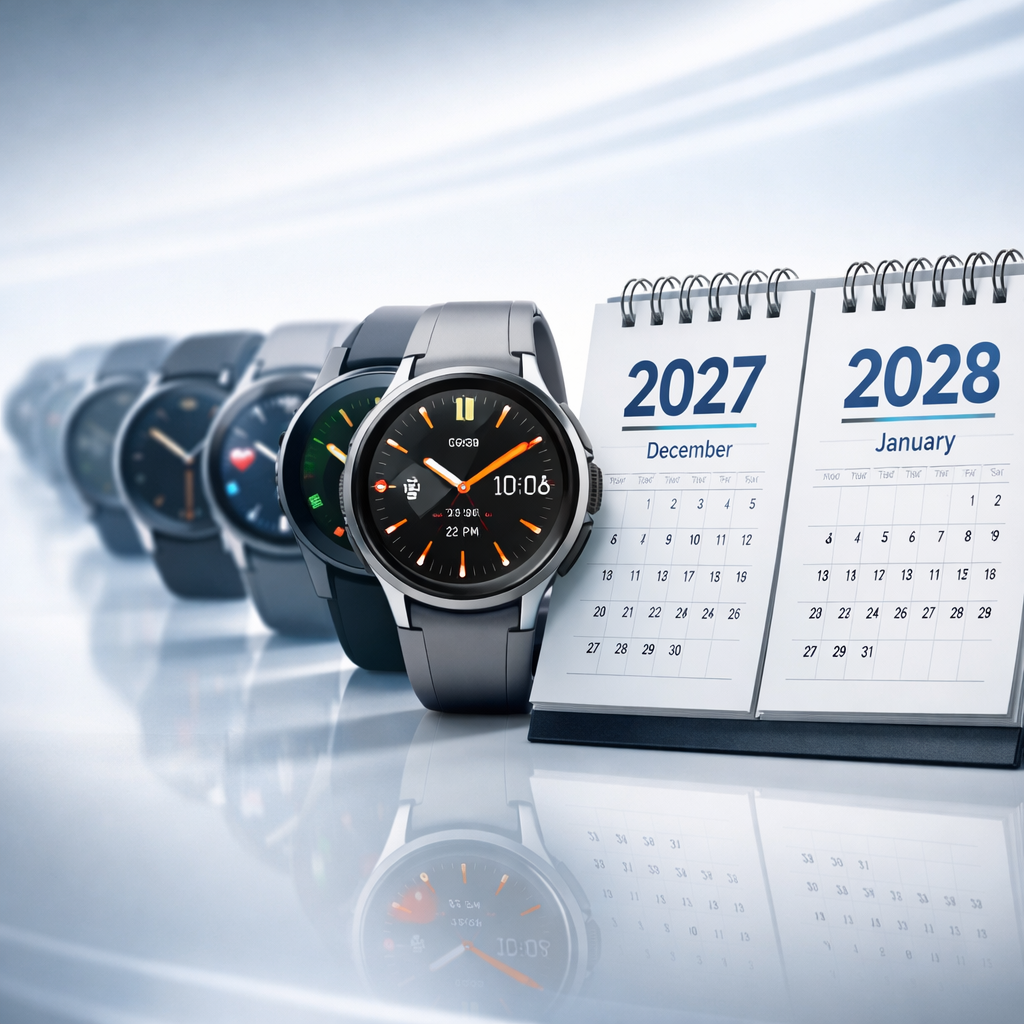
Samsung is putting its usual annual Galaxy Watch cycle on pause: no “Galaxy Watch 10” will launch in 2027. The company is reportedly shifting to a new strategy, rolling out flagship smartwatches every other year.
What’s changing?
Previously, Samsung released a new Galaxy Watch model every year—an annual cadence it’s kept since 2018. Even the switch to Wear OS with the Galaxy Watch 4 in 2021 didn’t disrupt that rhythm. But internal documents suggest the next major release won’t arrive until 2028. The Galaxy Watch line, it turns out, is being treated as a “mature phase” product in the smartwatch market.
The decision seems driven by financial pressures. Samsung’s mobile division has reported two consecutive quarters of loss, prompting what insiders describe as a structural overhaul aimed at improving profitability. One move in that direction is spacing out the release cycle for its wearables.
What to expect before Watch 10
Although the hardware for Galaxy Watch won’t be refreshed in 2027, Samsung is still planning meaningful updates in firmware and health-tech features. Software improvements and enhancements to wellness tracking or related tools are expected throughout the off-year. Meanwhile, the company is also preparing a new fitness tracker, the Galaxy Fit 4, which is anticipated to reach European shelves in 2027 at about €79.90—a modest bump over the prior model’s price.
Past Galaxy Watch models haven’t consistently met commercial expectations. The most recent release, the Galaxy Watch 9, reportedly underperformed in sales—likely due to its elevated pricing—adding urgency to Samsung’s rethink of its product rhythm.
Samsung is thus entering a phase of recalibration: fewer devices, more polish and focus on key features. The move sets the pace toward more deliberate launches.
Why it matters
Transitioning to a biennial release schedule marks a departure from the fast-paced gadget refresh culture. For consumers, this could mean more stable pricing, better-tested updates, and a clearer sense of when to expect meaningful device changes. For Samsung, it’s a move to stem losses and reinvest more conservatively—but it also risks ceding space to competitors who are still chasing yearly buzz.
Skipped models often leave gaps in market attention. Samsung needs to ensure that software, health, and feature improvements in the off-year are substantial enough to maintain momentum until the next big launch. The Galaxy Fit 4’s pricing will be an early test of how well Samsung can keep users engaged without the allure of completely new hardware.