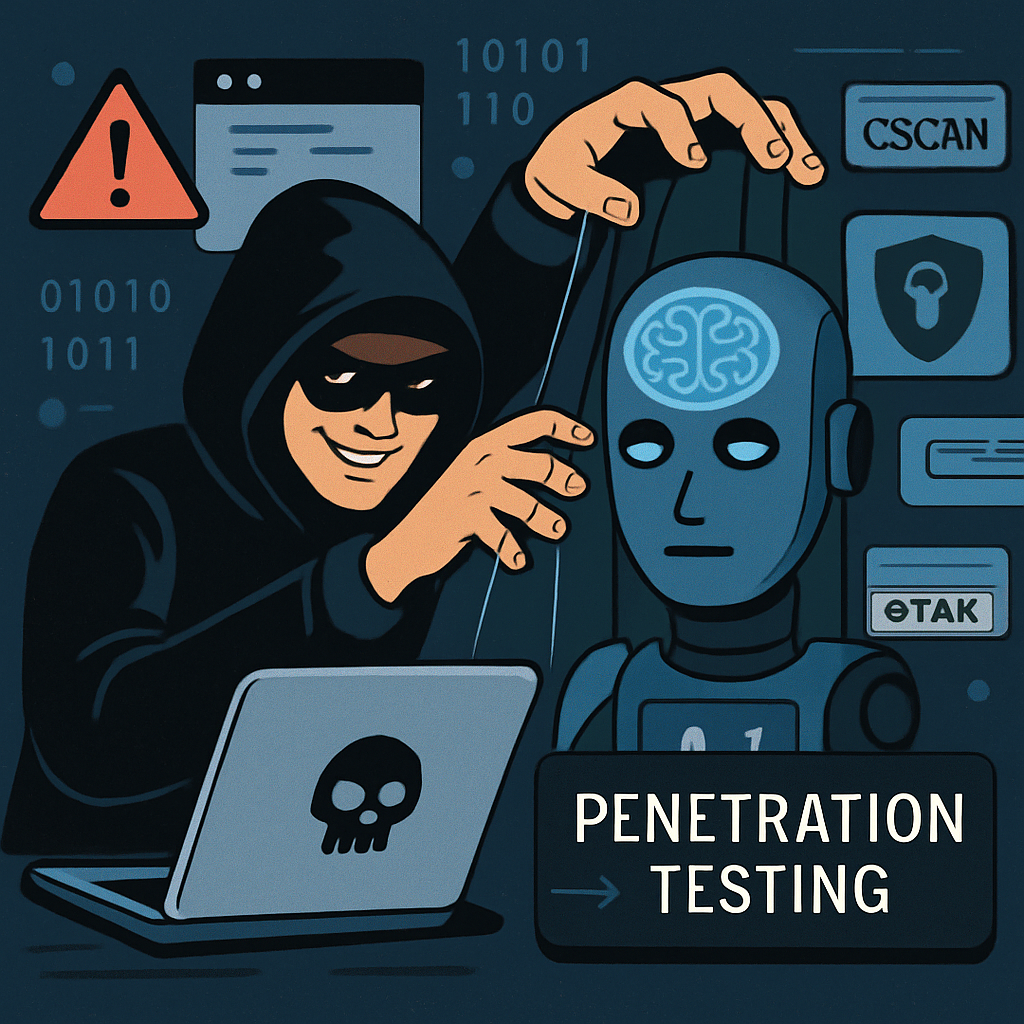
A Russian-speaking cybercriminal, known by the alias “Trim,” has reportedly repurposed jailbroken advanced AI models to develop an automated penetration testing platform named AI Pentest Checker. This development underscores the potential for malicious actors to exploit legitimate AI services and security tools to streamline reconnaissance, validate vulnerabilities, and generate comprehensive reports.
Trim first emerged on a Russian-language cybercrime forum on March 13, 2026, where he shared methods purportedly capable of bypassing the safety controls of AI models like Claude Opus. These techniques involve prompt-based manipulations designed to make the AI perceive offensive requests as authorized security research rather than malicious activities. The methods include creating a benign context before issuing harmful requests, reframing instructions to focus solely on code structure, and iteratively softening previously refused prompts.
Such strategies are forms of “jailbreaking,” where attackers attempt to override an AI model’s behavioral safeguards through crafted inputs, without exploiting the underlying infrastructure. This approach has been observed in the misuse of legitimate large language models (LLMs), including instances of jailbreaking. Trim also reportedly recommended alternative AI services and locally hosted models when commercial systems declined a request, reducing dependency on any single AI provider and providing fallback options for generating code, analyzing targets, or creating exploitation content.
Research groups have warned that increasingly capable frontier models can support offensive tasks, such as vulnerability analysis and exploit-related activities, even when providers implement safety controls. On June 21, Trim allegedly promoted AI Pentest Checker, which combines AI capabilities with offensive security tools for automated testing. The tool integrates scanners and reconnaissance utilities like Nuclei, ffuf, katana, subfinder, and Gitleaks to automate target discovery, endpoint enumeration, secret detection, and vulnerability assessments.
While these utilities are not inherently malicious and are widely used by legitimate penetration testers and defenders, their combination with a jailbroken AI assistant can significantly reduce the time and expertise required to coordinate an intrusion workflow, interpret scan results, prioritize findings, and produce polished reports. The platform reportedly utilized Claude Opus in its critical vulnerability escalation process and another model for generating exploitation reports. Claims that a modified system prompt from a “Fable 5” configuration was used should be treated cautiously unless independently verified. However, exposed or leaked system prompts can provide attackers with insights into a model’s instructions, aiding them in testing prompt-injection or jailbreak strategies more effectively.
This case reflects a larger shift in the threat landscape, where adversaries are increasingly leveraging AI technologies to enhance the efficiency and sophistication of their attacks. It highlights the urgent need for AI developers and cybersecurity professionals to collaborate in strengthening the security measures of AI systems, ensuring they are resilient against such manipulations. As AI continues to evolve, so too must the strategies to protect it from exploitation by malicious actors.