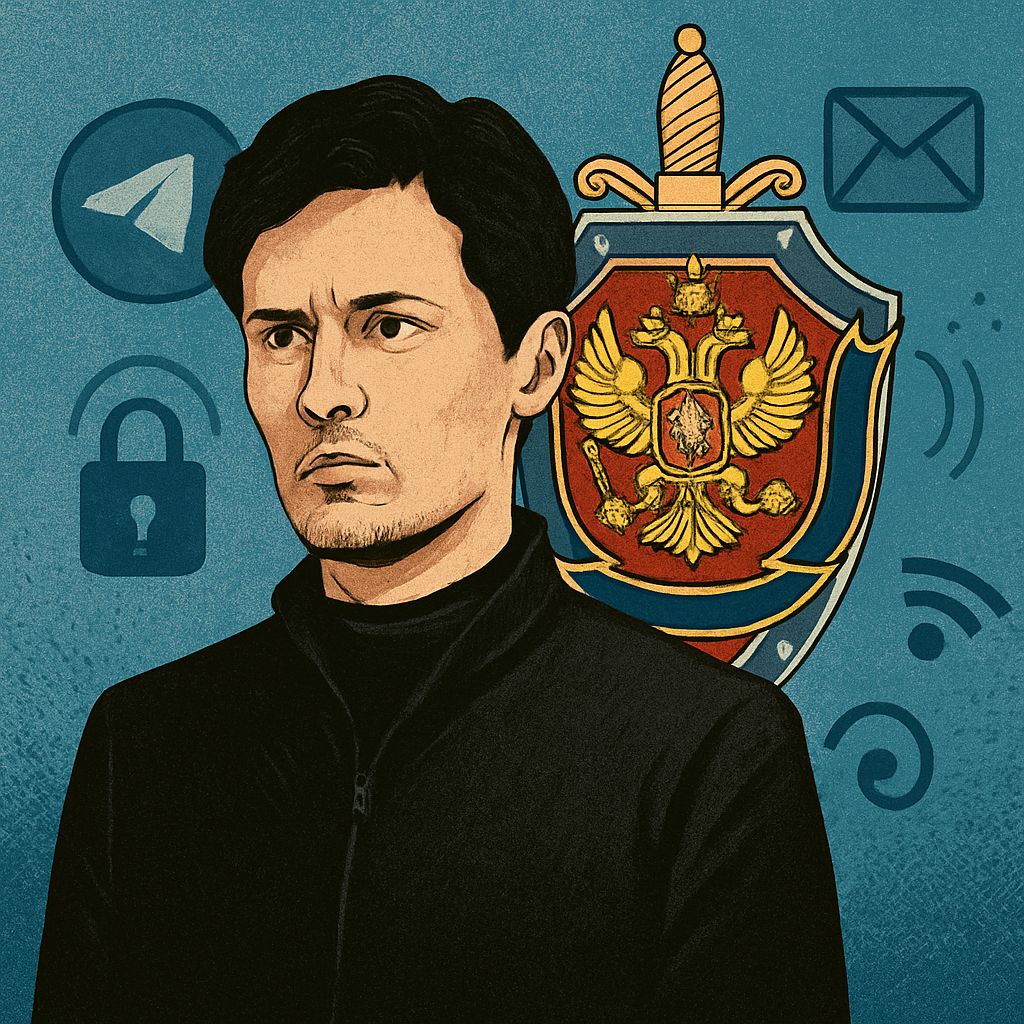
The Federal Security Service of the Russian Federation (FSB) has formally charged Pavel Durov, the founder of the messaging platform Telegram, with allegedly facilitating terrorist activities and failing to remove prohibited content, actions that contravene Russian law.
According to the FSB, Telegram has not taken down numerous channels, chats, and bots that are reportedly utilized by Ukrainian special services and various terrorist and extremist organizations. These entities allegedly use the platform to plan and coordinate acts of sabotage, terrorism, mass killings, and cyber-fraud operations within Russia. The FSB claims these activities have resulted in numerous casualties, including women and children, and have caused significant financial damage amounting to billions.
Durov faces charges under Part 1.1 of Article 205.1 of the Russian Criminal Code, which pertains to aiding terrorist activities. Consequently, he has been placed on the international wanted list.
The FSB also highlighted instances where Ukrainian special services allegedly employed a Telegram chatbot named “Daivinchik/Leo-Dating, Chatting, and New Friends” to recruit Russian citizens for sabotage and terrorist activities. The agency asserts that between July 2025 and the present, 46 Russian citizens aged 12 to 22 were detained for carrying out armed attacks on law enforcement officers and acts of arson targeting critical infrastructure sectors such as transport, energy, communications, and finance.
Furthermore, the FSB alleges that Ukrainian intelligence agents used the “Daivinchik” Telegram dating service to pose as young women, initiating online relationships with young Russian men. These agents reportedly manipulated the men into sharing geolocation data and making payments through phishing links. Subsequently, individuals impersonating Russian law enforcement or financial monitoring officials contacted the men, claiming that their actions had inadvertently supported Ukrainian military efforts. Under psychological pressure and threats of criminal prosecution, these men were allegedly coerced into committing acts of violence and arson, purportedly framed as security checks or pseudo-operational activities.
In response to these charges, Telegram’s official account on X posted a photo of Durov making an obscene gesture. Durov, who resides in Dubai, has not publicly commented on the allegations.
These developments occur amid increasing restrictions on Telegram within Russia. Earlier this year, the platform faced throttling measures, culminating in a near-complete blockade in April 2026. Additionally, nearly two years ago, Durov was arrested and charged in France for failing to address illicit activities on Telegram.
This situation underscores the ongoing tension between governments and encrypted messaging platforms regarding content moderation and national security. As authorities intensify efforts to regulate online spaces, platform operators like Telegram are caught between upholding user privacy and complying with legal obligations. The outcome of these charges against Durov could set significant precedents for the responsibilities of tech executives and the future of encrypted communications.