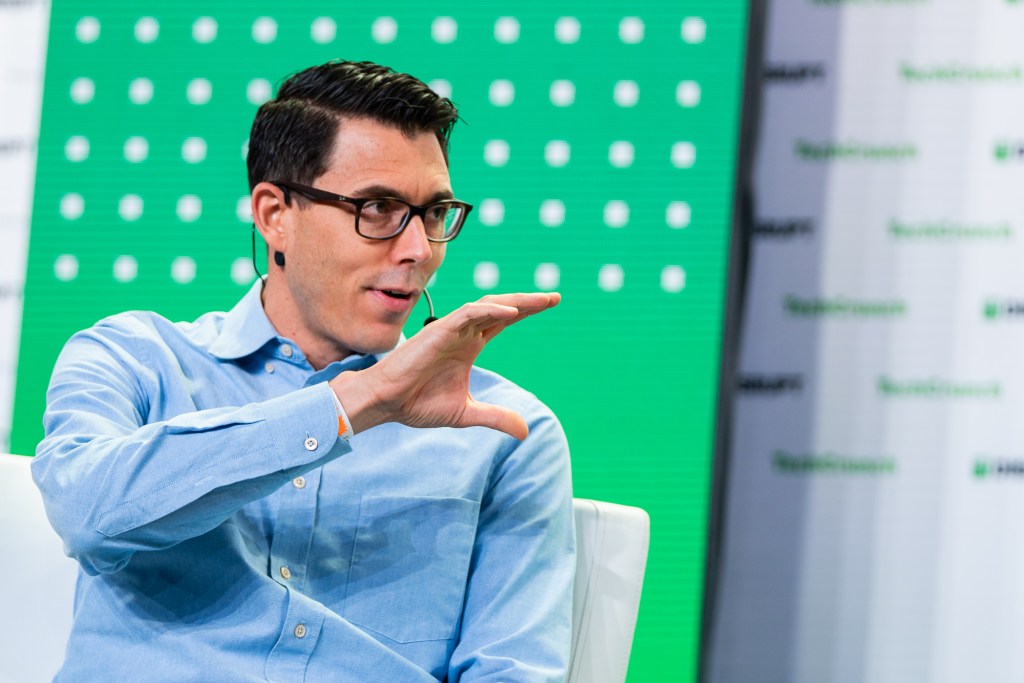
Robinhood is evolving beyond its roots as a commission-free trading platform. At TechCrunch Disrupt 2026, the company’s VP of Product Management for Brokerage, Abhishek Fatehpuria, will explain how Robinhood is adapting to meet the modern financial consumer — one who expects seamless banking, AI-driven investing, and integrated money management without compromising trust. The session, titled “Winning the Modern Financial Consumer,” will explore how financial products and services are converging.
Expanding product range and scale
Originally known for democratizing stock trading, Robinhood now operates across many financial verticals. Its offerings today include banking, credit, crypto, retirement, prediction markets, and advanced tools in private markets. Alongside its traditional feature set, the firm has recently introduced AI innovations like Cortex and Agentic Trading.
The scale of this transformation is significant: at the end of August 2026, Robinhood had 28.6 million funded customers and $384 billion in assets on its platform. Its newer verticals are rapidly growing. Banking deposits have surpassed $3 billion, its credit card operations are generating over $100 million in annualized revenue, and prediction market activity has surged — with more than 3.5 billion contracts traded by mid-year.
Changing expectations, emergent behaviors
Consumer expectations for financial services are being reshaped by what people already experience in tech: instantaneous responses, personalized interfaces, and frictionless UX. Robinhood is leaning into that by offering AI-based investing tools. Its Agentic Trading product enables users to trade stocks, options, and crypto through AI agents — nearly 100,000 users had opened such accounts by Q2 of 2026.
Prediction markets are also emerging as one of the fastest-accelerating areas in Robinhood’s business. In August alone, users traded 4.7 billion event contracts — representing a 15-times year-over-year increase. This kind of growth suggests new behaviors, not just new products.
What this signals for fintech and product building
For founders and product leaders, Robinhood’s trajectory shows how financial platforms are moving from individual services toward holistic ecosystems — integrating investment, banking, credit, and AI to deepen customer relationships. But this transition brings serious product challenges: maintaining simplicity while layering in complexity, preserving trust where money is involved, and meeting the bar for UX set by non-financial tech.
Also crucial is what Robinhood’s activity reveals about where financial demand is headed. AI-powered investing, prediction markets, and embedded finance are becoming core expectations, not niche features. Products that don’t evolve may fall behind.
Fatehpuria’s session at Disrupt is an opportunity for anyone in fintech — from startup founders and product folks to investors — to see firsthand how a major platform is navigating this shift.
Why this matters: Robinhood’s efforts aren’t just about adding services. They’re about winning the loyalty of consumers who now expect financial apps to anticipate their needs, use AI intelligently, and act as a trusted center for all money matters. The companies that figure that out — balancing innovation, regulation, usability and trust — will shape what financial services look like for a generation. Keep an eye on how consumers adopt features like prediction markets, how well agents deliver in AI-trading tools, and whether regulatory frameworks catch up to this broader platform model.