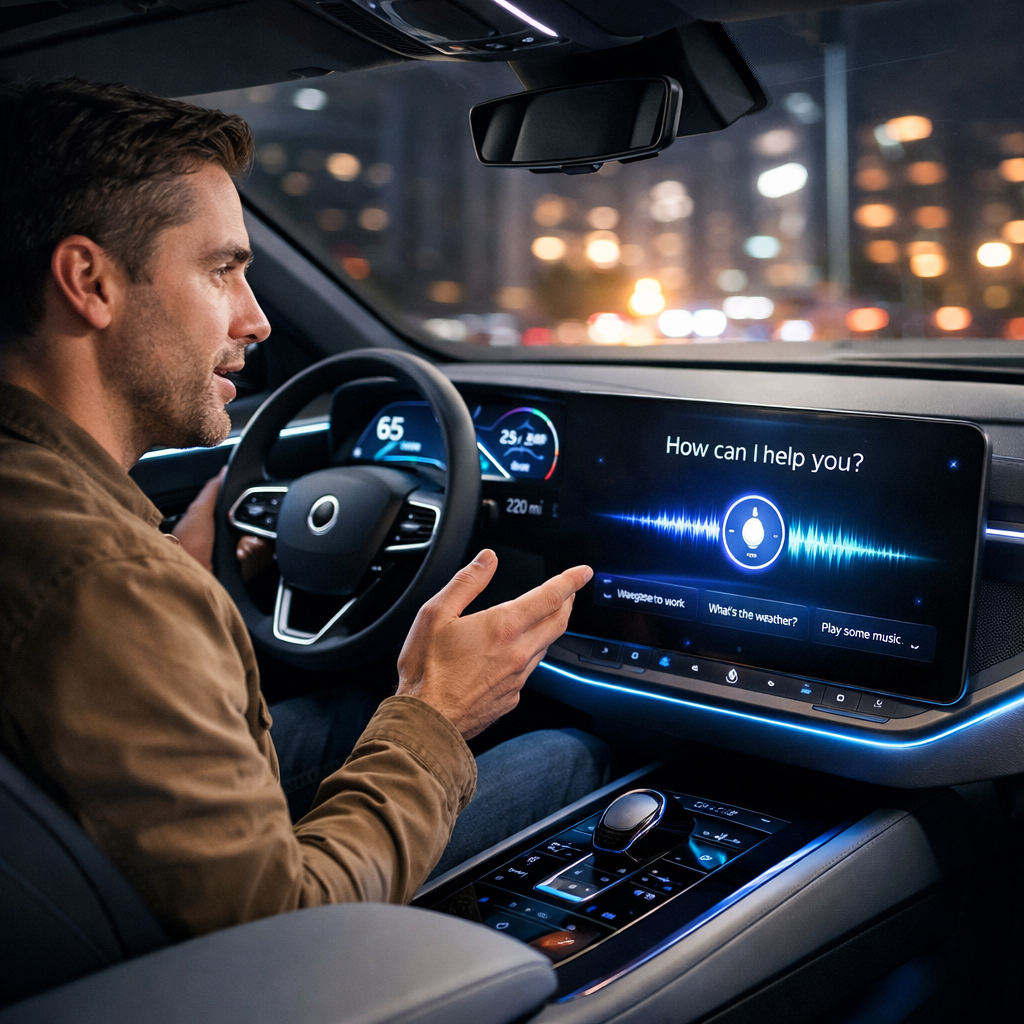
Rivian and Volkswagen Group are expanding their $5.8 billion joint venture to include Rivian’s AI voice assistant technology, marking a new chapter in their collaboration. As of this announcement in Q3 2026, Rivian will license parts of its AI assistant to VW, which could debut in Volkswagen’s upcoming entry-level EV, the ID EVERY1 hatchback. Details about licensing terms, which models beyond the ID EVERY1 will use the system, and deployment timelines have not been disclosed.
What’s Changing in the JV
The joint venture between Rivian and VW, originally formalized in November 2024, was focused on giving Volkswagen access to Rivian’s electrical architecture and software platform for its next-generation vehicles. While VW initially committed up to $5 billion, that investment grew to $5.8 billion by 2027. Now, the expansion includes more than just hardware and base software: VW will integrate aspects of Rivian’s AI voice assistant into its lineup. The ID EVERY1 is expected to be the first VW model benefiting from the expanded tech stack.
The AI Assistant’s Role & Rivian’s Strategy
Rivian has been developing its AI assistant for around two years. It officially launched in September 2026 on its R1S SUV, R1T pickup, and R2 midsize SUV. The assistant enables drivers and passengers to issue voice commands and control various vehicle functions. Internally, Rivian has built an agentic framework that interprets user intents and assigns them to the appropriate software modules. The system may ultimately support third-party agents from companies like Anthropic.
This move aligns with Rivian’s broader strategy toward vertical integration. In its most recent earnings materials, the company emphasized that owning more of the technology stack—including hardware, sensors, displays, compute, and software—gives it an edge. This integration allowed Rivian to significantly overhaul its R1T and R1S vehicles: changes span battery packs, suspension systems, the electrical architecture, sensor suites, and the user interface. Underlying those updates is a major simplification of electronic control units (ECUs)—shifting from 17 ECUs down to seven—alongside a leaner wiring harness. These efforts lay the groundwork necessary to support advanced AI features and over-the-air updates across entire vehicle systems.
Volkswagen’s interest in Rivian’s tech reflects a wider industry trend: traditional automakers are under pressure to catch up with rivals prioritizing software, EV architectures, and user-centric in-car experiences. Rivian’s systems, built from the ground up for modern EVs, catch VW’s eye precisely because of their clean, extensible architecture.
Rivian describes this licensing expansion as a demonstration of its platform’s extensibility—an internal benchmark that its systems are not just fit for Rivian vehicles, but are adaptable enough to power products from other automakers. By offering its voice-assistant tech to VW, Rivian is testing how deeply and how quickly its in-house software can be leveraged beyond its own brand.
What this means for consumers and the market: the ID EVERY1 could be the first mass-market VW to feature a home-grown voice assistant built on Rivian’s architecture. Rivian’s vertical integration gives it the flexibility to push OTA updates and more complex AI functions faster than many competitors.
Looking ahead, the critical factors will include how seamlessly VW integrates the assistant, how stable and feature-rich the experience is outside Rivian’s vehicles, and whether this signals the start of similar licensing deals for more automakers. It could mark the beginning of a shift where iconic brands without deep AI expertise lean on newer EV platforms to modernize their in-car tech stacks.