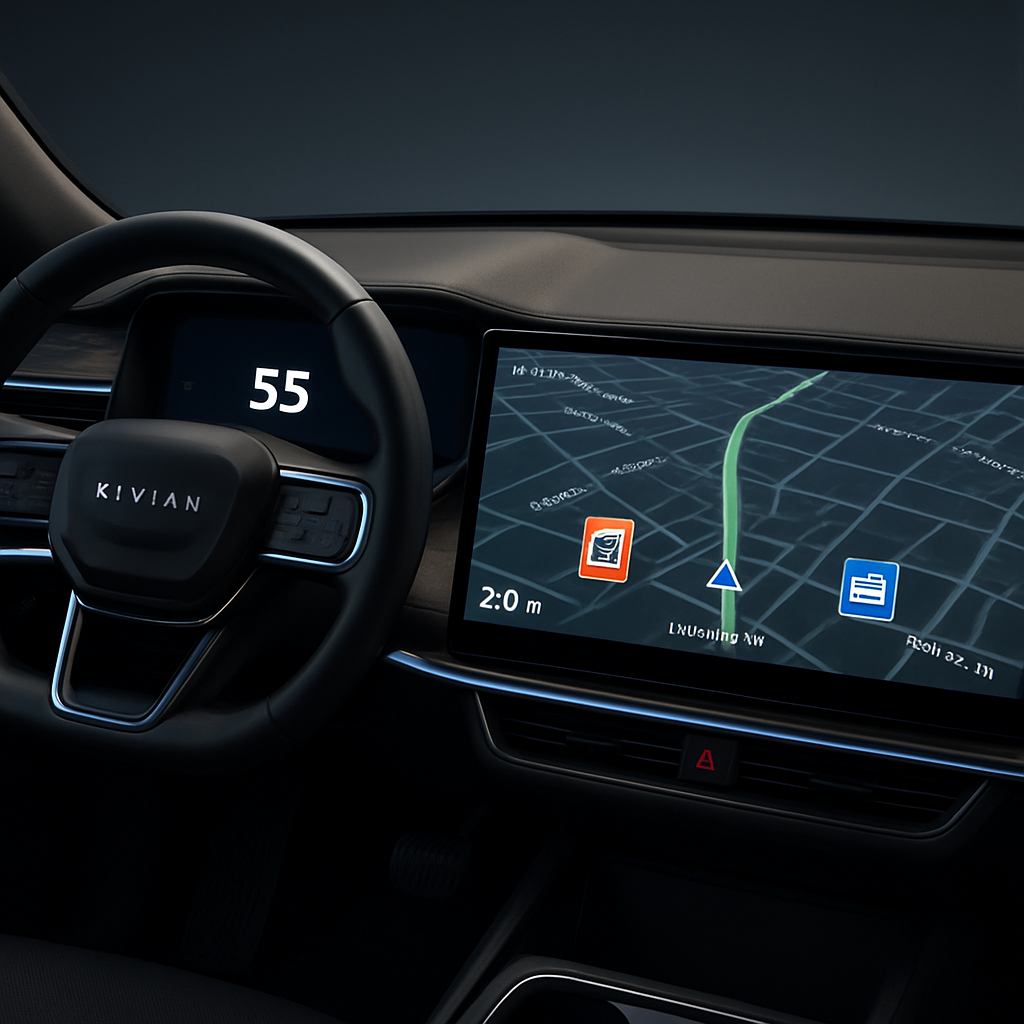
Rivian is enhancing its in-car navigation for the R1 and R2 electric vehicles by integrating live alerts from Waze. Starting with the OTA update version 2026.31, drivers will receive real-time reports of police sightings and speed cameras directly from Waze’s community-driven system. Expansion for more alert types is expected in future software updates. ([9to5google.com](https://9to5google.com/2026/08/24/rivian-adding-real-time-waze-alerts/))
Waze, owned by Google, offers users crowd-sourced incident reports—from road hazards and police presence to speed traps and more. While many navigation apps have adopted these features, Rivian has been slower to integrate them due to its use of proprietary software instead of Android Auto. ([9to5google.com](https://9to5google.com/2026/08/24/rivian-adding-real-time-waze-alerts/))
The upcoming 2026.31 update will roll out in Rivian’s own in-vehicle navigation system and initially support only police sightings and speed cameras. Other common Waze alert types—such as crash reports or traffic jams—were not confirmed for this first release, but are believed to be in the pipeline. ([9to5google.com](https://9to5google.com/2026/08/24/rivian-adding-real-time-waze-alerts/))
What This Change Means
This is a notable shift for Rivian. Up until now, its EVs didn’t offer Waze’s live alerts natively, and drivers might have relied on external devices or the phone version of Waze. With the 2026.31 OTA update, Rivian aims to bring that level of community-backed, real-time driver safety and awareness directly into the dashboard experience. ([9to5google.com](https://9to5google.com/2026/08/24/rivian-adding-real-time-waze-alerts/))
The update is targeted specifically for R1 and R2 models. There’s currently no word on whether Rivian will backport this feature to any earlier versions or expand support to future alert types beyond speed cameras and police. ([9to5google.com](https://9to5google.com/2026/08/24/rivian-adding-real-time-waze-alerts/))
Drivers will want to watch for the rollout of the 2026.31 update. Once installed, they’ll gain richer, live information between the vehicle display and Waze’s community network. Always check your system settings post-update to enable the new alerts if they’re not enabled by default.
What’s at stake here is Rivian’s competitive positioning in the EV space—offering feature parity (or superiority) with rivals which already deliver live alerts via Android Auto or built-in navigation. Waze integration could tilt perceptions among tech-savvy drivers who value real-time awareness on the road. Also worth noting: as Waze continues to refine its alerts, Rivian’s ability to keep pace through OTA updates will become a key factor in user satisfaction. That’s a trend to observe closely going forward.