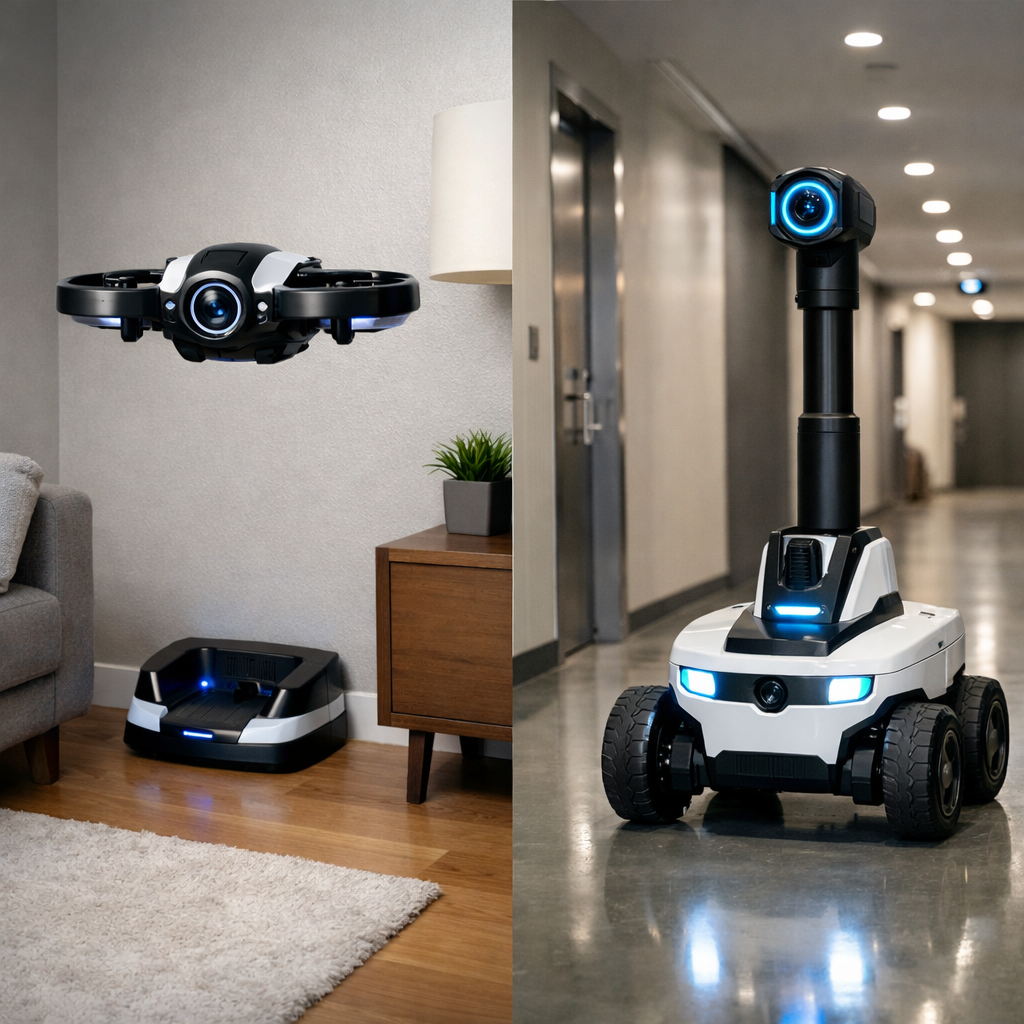
Ring, now a robotics contender under Amazon’s umbrella, just announced two security-first machines: a home drone called the Ring Drone Cam, and a business-focused patrol robot dubbed Ring Rover Cam. This move marks Ring’s entry into automated surveillance beyond its signature doorbell cameras.
Ring Drone Cam: A Flying Watchdog for Your House
The first of the pair, the Ring Drone Cam, is built to glide through your living spaces. When sensors—like a door or window alarm—are triggered, or on a schedule you set, this drone springs into action. It flies from room to room, recording video in 2K resolution, and is equipped with LED lighting so it can watch through low-light conditions. Docked when inactive, it integrates with Ring’s broader ecosystem and can even respond to alerts.
Ring Rover Cam: On-Patrol Security for the Workplace
The Rover Cam is tailored for business settings. It travels along programmed routes, continuously streaming in 4K resolution via Ring’s mobile app. The surveillance robot detects human presence to start recording, operates a periscope camera to see over obstacles, and enables two-way communication—so you can speak through it, whether to an employee or an intruder.
Backing It All: AI, Privacy & Pricing
Both devices run on Ring’s newly introduced AI Pilot software, which combines vision models, sensors, and cloud processing to map out and navigate their surroundings. The aim is to create an autonomous watchkeeper for both residences and enterprises, using machine-generated schematics to understand layout without prior setup.
As for security measures, Ring claims each device uses its strongest default encryption yet—named TAKE (Throw Away the Key Encryption)—to protect the video feeds. It hasn’t clarified whether local video storage will ever be offered. Ring devices typically rely on cloud storage.
On pricing and release: the Rover Cam will hit the market first—launching on December 16 at a price of $1,000. The Drone Cam will follow early next year, with a planned January 27 release and a $270 sticker.
Why This Matters
Ring’s push into mobile, autonomous securitybots is part of a growing trend toward surveillance powered by robotics and AI. Previous Amazon efforts—like the Astro robot—hinted at this direction but didn’t stick. Meanwhile, privacy concerns have piled up around Ring’s static cameras, especially around police access and lack of transparency. These new devices raise those stakes, since a flying camera that patrols your hallways may intensify existing concerns.
What to watch: How Ring handles data storage, who controls access, and whether the AI systems are audited or restricted. These are going to be key in determining whether the benefits of roaming surveillance outweigh the risks—and how consumers and regulators respond.