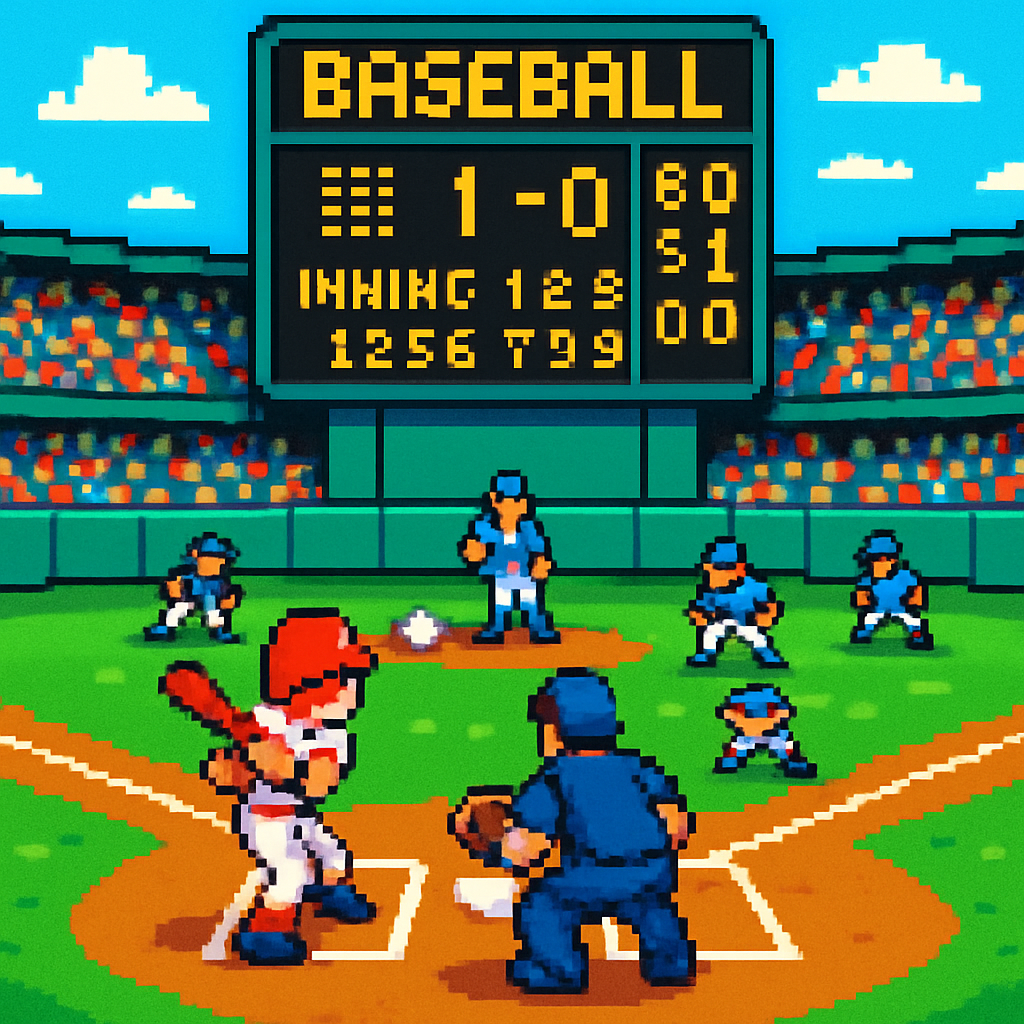
Baseball enthusiasts and retro gaming fans alike have a new platform to explore: Ribbie, a website that converts live Major League Baseball (MLB) data into animated, 8-bit style broadcasts reminiscent of classic arcade games.
Eric Brownrout, the creator of Ribbie, was inspired by the wealth of baseball statistics available to fans. However, he found traditional platforms like ESPN’s Gamecast lacking in engagement. This led him to develop Ribbie, aiming to present game data in a more visually captivating manner.
The concept for Ribbie emerged when Brownrout designed a pixel-art image of Phillies player Kyle Schwarber for his fantasy baseball team’s logo. This sparked the idea of applying pixel art aesthetics to data visualization tools. Discovering MLB’s public StatsAPI, he realized he could recreate entire baseball games in this nostalgic format.
Utilizing tools like Claude Code and Codex, Brownrout expedited the development process, transforming what could have been a months-long project into a functional platform within a few weekends. Codex facilitated the creation of image and sprite generation workflows, while Claude Code assisted in web app development. Notably, this was Brownrout’s first venture into video game development.
Upon visiting Ribbie, users are greeted with a pixel-art living room interface displaying ongoing MLB games. They can select a game to “watch” through Ribbie’s unique presentation. For those preferring a more streamlined view, there’s an option to zoom in and focus solely on the game screen.
Unlike conventional play-by-play applications such as ESPN’s Gamecast or MLB’s Gameday, which prioritize straightforward information delivery, Ribbie emphasizes aesthetics. It offers distinctive pixel-art depictions of each stadium and player, while still providing essential game details like scores, current pitchers, batters, and base runners.
All visualizations on Ribbie are powered by data from MLB’s API, ensuring users receive comprehensive information comparable to other platforms but presented in a more engaging, descriptive manner. Additionally, Ribbie has introduced support for fantasy baseball, allowing users to add their rosters and monitor active players in real-time.
Brownrout expresses a deep appreciation for the miniature pixel-art stadiums, noting their satisfying appeal. He draws parallels to the allure of games like Stardew Valley, where entire pixelated worlds are encapsulated within the user’s grasp.
In an era where digital experiences often prioritize monetization, passion projects like Ribbie stand out for their genuine enthusiasm and user-centric design. While there are potential legal considerations regarding the use of MLB data, Brownrout references a 2007 court ruling stating that baseball statistics are factual and not subject to copyright. This precedent has allowed various fantasy baseball products to operate without explicit MLB permission. He emphasizes that Ribbie is a free, non-commercial endeavor, clearly presented as an unaffiliated fan project—a tribute to baseball rather than a competitor to official MLB services.
Despite his commitments as the co-founder of AI SaaS platform Frigade, Brownrout continues to enhance Ribbie. Future updates include adding sound effects and more comprehensive animations to facilitate passive game following. His dedication is evident, as he recounts recording multiple takes of game-related audio on his iPhone to enrich Ribbie’s auditory experience.
Ribbie exemplifies how innovative technology can breathe new life into traditional sports viewing, merging nostalgia with modern data visualization to create a unique and engaging fan experience.