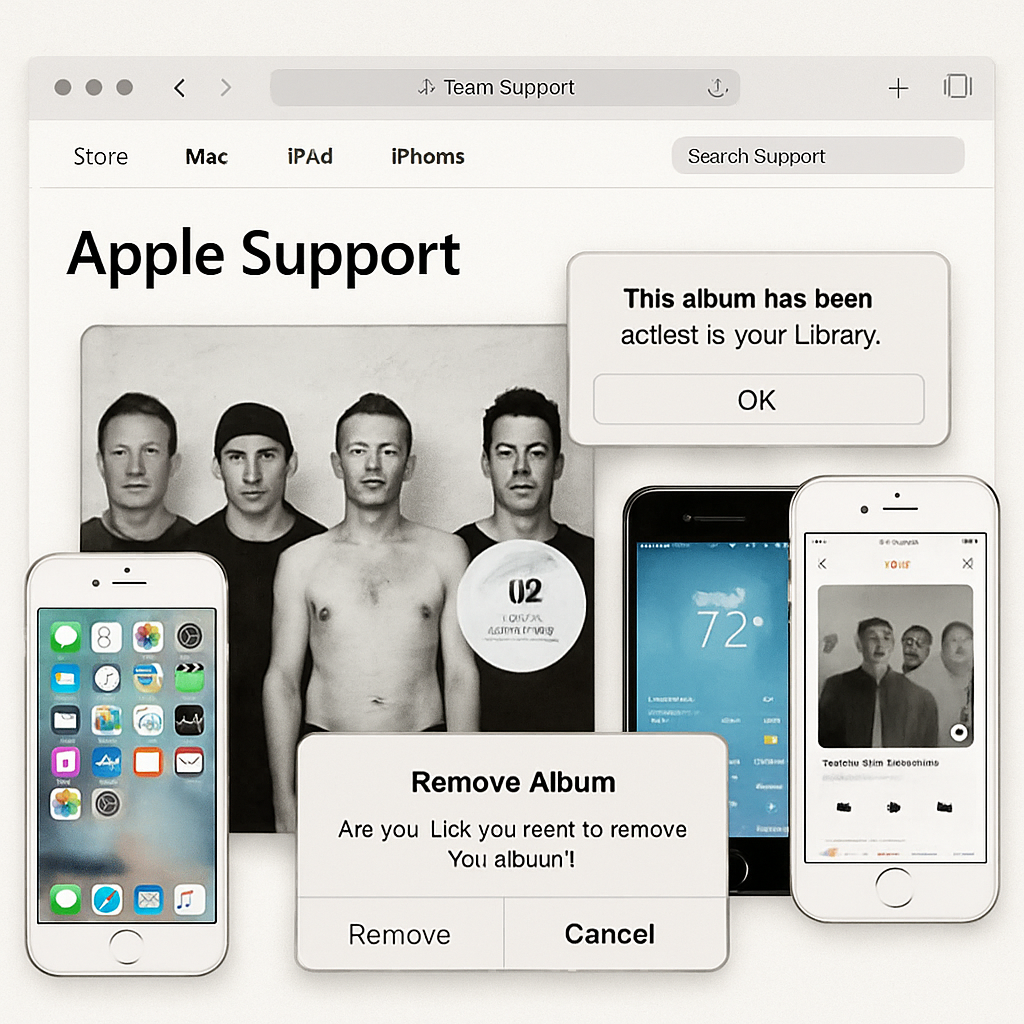
On September 15, 2014, Apple issued a support tool to remove the U2 album “Songs of Innocence” from users’ iTunes libraries — an album that had been automatically added to every iTunes account without explicit consent earlier that week. Today marks the 12th anniversary of that unusual reversal, still one of Apple’s most talked-about support moves.
The Album That Apple Gave — and the Backlash
At its iPhone 6 launch event on September 9, 2014, Apple announced that U2’s then-new album, “Songs of Innocence,” would be gifted to all iTunes users. The record was linked directly to accounts, and if devices were set to download automatically, the album appeared in libraries without any action on the user’s part. The rollout generated frustration among users who didn’t want it, and many saw the move as invasive.
The backlash was swift. Within six days, Apple had to respond. On September 15, the company released a one-click removal tool— a support page that let users strip the album from their accounts. For those who regretted doing so, there was a one-month window to download it again, free of charge. Ultimately, about 26 million people downloaded the album during that period.
Aftermath: Tool Gone, Memory Kept
Apple’s removal page eventually went offline, but archives of it are still accessible. Bono, U2’s frontman, publicly apologized about a month after the launch. The site that enabled removal is no longer active, yet its impact lingers in conversations about company policy, digital ownership, and user consent.
“Songs of Innocence” became a case study both for Apple and for the tech industry: how not to give something just because it’s free, especially when many users perceive it as unwanted or intrusive. What started as a promotional stunt transformed into a lesson about power and digital content control.
Apple’s move raises questions still relevant today: What constitutes consent when content is automatically delivered? How transparent should platforms be when pushing media into customer accounts? If users are “given” something, who gets to decide what counts as a gift?
Looking back on this 12-year incident isn’t just about nostalgia — it’s about recognizing missteps in digital policy that continue to echo. In an age of subscriptions, push content, and automatic downloads, the album’s sudden pop-up in user libraries demonstrated how even well-intentioned actions can cross lines. What to watch now: how companies handle consent for bundled media, whether tools for user control are built in from the start, and how reactions like this one have shaped today’s privacy norms.