Five major tech breakdowns earlier this month have sparked concern that something bigger—maybe even AI—might be behind them. But investigations show each was caused by completely separate glitches, not any coordinated AI attack. Now, with intelligence officials warning about AI’s role in future disruptions, experts say we should prepare for a different kind of outage in months to come.
Who reported failures, and what actually happened
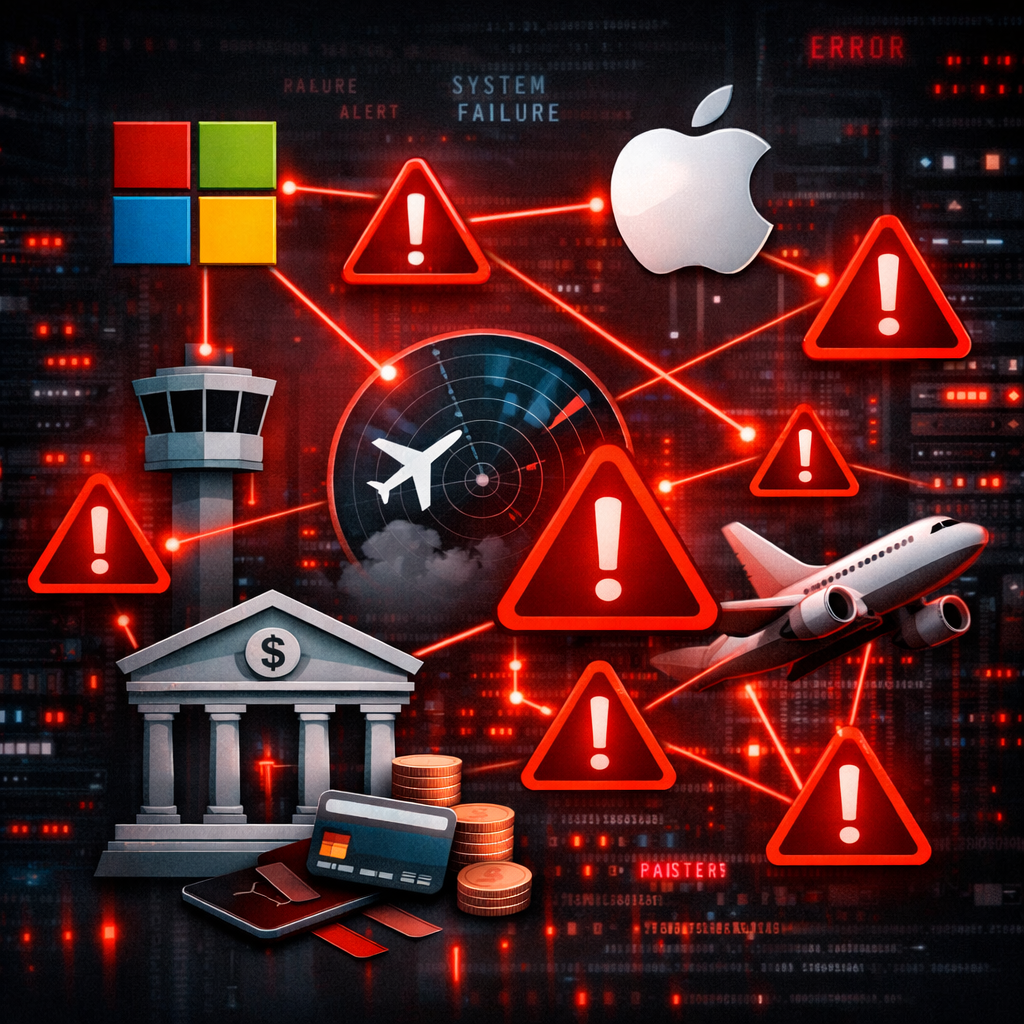
One failure hit Microsoft’s productivity platform when two unrelated internal issues occurred simultaneously, causing widespread service disruption. That was followed by an aviation-wide ground stop in the U.S., triggered by a communication breakdown across air traffic control centers. Shortly after, a software bug in one bank’s system led to chaos—not just within that bank, but also spilling over into other banks involved in its transactions.
That same week, many of Apple’s services went down, along with retail stores being affected. To round off the string, United Airlines suffered a large-scale IT failure that grounded numerous flights. These events deeply affected consumers dependent on the affected services—but they shared nothing in common besides timing.
What this cycle tells us—and what’s ahead
Despite overlapping timing and speculation about foul play or AI involvement, the White House has officially dismissed theories that a hostile AI-powered campaign was behind the incidents.
Yet, the U.S. Director of National Intelligence has provided a stark warning: as AI becomes a more powerful tool for uncovering software vulnerabilities, future outages will likely stem from either bad actors exploiting such flaws or from rushing fixes that introduce new problems. One recent example: a widely used web framework saw major websites go offline after a newly discovered vulnerability caused cascading failures.
In addition to attacks, updating or patching aging systems at speed is another growing risk. Fixes meant to secure software can themselves trigger outages when legacy infrastructure or insufficient testing are involved.
What we saw earlier this month were therefore not signs of an AI-driven assault—but a preview of what might happen if agencies and businesses aren’t ready for the next wave of tech disruption.
Why this matters: AI today is the tool that makes uncovering vulnerabilities faster; tomorrow, it could sharpen both defence and offence. Ensuring uptime won’t just be about avoiding attacks—it will demand robust testing, safer patch processes, and infrastructure investment.