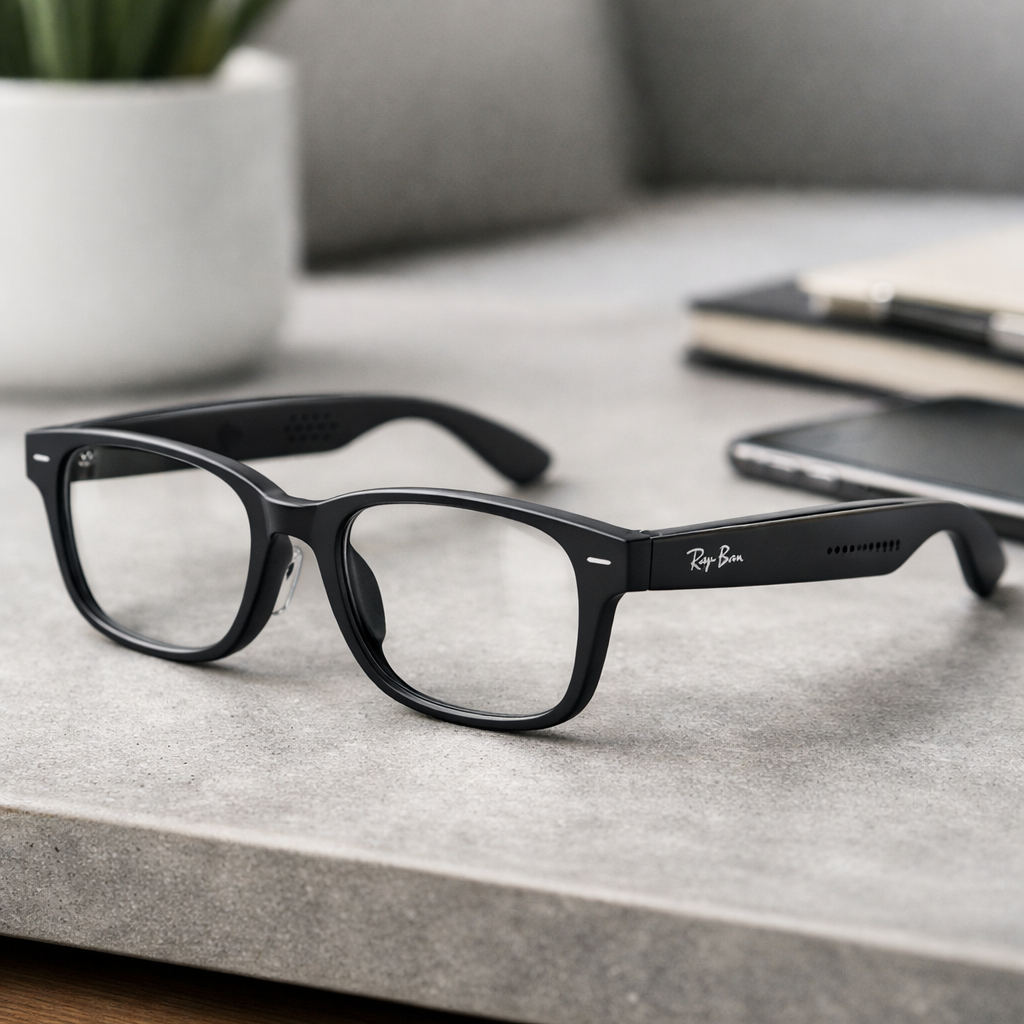
Meta’s latest wearable removes the camera entirely, focusing on audio and AI — and delivers some wins alongside some compromises. The Ray-Ban Meta Audio glasses are an open-ear pair of smart shades built to give you immersive audio, Meta AI access, wider prescription compatibility, lighter weight, and quieter performance than the camera-equipped models — though at a price point that many will find hard to justify.
What you get — and what you give up
These glasses strip out any imaging hardware; there are no cameras onboard, just a six-mic array that handles impressive noise cancellation and audio input. The speakers are identical to other Meta smart glasses, offering rich surround-sound playback that enhances movies and media without resorting to headphones. If your interest lies in calls, music, notifications or just staying connected hands-free with Meta AI (via voice command or a button), Audio delivers solid audio performance. The Frame styles come in Clubmaster and Burbank, each available with an array of lens types — including clear, tinted, polarized, Transitions, and the major virtue: prescriptions between −12 to +6.
On the other hand, you lose things found in Meta’s Gen 3 smart glasses: no camera means no assisted vision features, and key new functionality like the hearing-aid mode is absent — the company has confirmed that feature isn’t supported “for now,” though it may arrive in updates later. The hardware feels streamlined; external controls are limited to a touchpad on the right temple and a small button to wake Meta AI (“Hey, Meta” voice command works too). The Burbank model lacks adjustable nose-pads and drifts toward a stiffer fit compared to the Clubmaster, which earns points for comfort.
Specs, comfort, and value tension
The glasses weigh approximately 44 g — about 10 g lighter than Meta’s camera-equipped smart shades — and use the same case design as the Ray-Ban Meta Gen 2. Battery life gets a healthy boost without camera drain, though specific hours weren’t stated. Still, gaps in the feature set show: the newer processor used in Meta Gen 3 models isn’t in Audio, which restricts some of the more advanced tools.
Ultimately this unit costs $349, putting it on the expensive side for what you get. It includes useful features: strong integration with phone notifications and messaging, excellent surround sound, and a broad prescription range that exceeds the usual −6 limit on Meta’s earlier smart glasses. But high cost combined with reduced functionality — most camera-derived functions are gone — may limit appeal.
Pros:
- Widest prescription range in Meta’s lineup (−12 to +6)
- Clear Meta AI integration; excellent audio and spatial sound
- Lightweight design with premium frame and stylish options
Cons:
- Expense relative to feature set
- No camera — so missing out on vision-based tools and photo capture
- Burbank model’s nose-pads and rigidity detract comfort
The strengths here are obvious: audio performance is excellent, the prescription flexibility opens it up to many who were excluded before, and battery life improves thanks to simpler internals. But the absence of features multiple users expect — like hearing-aid capabilities and camera-based functions — weighs against its hefty price tag.
These glasses are clearly built for those who want Meta AI and open-ear sound without being under surveillance. But if the premium went into design and certain comforts, it also means buying into a platform still evolving. If you get one now, you’re investing in potential future updates more than a full-feature experience today.