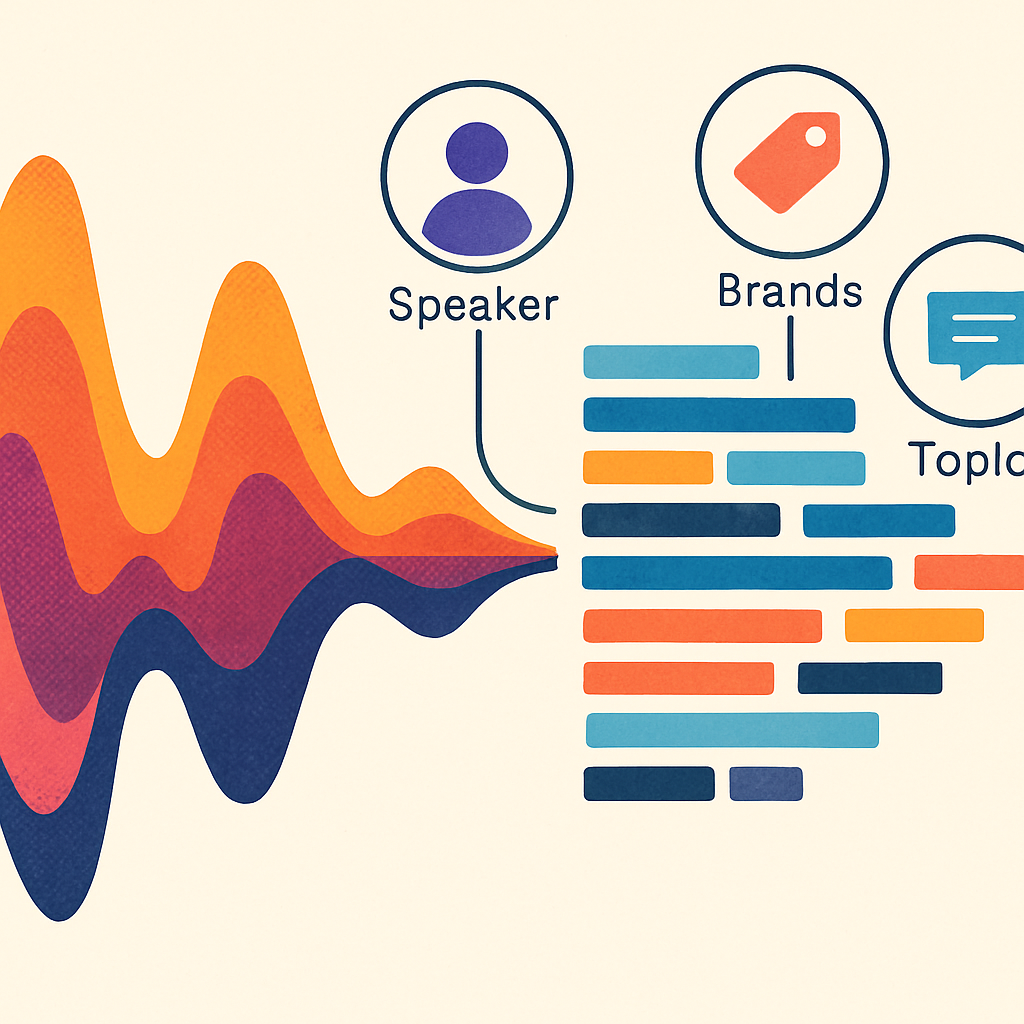
Particle, a startup created by former Twitter engineers, is launching Radar, a tool designed to transform podcasts from audio into structured data intelligible by AI agents. The platform doesn’t just transcribe episodes—it identifies and tags people, brands, topics, and products, making vast podcast libraries searchable and actionable for businesses and agents alike.
Radar functions as a powerful search engine for spoken content. It transcribes more than 130,000 podcasts, including all shows in Apple’s Top 200 across 135 verticals, adding more than 20,000 episodes to its index each day. Alongside full transcripts, it delivers speaker labels and rich metadata to enable pinpoint quotes, tracking of mentions, and context-aware filtering. Users can receive alerts via email, Slack, or webhook when certain entities appear in relevant episodes, and can customize those alerts or searches based on guests, topics, or podcast popularity.
Business Use & API Integration
Radar’s technology has already drawn interest from a variety of paying customers. Hedge funds are leveraging its data for agent-driven insights; journalists, researchers, AI search firms, and data resellers also figure among its early adopters. A key partner is Exa.ai—another provider of search tools for agents—indicating Radar’s centrality in the agent ecosystem.
While Radar offers a web-based interface, its primary value proposition is its API. The API allows agents and platforms to access Radar’s ledger of podcast transcripts and intelligence programmatically, enabling integration into larger systems and workflows. Pricing for the consumer-facing version starts at $29 per seat per month. Businesses can access a plan at $399 per month for up to 20 seats. API users negotiate custom pricing based on scale.
Features & Monetization Paths
Radar offers a variety of tools aimed at different stakeholders. It supports exporting self-contained clips with timestamps for easier consumption, and its metadata enables monitoring of reviews, ratings, sponsorships, and even ad trends. One standout feature is a podcast ads search engine: users can find episodes featuring specific company ads and observe trends over time—an audience metric with clear commercial potential. Other tools promised include brand-suitability scoring, political-bias analysis, and audience size estimations.
Beyond podcast content, the roadmap includes expanding to other audio formats—YouTube videos, news clips, and other spoken-word media are prospective additions. This expansion could multiply use-cases, especially for AI agents that currently lack reliable access to non-text data.
Transforming spoken media into searchable, structured intelligence opens new doors for AI. Radar stands apart by giving agents the ability to ‘see’ (via transcripts and metadata) and act on what they previously could only hear. For hedge funds or companies tracking brand mentions or political context, that’s a leap in what’s possible.
Analytically, Radar’s move highlights how foundational the shift from text to audio intelligence is in the AI ecosystem. As more services offer APIs that absorb spoken content, businesses reliant on traditional text crawling risk falling behind. The questions to watch: how well Radar handles audio accuracy at scale, how it addresses bias or misidentification in transcripts, and how it protects privacy—while its utility is clear, its trust will hinge on rigorous, transparent implementation.