In the burgeoning market of AI-driven note-taking devices, Pocket has emerged as a notable contender. The company recently secured $11 million in funding from investors including Accel, Y Combinator, and ElevenLabs CEO Mati Staniszewski. This investment aims to bolster Pocket’s mission to enhance real-world conversation recording and transcription.
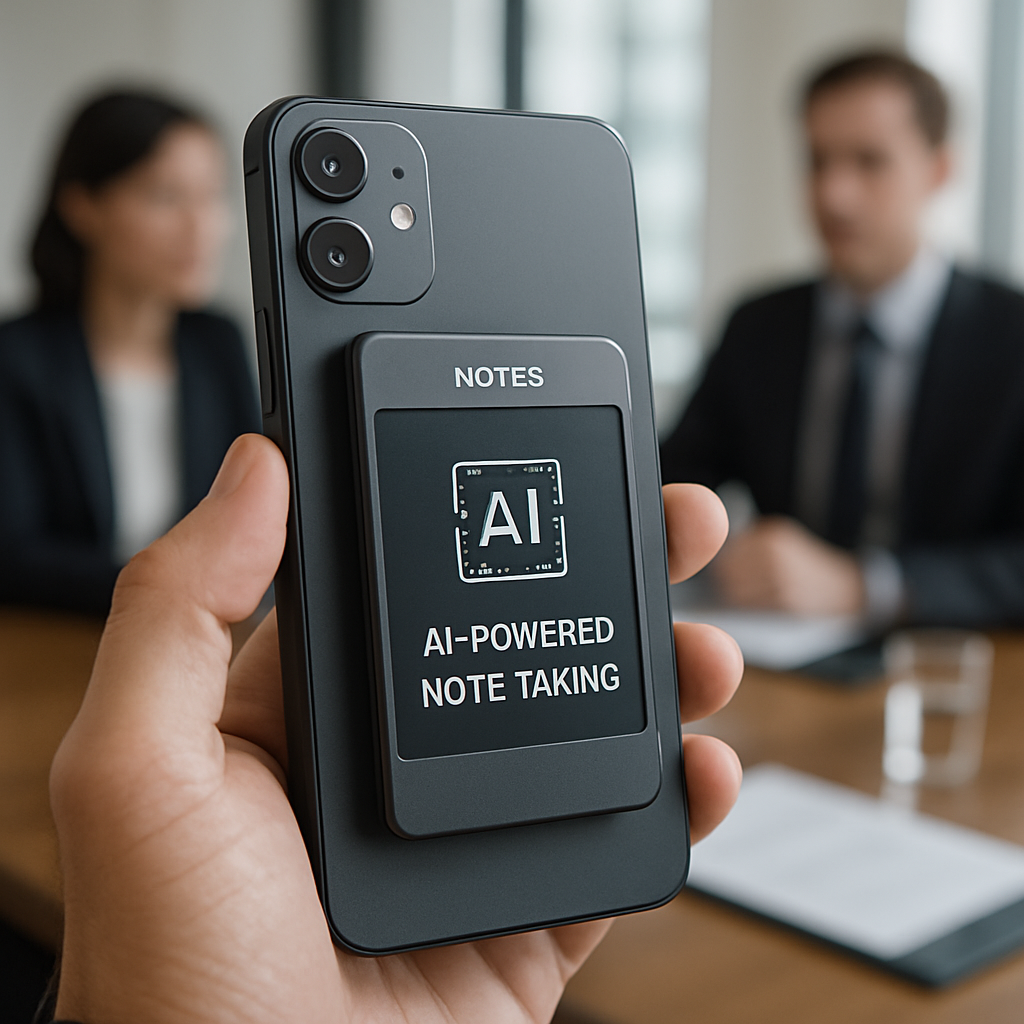
Pocket offers a $129 credit card-sized device that attaches to the back of a smartphone. This gadget enables users to record and transcribe meetings without the need for a subscription. Since its launch last year, Pocket has sold over 130,000 units, indicating a strong demand for its product.
The device’s functionality is straightforward: users activate the recording feature during meetings, and the device captures and transcribes the conversations. The accompanying mobile application allows users to generate meeting summaries, pose questions to an AI assistant, create mind maps, and format the transcribed text into various templates.
While basic transcription services are included with the device, Pocket offers a premium subscription at $200 per year. This plan provides unlimited AI-generated summaries, enhanced AI assistant interactions, daily highlights, and the ability to attach files.
Accel partner Cecilia Wang highlighted the device’s versatility, noting its utility for professionals such as lawyers, salespeople, doctors, real estate agents, construction workers, and students. She emphasized that the device enables users to remain engaged during meetings without the distraction of manual note-taking, leading to more comprehensive information capture.
Pocket was founded by Akshay Narisetti, a former member of the note-taking startup Omi, and Gabriel Dymowski, who previously established a blockchain-based document management company. Narisetti pointed out that while many note-taking solutions focus on online conversations, Pocket is designed to address the needs of in-person discussions, providing AI with the necessary context that often exists offline.
For enterprise clients, Pocket offers features such as custom workflow management, webhook support, and integration with applications like Google Calendar, OneDrive, Google Drive, Obsidian, Claude, and Cursor. Additionally, the company provides a model context protocol (MCP) server to connect its AI assistant to various databases.
In a competitive landscape that includes companies like Plaud, which has shipped over 2 million AI note-taking devices and achieved more than $100 million in annual recurring revenue, Pocket’s recent funding positions it to further innovate and capture a significant share of the market.
The success of Pocket underscores a growing trend towards specialized hardware solutions that complement software applications, offering users enhanced functionality and convenience. As the demand for efficient and accurate note-taking solutions continues to rise, Pocket’s approach of integrating AI with user-friendly hardware could set a new standard in the industry.