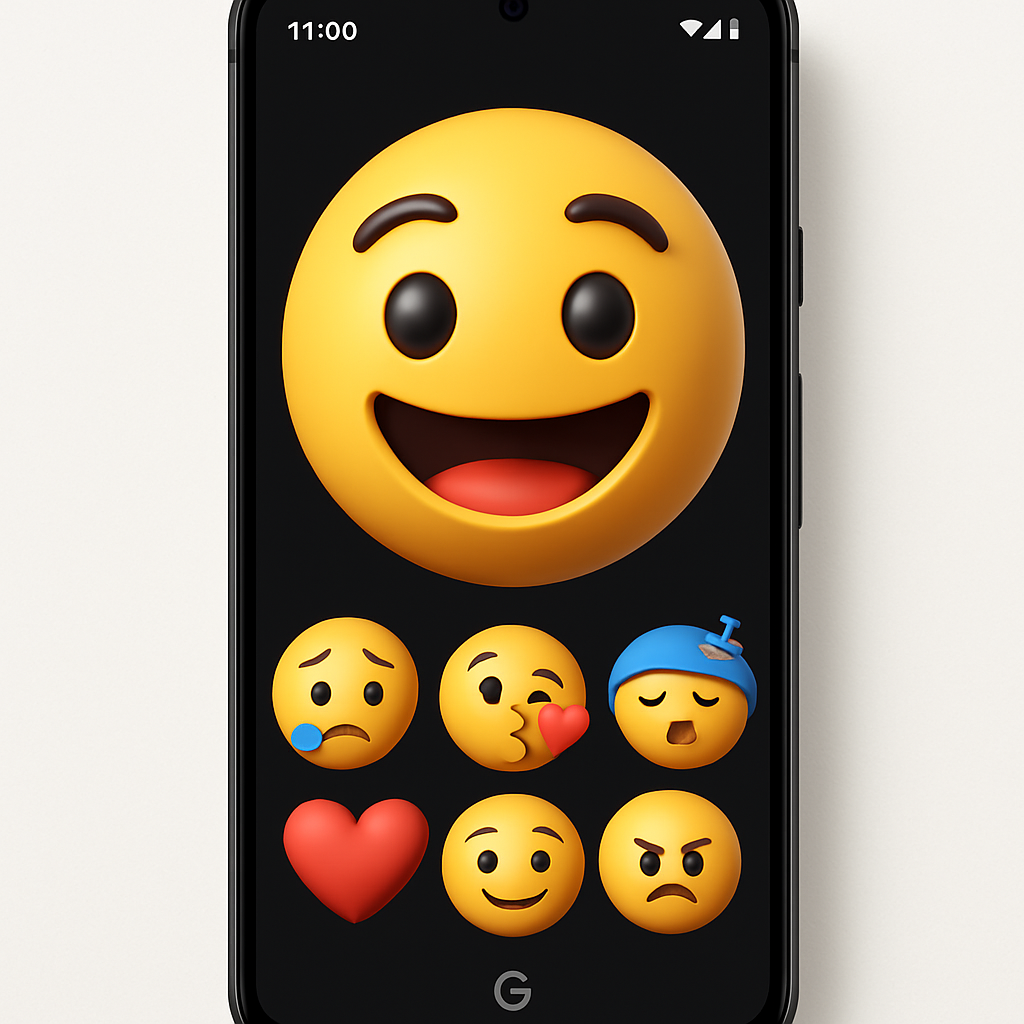
Google’s Pixel 11 series has launched with Android 17’s new 3D emoji, marking a significant shift in the platform’s visual language. This redesign adds depth and dimension to the existing emoji set, moving away from the previous flat designs.
Initially unveiled in May, the 3D emoji were developed to bring a more lifelike and expressive quality to digital communication. Contrary to some assumptions, these designs were meticulously crafted by human designers and are not AI-generated. The goal was to infuse the emoji with a sense of physicality and presence, enhancing user engagement.
While the Pixel 11 series comes preloaded with these updated emoji, older Pixel devices running Android 17 have yet to receive the new designs. However, an update is expected to roll out soon to extend this feature to earlier models.
It’s worth noting that the “Emoji Kitchen,” Google’s feature for creating custom emoji combinations, has not yet adopted the 3D style. Given the extensive library of custom stickers, a significant update will be required to align this feature with the new aesthetic.
As users begin to experience these 3D emoji, reactions are mixed. Some appreciate the added depth and realism, while others feel the new designs resemble those found on other platforms, potentially diminishing the unique identity of Google’s emoji. This evolution reflects a broader trend in digital communication, where platforms strive for more expressive and engaging visual elements.