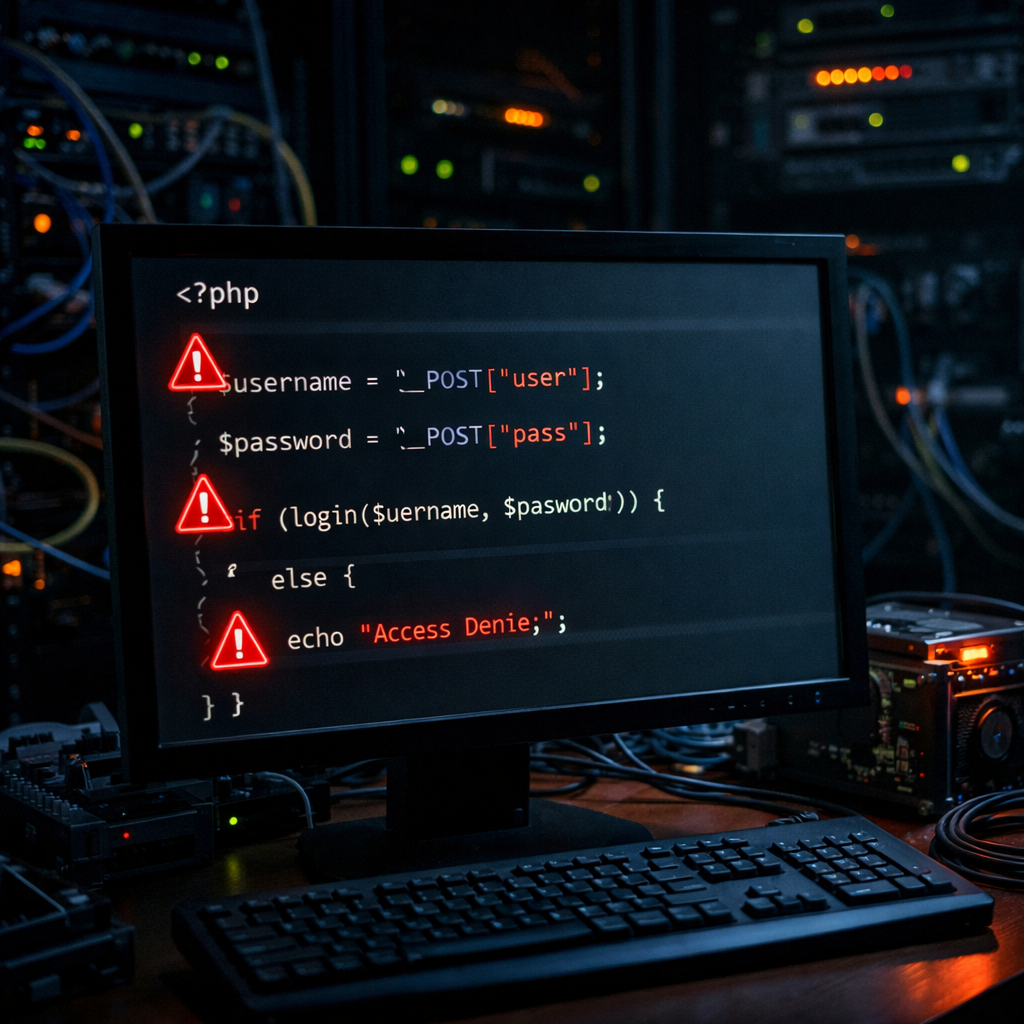
PHP’s core team has issued a high-severity security alert covering every currently supported release. An urgent update is scheduled for November 19, 2026, between 2:00 and 2:30 p.m. UTC. The upcoming patch cycle will tackle multiple vulnerabilities, one of which is classified as CRITICAL. These issues stem not from default installations but rather from rare or customized server configurations.
What’s Known So Far
One of the key vulnerabilities in the upcoming fixes is CVE-2026-115560, which enables remote code execution—but only under specific circumstances. To be exposed, a system must have changed its session serialization handler from a default to either php_binary or php_serialize, then switched back to php using ini_set() right before calling session_start(). Additionally, the system must have session upload progress enabled, which is the default setting in PHP installations. Until the patch rolls out, users are strongly advised to disable session upload progress (set session.upload_progress.enabled=0) and restart PHP workers to fully apply the change.
Background: Recent PHP Vulnerabilities & the Wider Threat Landscape
This latest wave of fixes comes nearly a month after PHP addressed two major flaws, known collectively as PHP2Shell (CVE-2026-109618 & CVE-2026-109619). Those earlier flaws allowed unauthenticated remote attackers to trigger code execution via crafted HTTP requests. These vulnerabilities have seen limited but rising exploitation—particularly targeting public-facing management interfaces from network product vendors and security gateway platforms, with attackers aiming at Active Directory systems and backdoor deployment.
Security research groups also disclosed large-scale discovery of exploit kits, proof-of-concepts, and post-exploitation tools tied to PHP2Shell activity across multiple hosts, as well as discussions among underground actors about the exploits’ real-world applicability. However, cross-deployment reliability remains elusive due to diverse PHP configurations.
Earlier in October 2026, PHP also patched a separate high-severity issue dubbed Brotli/Broccoli2Shell (CVE-2026-111497), involving an out-of-bounds write in the Brotli decoder, which could also lead to arbitrary code execution under specific conditions.
What You Should Do Now
Administrators of PHP-powered systems need to act promptly. If adjusting configuration, disable session upload progress immediately and restart PHP worker processes. Once the official update drops on November 19, apply it across all supported versions of PHP. Monitoring relevant security bulletins and following PHP’s release cycle is critical to staying protected.
Understanding what this means: though these critical flaws require uncommon setups—not typical in default environments—they still pose severe risks for exposed or misconfigured servers. Even minor configuration choices can open doors to full system compromise.