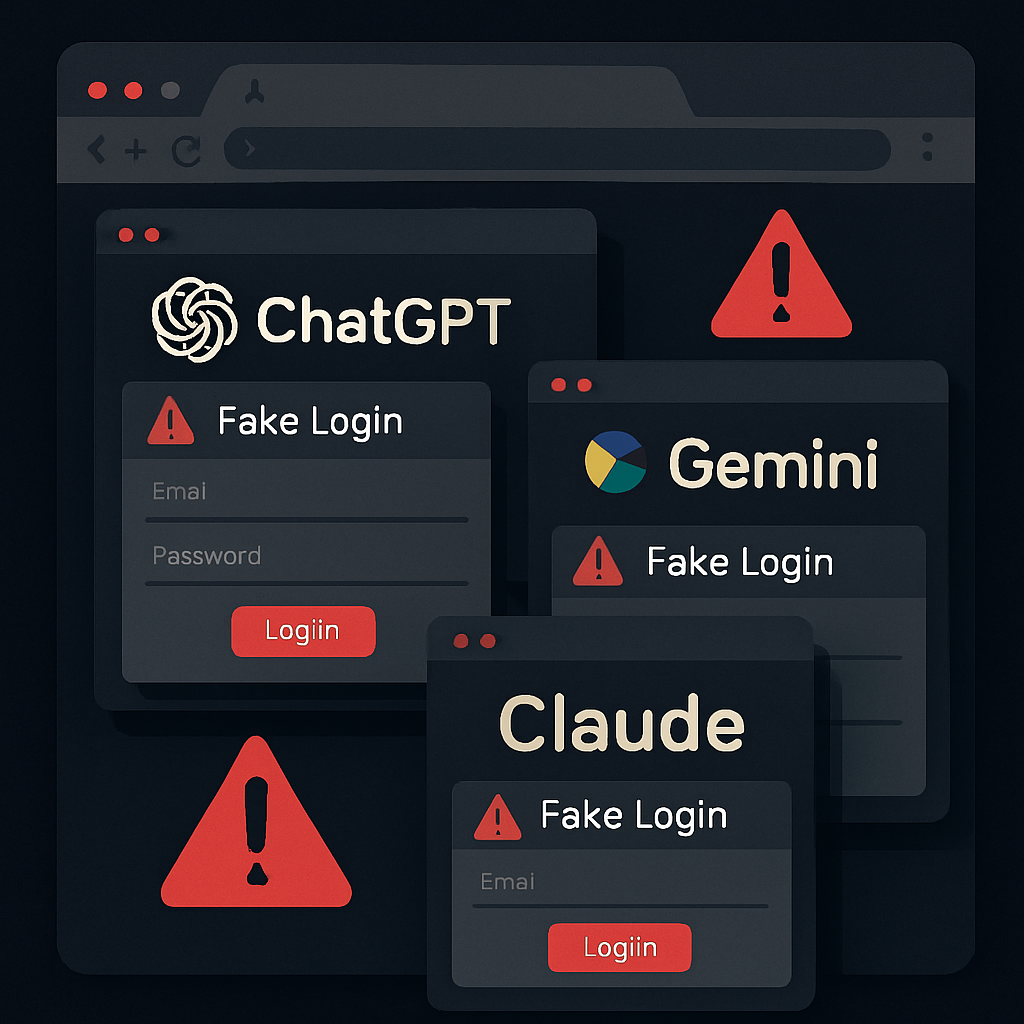
Cybersecurity researchers have uncovered an elaborate phishing campaign mimicking major AI chatbot brands—including ChatGPT, Google Gemini, and Claude—aimed at stealing credentials and multi-factor authentication (MFA) codes using browser-in-the-browser (BitB) techniques. These fake portals, posing as ad tools or agency dashboards, use spoofed login flows to trick users into handing over sensitive information. Known brands targeted also include Meta Muse, Perplexity, and Manus.
How the Attack Works
The scam starts with convincingly designed landing pages that advertise services like campaign optimization, ad account linking, spend audits, or business account connections. These ads are spread via fake invitation emails that impersonate legitimate companies to build a false sense of authenticity. Victims are invited to click a “Connect” button, which then opens a deceptively embedded browser window. The fake window displays trusted URLs, such as accounts.google.com or a legitimate Okta domain, while the real browser is still pointing to the phishing site.
Behind the scenes, every credential attempt is recorded. Devices are fingerprinted and attackers decide which MFA challenge to present. This manipulation enables attackers to collect both login details and MFA codes in real time. One phony site discovered goes by “museads.ai,” launched on September 16, 2026, directly exploiting interest in Meta’s agent “Muse” for ad workflows.
Scope, Infrastructure, and Targets
The campaign is part of a broader platform with multiple fronts. Other themed attacks include fake Google Ads refund claims, payment confirmation pages, and recruitment scams impersonating brands like Tesla, Louis Vuitton, Nike, and Adecco.
All scam sites use a common technical foundation—Next.js and Socket.IO—to manage phishing workflows and opportunistic communication. Notably, earlier versions of the platform had source code exposed via poorly secured public GitHub repos, suggesting sloppy operational security.
The primary victims appear to be agency employees, media buyers, and people who manage ad accounts for third parties. Once attackers capture an account—especially manager-level accounts—they often install their own admin rights, downgrade genuine users, and may take weeks or months for rightful owners to reclaim control. Meanwhile attackers run ads, steal value, or sell access.
Recommendations and Risk Mitigation
Experts recommend organizations enable phishing-resistant authentication wherever possible. Review any changes in ad account controls closely, and treat AI integrations, especially those asking for full access, with skepticism. Users are also urged to verify invitation sources carefully, avoid clicking unfamiliar “Connect” buttons, and scrutinize browser address bars during login flows.
This phishing wave adds to a growing ad-account theft crisis: ad fraud and account compromise have become popular commodity crimes, with malware like DuckTail and NodeStealer facilitating mass attacks. Even when financial tools used are restored, reputational damage and lost access can have lasting consequences for brands and agencies.
The assault is not due to vulnerabilities in ChatGPT, Gemini, or Google themselves; it exploits legitimate platforms, paid search, and trusted external content to draw users in. Over a three-month monitoring period ending August 2026, researchers logged about 850 phishing landings tied to paid ads.
The urgency here is clear: as attackers align phishing campaigns with the latest AI products, even cautious users can be at risk. These tactics work by combining technical trickery with psychological credibility.