The pgAdmin Development Team has announced the release of pgAdmin 4 version 9.16, introducing a series of new features, bug fixes, and crucial security updates to enhance the widely utilized PostgreSQL management platform.
This latest version addresses 64 bugs and resolves seven security vulnerabilities, identified as CVE-2026-12044 through CVE-2026-12050. Given pgAdmin’s prominence as an open-source graphical tool for PostgreSQL database management, these security enhancements are particularly significant for enterprise and cloud environments where the platform is extensively employed for administrative tasks.
Key Security Fixes
A notable vulnerability, CVE-2026-12044, involved SQL injection risks across sixteen dialog templates due to improper handling of user inputs. This issue has been rectified by adopting safer query handling methods and implementing proper casting mechanisms.
Another critical flaw, CVE-2026-12045, pertained to the AI Assistant feature, where attackers could bypass read-only transaction restrictions through prompt injection. This could potentially lead to remote code execution via PostgreSQL’s “COPY TO PROGRAM” capability when connected with elevated privileges. The update has effectively mitigated this risk.
Authentication and access control weaknesses were also addressed. CVE-2026-12046 exposed two SQL Editor endpoints lacking proper authentication checks, allowing unauthorized access and posing deserialization risks. The fix ensures that all endpoints now enforce necessary login validations.
Client-side vulnerabilities have been resolved as well. CVE-2026-12048, a stored cross-site scripting issue, allowed malicious scripts embedded in PostgreSQL error messages or query plans to execute within the pgAdmin interface, potentially leading to credential theft and unauthorized database operations. Additionally, CVE-2026-12047 fixed an HTML injection issue in cloud deployment integrations where unsanitized SDK error messages were rendered in the browser.
Further, the release addresses an open redirect vulnerability in multi-factor authentication flows (CVE-2026-12049) and another SQL injection flaw in the restore point functionality (CVE-2026-12050), both of which allowed user input to be inserted into SQL queries without proper parameterization.
New Features and Enhancements
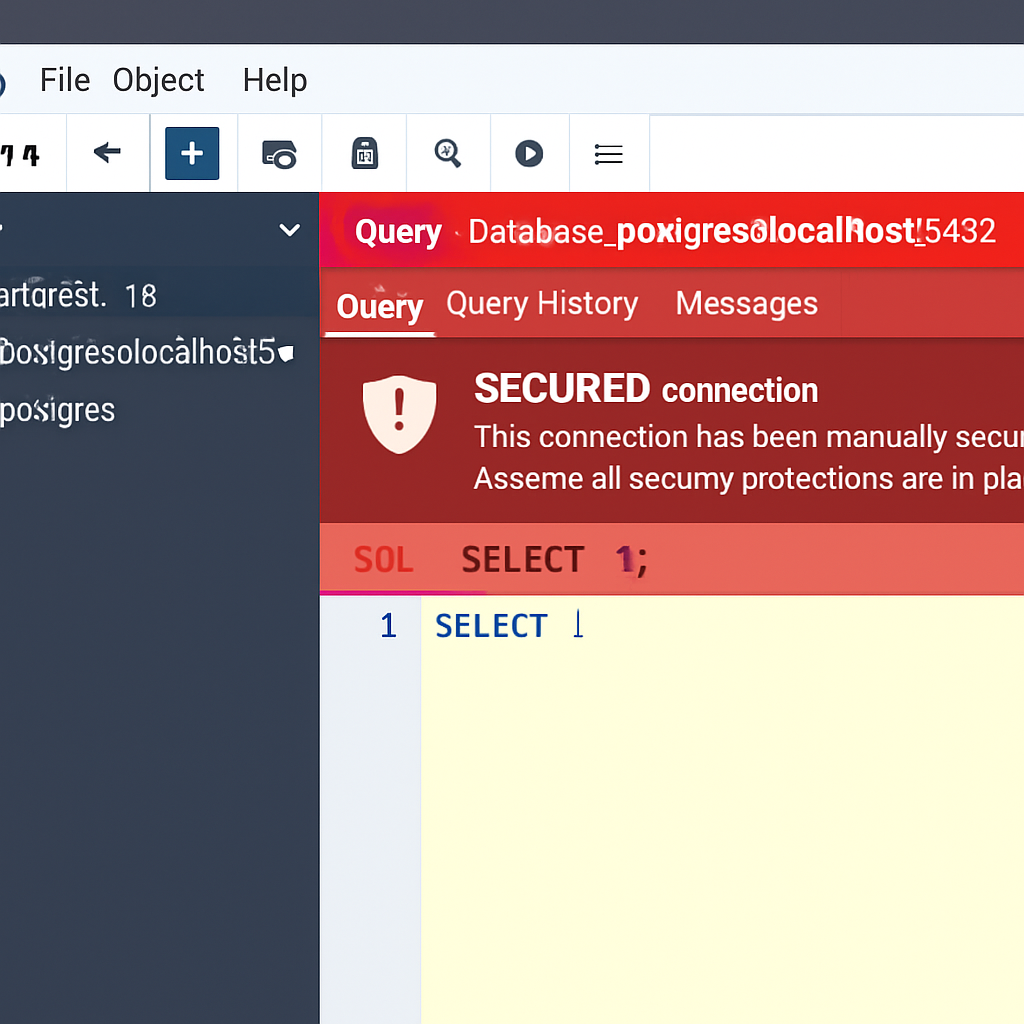
Beyond security improvements, pgAdmin 4 v9.16 introduces several usability enhancements. Users can now colorize panel and tab headers based on the connected server, facilitating more intuitive multi-server management. A middle-click tab-closing feature has been added, along with improvements to OAuth2 login customization and password reset navigation.
Additional updates include support for new PostgreSQL storage parameters, enhancements to JSON handling, and dependency upgrades, including Electron 42.3.3 and updated cryptography libraries. The Helm chart now allows configurable container security contexts, improving deployment flexibility in Kubernetes environments.
The release also enforces stricter access controls by removing a previously identified administrator role bypass and aligns SQL templates with PostgreSQL 14, the oldest supported version.
With these comprehensive updates, pgAdmin 4 v9.16 not only fortifies the platform against potential security threats but also enhances user experience and deployment flexibility, reinforcing its position as a leading tool for PostgreSQL database management.