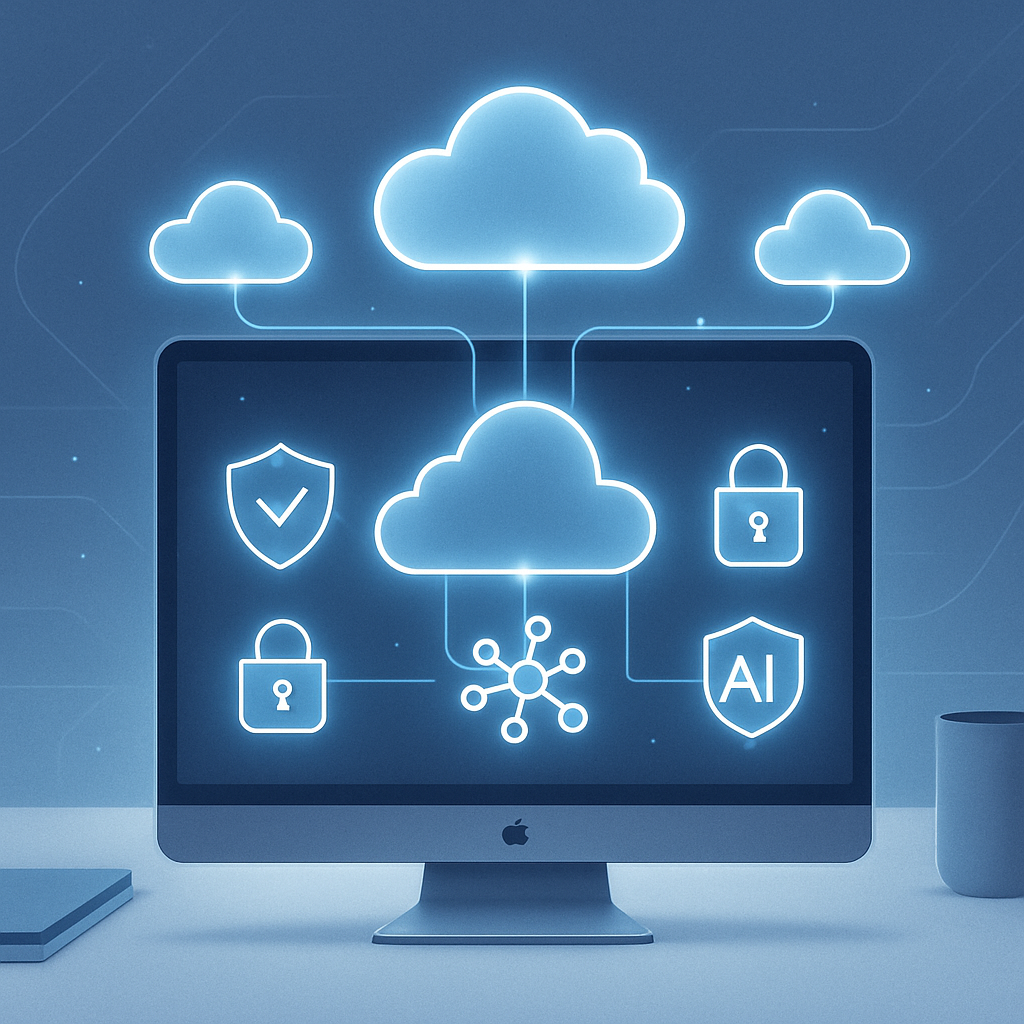
Perplexity has unveiled “Hybrid Compute,” a new privacy-focused AI capability for its Mac app that blends local and cloud models to safeguard sensitive data. The update, available starting today, was first teased in June; it’s designed to split AI tasks between remote servers and the user’s Mac to better handle private content.
How Hybrid Compute operates
This feature begins by initiating tasks in the cloud. If the task requires access to private files or involves personal data—such as names, addresses, or account numbers—it shifts operations to a model running locally on the Mac. To prevent sensitive information from ever leaving the machine improperly, Perplexity’s on-device PII (personally identifiable information) classifier scans each task ahead of transmission. Identified items are replaced with placeholders before being sent to the cloud, and reinstated once results return.
The local component leverages the PPLX Qwen 3.8 27B model, which users can download with a click. This setup requires macOS 15 or later and runs only on Apple silicon Macs with a minimum of 24 GB unified memory; 32 GB is recommended for smooth performance.
Why this matters now
The hybrid approach aligns with growing concern over data privacy in AI workflows. Keeping sensitive portions of tasks on-device helps reduce exposure to cloud vulnerabilities, while retaining the benefits of cloud-based processing for less sensitive operations. By open-sourcing its PII classifier—built in collaboration with its Secure Intelligence Institute—Perplexity also allows outside review and potential improvement of its privacy architecture.
This update also builds on Perplexity’s recent investments in deepening its Mac presence. Earlier this year the company rolled out a redesigned Mac app, and Apple itself flagged Perplexity’s “Personal Computer” offering as a highlight for its M6 Mac mini launch.
For many users, this means they can trigger AI tasks from an iPhone and trust that any sensitive processing—say, file analysis or personal data—is handled safely on their Mac without cloud reliance. Crucially, the local model works without needing API keys or cloud credits, streamlining usage.
In short: Perplexity’s Hybrid Compute gives Mac users a stronger privacy guarantee, enabling them to make full use of powerful AI tools without compromising sensitive information.
Analytical Takeaway: With Hybrid Compute, Perplexity joins a trend where AI platforms increasingly push privacy-sensitive workloads to local hardware. As Apple’s own chip advancements expand what Macs can do locally, this kind of split model may become the baseline expectation. Going forward, it’ll be critical to watch how performance scales, how clear the privacy protections really are under real-world use, and whether more apps follow this hybrid architecture—or whether cloud-first models still dominate.