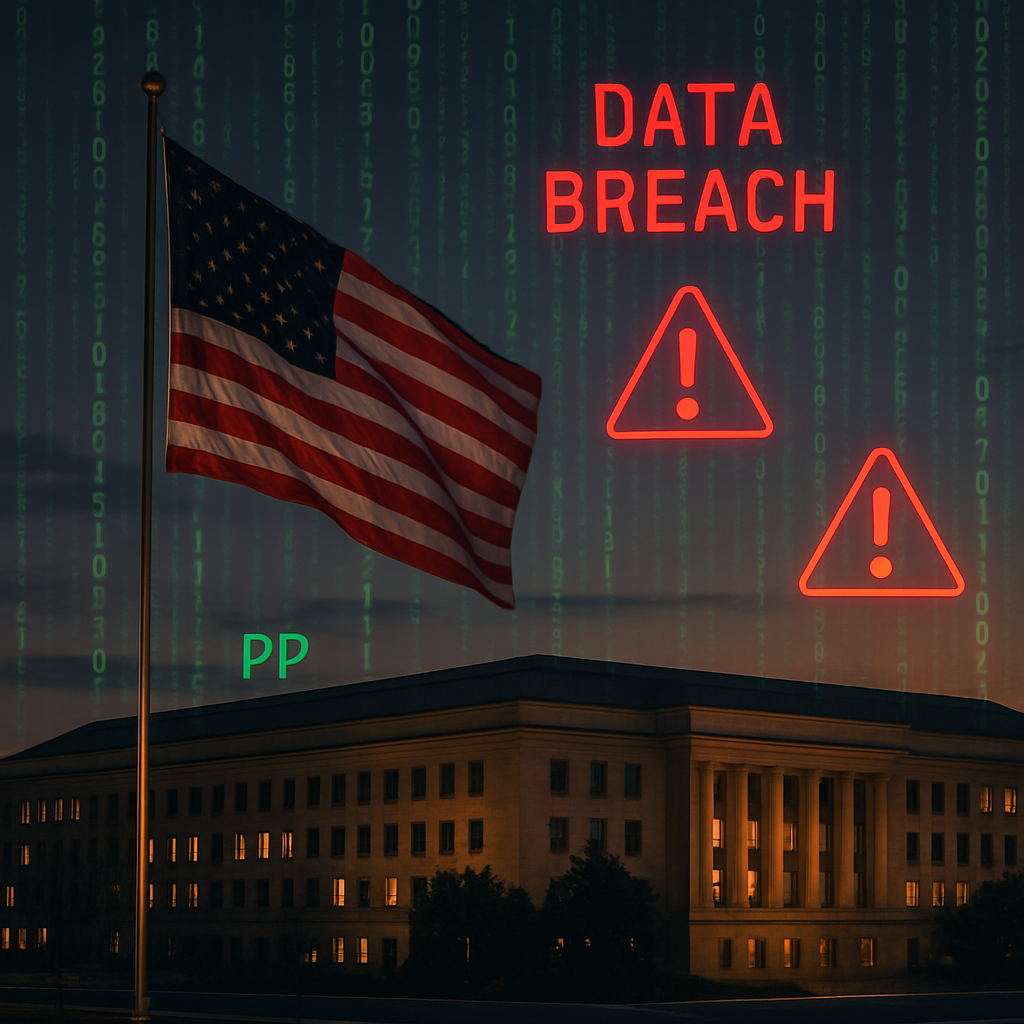
The Department of Defense has confirmed a major security breach within its Defense Manpower Data Center (DMDC), resulting in the exposure of sensitive personal data for more than three million people. Roughly 2.76 million of those affected are alive; about 294,000 are deceased.
What Happened
The breach stemmed from unauthorized access between October 2025 and July 2026. Attackers exploited a vulnerability in a file-sharing system, gaining access to files stored on a compromised server. The flaw was discovered and patched on July 16, 2026. Once detected, DMDC activated its incident-response and privacy protection protocols.
What Data Was Exposed
The affected records were unencrypted and included names, Social Security numbers, dates of birth, contact information, sex, race, and military-specific data like occupational specialties. Since DMDC handles personnel information for active and reserve service members, civilian employees, contractors, retirees, veterans, family members, and affiliates, this breach touches many layers of the defense community.
While DMDC holds over 60 million personnel records, officials have confirmed that not all of them were compromised. The breach’s prolonged undetected period—nine months—has raised concerns about the extent of access and what data may have been viewed or harvested during that time.
Risks and Response
No firm evidence so far suggests that stolen data has been misused, but experts warn that once identity attributes like Social Security numbers and birth dates are exposed, the risk persists long term. These details can be leveraged in identity theft, fraud, phishing, or impersonation, especially with military job information, which could be advantageous in counterintelligence or social engineering schemes.
Under the response plan, affected individuals can enroll in a year of free credit monitoring and identity restoration services provided by IDX. Notification letters were sent beginning September 18, urging people to keep tabs on financial accounts, government benefits, reports of military status, and unexpected communications.
Internally, the Pentagon is reviewing and strengthening its cybersecurity measures. Key priorities include ensuring data at rest is encrypted, tightening access controls, implementing continuous monitoring of file access, enhancing anomaly detection, and adopting stricter data-minimization practices.
Definitive assessments of motive, attribution, or operational impact remain pending. No public disclosure has been made regarding who carried out the breach, why, or how deeply the attack penetrated DMDC systems. Accountability and transparency will be necessary to fully understand the national-security implications.
This incident places a spotlight on how critical defense systems store and protect identity and personnel data, and how vulnerabilities—even in non-combat support infrastructure—can pose long-lasting dangers.