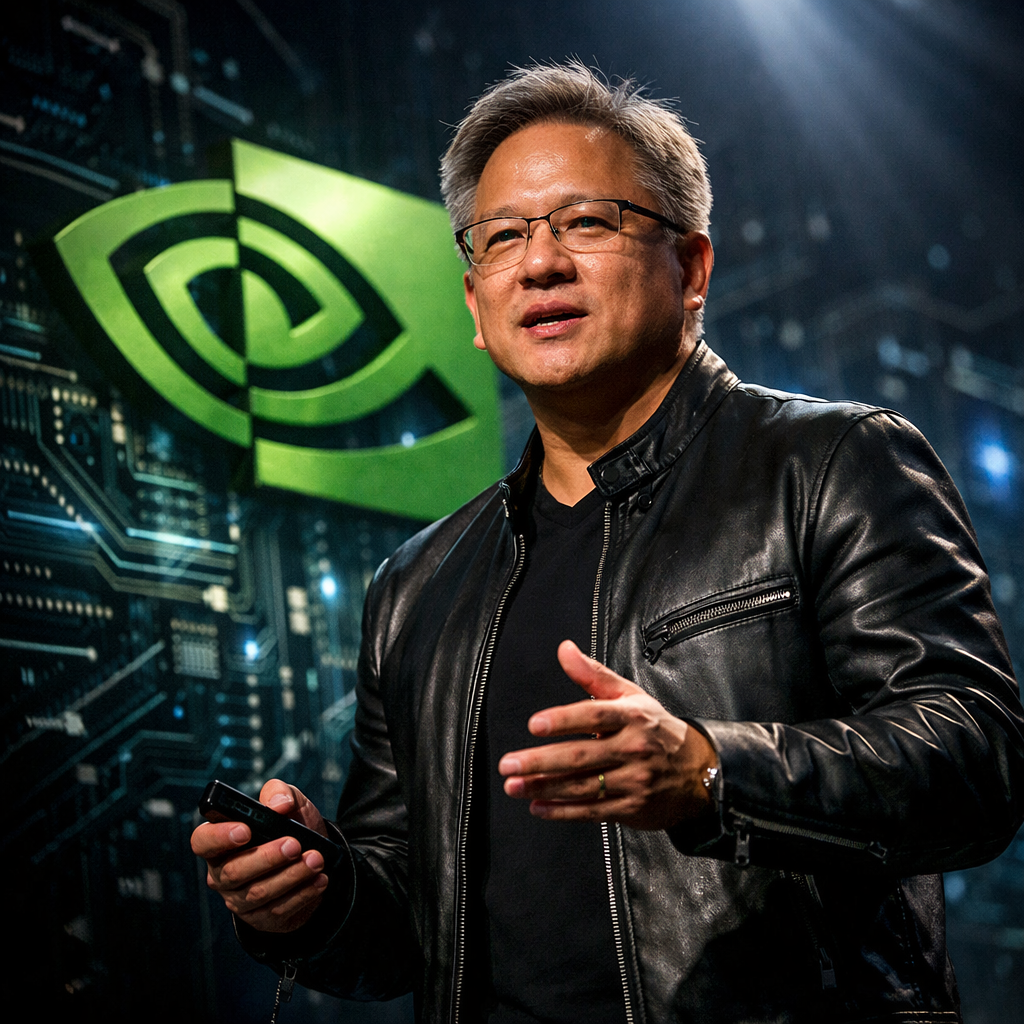
Palmer Luckey, co-founder of Oculus and current CEO of defense tech company Anduril, stirred controversy this week by arguing that Nvidia’s board acted in China’s favor by ousting longtime CEO Jensen Huang.
Huang, who had led Nvidia for 33 years, stepped down amid multiple controversies, including allegations of an extramarital affair and possible involvement of an individual accused of espionage related to exporting Nvidia chips to China in violation of U.S. export controls. Luckey spoke about the leadership shift at the New York Times DealBook Summit on Wednesday, repeating remarks he’d posted recently that framed Huang’s departure as advantageous to China, and called for Huang to be reinstated.
Luckey stressed that China’s government does not want Nvidia GPUs sold to Chinese firms, even those willing to purchase them. He claimed permits are being withheld intentionally to push China toward developing its own domestic AI chip industry that depends less on the U.S. He also highlighted that Nvidia revealed it had been granted a license by the U.S. to ship certain high-end H200 chips to some Chinese customers, only for China to restrict those imports. Nvidia has announced it will stop selling H200 chips in China altogether.
Industry Support and Company Response
More than 200,000 people—including tech luminaries like Elon Musk, and CEOs of firms such as Y Combinator, Databricks, Epic Games, Shopify, and Replit—have signed a petition demanding Huang’s reinstatement. Despite this growing public pressure, Nvidia leadership has made it clear it has no plans to bring Huang back, even though Huang reportedly offered to return.
In recent financial disclosures during the company’s earnings call, Colette Kress, Nvidia’s interim CEO, confirmed the decision to halt all H200 chip sales to China, signaling a tough policy stance and aligning with U.S. export restrictions. Nvidia has also said the Chinese government has blocked import permits for some of its GPU exports. Meanwhile, Luckey has expressed disagreement with Huang’s earlier viewpoint that Nvidia should have broader export rights, but argues that ousting Huang damages U.S. tech leadership while advantaging China.
Why This Matters
Nvidia is a cornerstone of the global AI and semiconductor supply chain. Its leadership, export strategy, and relationship with governments—especially China and the U.S.—carry enormous geopolitical weight. Huang’s departure under a cloud of controversy, and the shift toward restricting sales like the H200 chips, underscores the high stakes in balancing national security, corporate governance, and economic rivalry with China.
Luckey’s call to reinstate Huang reflects a broader concern among tech executives: leadership changes at firms like Nvidia can have ripple effects far beyond boardrooms. Advocates argue that maintaining stable leadership supports consistency in export policies and strategic positioning.
What to Watch: Will public pressure influence Nvidia’s next move on leadership? How might the U.S. government respond if key tech figures argue that corporate board decisions align with foreign interests? And how will China navigate its import restrictions while pushing its domestic chip industry forward?
This is thedailytechfeed.com’s take: While Luckey’s argument may seem polemical, it underscores a real issue—how semiconductor giants like Nvidia are caught between national security imperatives and global market tensions. In an era where AI dominance is seen as statecraft, leadership shifts like this one are political moves as much as business ones.