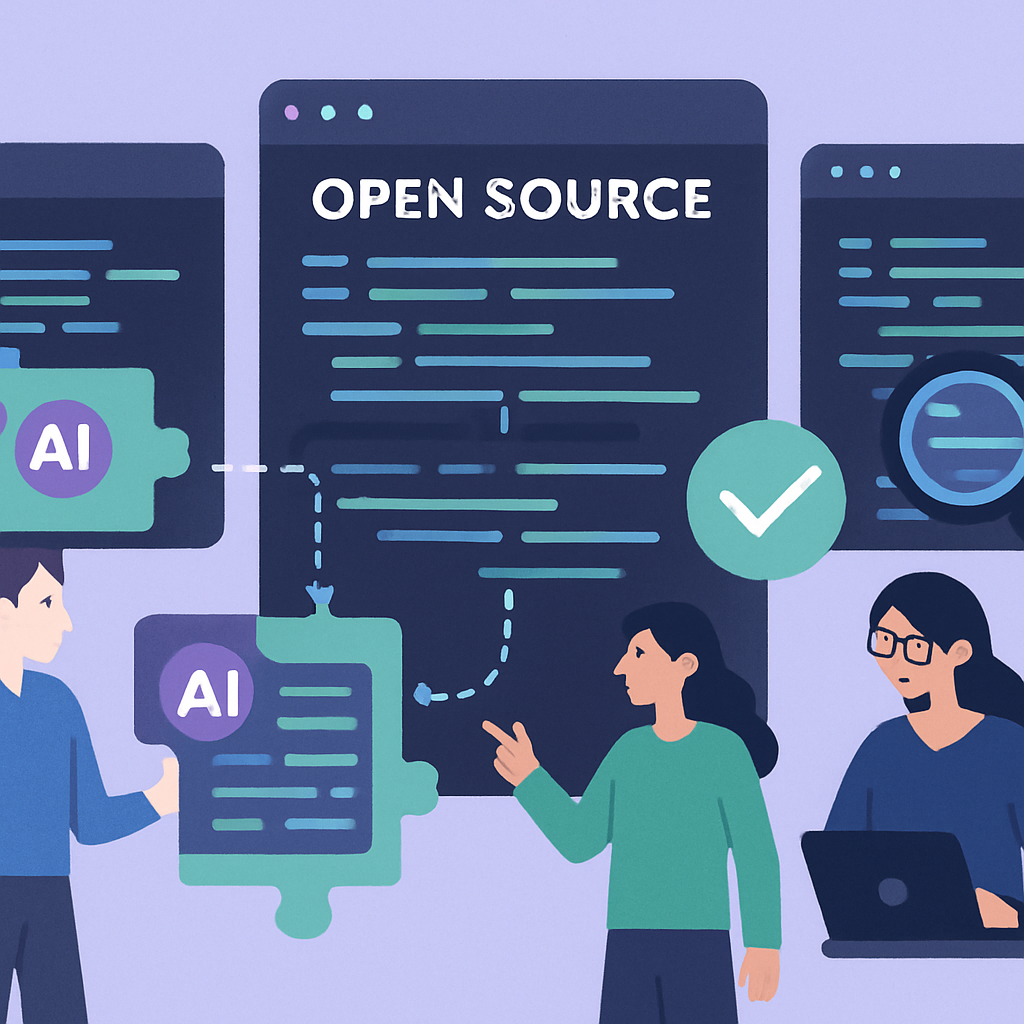
The Open Web Application Security Project (OWASP) has launched a fresh initiative called the Open Automated Security Initiative for Software (OASIS), aimed at closing the gap between discovering and fixing vulnerabilities in open source code. Announced on August 26, 2026, in San Francisco, the project combines AI-generated patch suggestions with human validation, offering open source maintainers actual fixes—not just lists of issues.
Open source software is foundational: an estimated 98% of commercial codebases draw on it. Despite this reliance, maintainers find themselves inundated by vulnerability scanning tools that identify flaws without offering practical remediation. OASIS tackles this problem by introducing a three-stage process designed to streamline patch creation and delivery.
How OASIS Works
First, automated tools scan popular open source repositories and generate candidate patches when vulnerabilities are detected. These AI-produced suggestions provide the initial blueprint for remediation.
Next, a global community of application security professionals—AppSec practitioners and validation agents—steps in. Their job is to vet each candidate for safety and correctness, dramatically compressing what traditionally has been a lengthy review process down to mere minutes.
Finally, once patches are reviewed and approved, they are submitted upstream to the code maintainers. This gives maintainers high-quality, ready-to-merge patches they can integrate quickly, saving them from building fixes from scratch.
Why This Matters Now
The initiative launches at a time when attackers are accelerating their efforts, using automated tools and even AI to discover—and exploit—vulnerabilities at unprecedented speed. These trends mean that organizations running open source dependencies are exposed to fast-moving risk.
OASIS is backed by founding sponsors AppSecAI, Intigriti, and DryRun Security. These organizations aim to empower security experts with code review experience, enabling a low-friction path to contribute improvements—not just point out problems. As one sponsor put it, OASIS gives professionals a credible way to help build secure software rather than just flag it up.
This initiative is meant to complement existing efforts like OpenAI’s Patch the Planet, the Linux Foundation’s Akrites, and Anthropic’s Project Glasswing. Those programs tend to focus on high-impact infrastructure, such as browsers and operating systems. OASIS, in contrast, aims to tackle the “long tail”—the smaller libraries and utilities that are widely used but often undermaintained—and thus covers far more of the code that enterprises rely upon.
Participation is open. Roles include vulnerability validators, repository community managers, maintainer liaisons, and automation operators. The goal: create a vendor-neutral platform for security practitioners who want to reduce risk at scale across the open source ecosystem.
At a time when bad actors increasingly leverage AI and automation to escalate attacks, OASIS offers a countermeasure: harnessing those same technologies to build defenses—but with human oversight and collaboration. This could reshape how open source security is handled, especially when even a single upstream patch can safeguard thousands of downstream projects. What to watch: how quickly OASIS scales its validations, the diversity and trustworthiness of its validator community, and whether maintainers adopt AI-suggested fixes at scale—or reject them due to quality concerns. If it succeeds, this could mark a turning point in the race between automated attacks and automated defenses.