Ouster’s Revolutionary Color Lidar: Merging Vision and Depth for Autonomous Systems
In a groundbreaking development poised to transform autonomous technology, San Francisco-based Ouster has unveiled its latest innovation: the Rev8 series of lidar sensors. These advanced sensors integrate high-resolution color imaging with precise three-dimensional depth perception, effectively combining the functionalities of traditional cameras and lidar into a single, cohesive unit.
For years, the tech industry has grappled with the challenge of integrating multiple sensors—cameras for color imagery and lidar for depth information—to enable machines to perceive and navigate their environments accurately. This dual-sensor approach often led to complex calibration processes and increased system costs. Ouster’s Rev8 series addresses these issues by delivering native color lidar, a technology that simultaneously captures color images and depth data, streamlining sensor fusion and enhancing performance.
Angus Pacala, CEO of Ouster, emphasized the significance of this innovation, describing it as the holy grail for roboticists. He highlighted the inefficiencies of traditional methods, where separate sensors required extensive calibration and data fusion efforts. The goal is to obviate cameras, Pacala stated, underscoring the potential of a unified sensor system.
The introduction of the Rev8 lineup comes at a pivotal moment in the lidar industry, marked by significant consolidation and technological advancements. Ouster’s recent acquisition of Velodyne and the bankruptcy-driven asset acquisition of Luminar reflect a rapidly evolving market landscape. Simultaneously, the demand for sophisticated sensors is surging, driven by the expansion of autonomous vehicles and robotics. Companies like Waymo are scaling their robotaxi operations, while robotics firms are attracting substantial investments to enhance machine perception capabilities.
Ouster’s collaboration with industry leaders such as Fujifilm and DXOMARK has been instrumental in developing the Rev8 sensors. By leveraging expertise in imaging science, Ouster has created sensors that not only match but, in some aspects, surpass the performance of modern cameras. The Rev8 sensors boast 48-bit color depth, a dynamic range of 116 dB, and megapixel resolution, delivering high-quality colorized 3D point clouds. This integration allows for versatile data streams, enabling users to access lidar data, camera data, or a pre-fused combination, depending on their specific requirements.
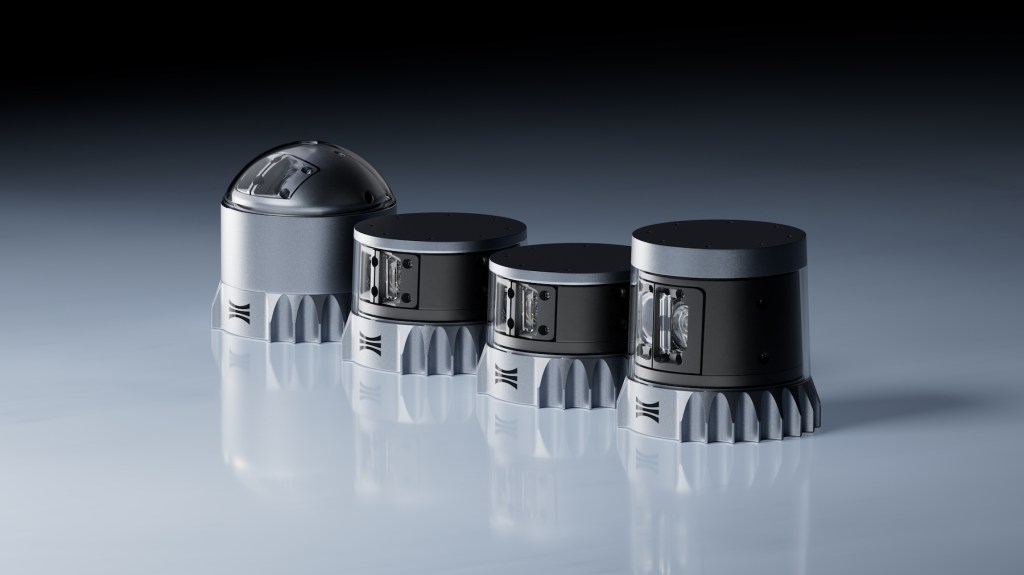
Central to the Rev8’s capabilities is Ouster’s digital lidar architecture, which utilizes single photon avalanche diode (SPAD) detectors on custom chips. This design enhances sensitivity and accuracy, providing superior performance compared to traditional analog systems. The OS1 Max sensor, a standout in the Rev8 series, offers a 500-meter range in all directions while maintaining a compact form factor. Pacala highlighted its potential applications in high-speed autonomous trucking, robotaxi services, and drone operations, noting its significant advantages over existing long-range lidar solutions.
The Rev8 platform also includes other models such as the OS0, OS1, and OSDome, catering to a diverse range of applications. Ouster has already begun shipping samples to existing customers and is currently accepting orders, signaling a strong market interest in this integrated sensor technology.
While Ouster is at the forefront of this innovation, it is not alone in exploring color lidar technology. Chinese company Hesai recently announced its own color lidar platform, with plans for mass production by the end of the year. Other firms, like Innoviz, have also introduced their versions of color lidar. However, Ouster’s approach of integrating lidar and imaging technology onto the same chip sets it apart, offering a more streamlined and efficient solution compared to systems that merely package separate sensors together.
This integration reduces the complexity of data fusion for customers and paves the way for future systems that may eliminate the need for traditional cameras altogether. Additionally, the Rev8 sensors are more cost-effective and compact than previous models, enhancing their appeal across various industries.
Ouster’s introduction of the Rev8 series marks a significant milestone in sensor technology, offering a unified solution that simplifies integration, reduces costs, and enhances performance. As autonomous systems continue to evolve, innovations like native color lidar are set to play a crucial role in shaping the future of machine perception and navigation.