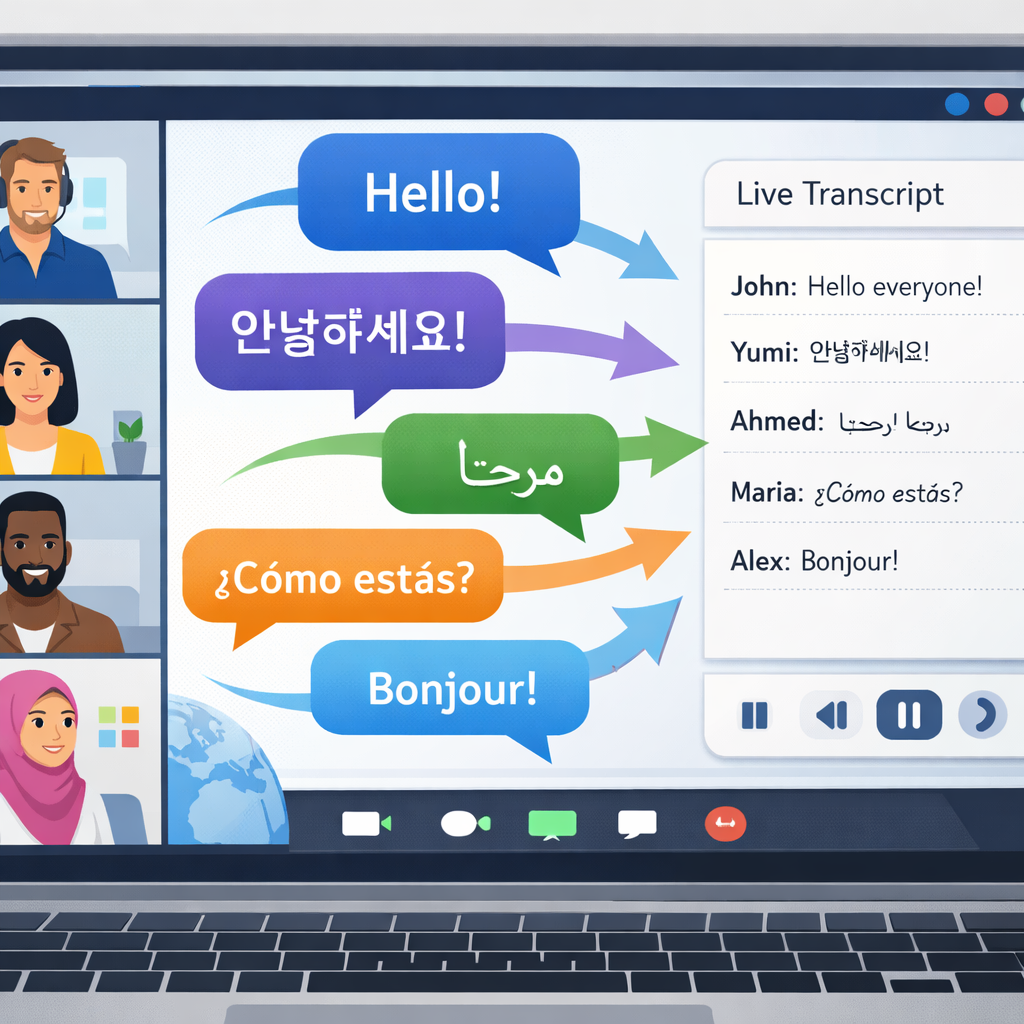
Otter.ai has upgraded its transcription platform to handle conversations across more than 30 languages, adding the ability for the tool to automatically recognize and continue transcribing when speakers switch between languages during a meeting. With support expanding to 31 languages, this is the largest multilingual update in its history.
Currently, Otter.ai has rolled out support for 13 new languages: Mandarin Chinese, Korean, German, Italian, Cantonese, Portuguese, Russian, Indonesian, Malay, Dutch, Turkish, Vietnamese, and Polish. The remaining 14 languages are slated to arrive in a future update and include Swedish, Danish, Finnish, Arabic, Hindi, Thai, Hebrew, Norwegian, Greek, Macedonian, Persian, Czech, Hungarian, and Romanian. All of these utilize Otter’s in-house speech models.
The new feature reduces friction for global teams. Rather than having to manually switch settings mid-conversation when different languages are used, Otter now detects the change automatically and keeps translating. This means a meeting that moves from English to Korean to Portuguese will be captured in a continuous transcript without interruption.
Training the Models & Language Picks
To build these multilingual capabilities, Otter.ai trained its models using public datasets, then enlisted native speaker volunteers to review transcripts and help ensure accuracy. The selection of languages reflects both global prevalence and demand among multilingual workforces.
Beyond Transcription: How Otter.ai Is Growing
This update arrives as part of Otter.ai’s broader push into AI-powered workplace tools. Not long ago, the company secured $320 million in funding from General Catalyst to support its expansion into smart meeting aids. One tool, Work Mode, pulls together context from previous meetings, connected apps, and recent files to help users prepare for upcoming calls. Another, Live Assist, gives real‐time coaching during meetings, analyzing what’s being said and suggesting responses or insights as the conversation unfolds.
With the latest multilingual support, these tools become more usable for international teams. Real-time coaching and meeting summaries that understand language switching open the door for more inclusive, seamless collaboration.
What This Means & What to Watch
Otter.ai’s push into multilingual capabilities marks an important step for voice AI in global workplaces. It helps remove language barriers and supports inclusivity, while positioning Otter as a more universally competitive option alongside major transcription and AI meeting platforms. The success of the upcoming batch of 14 languages, along with how well automatic detection handles complex multilingual speech patterns, will be crucial to retaining trust among users whose workflows depend on precision. As more teams embrace hybrid and globally distributed work, these advances in voice AI could shift what people expect from meetings and communication tools.