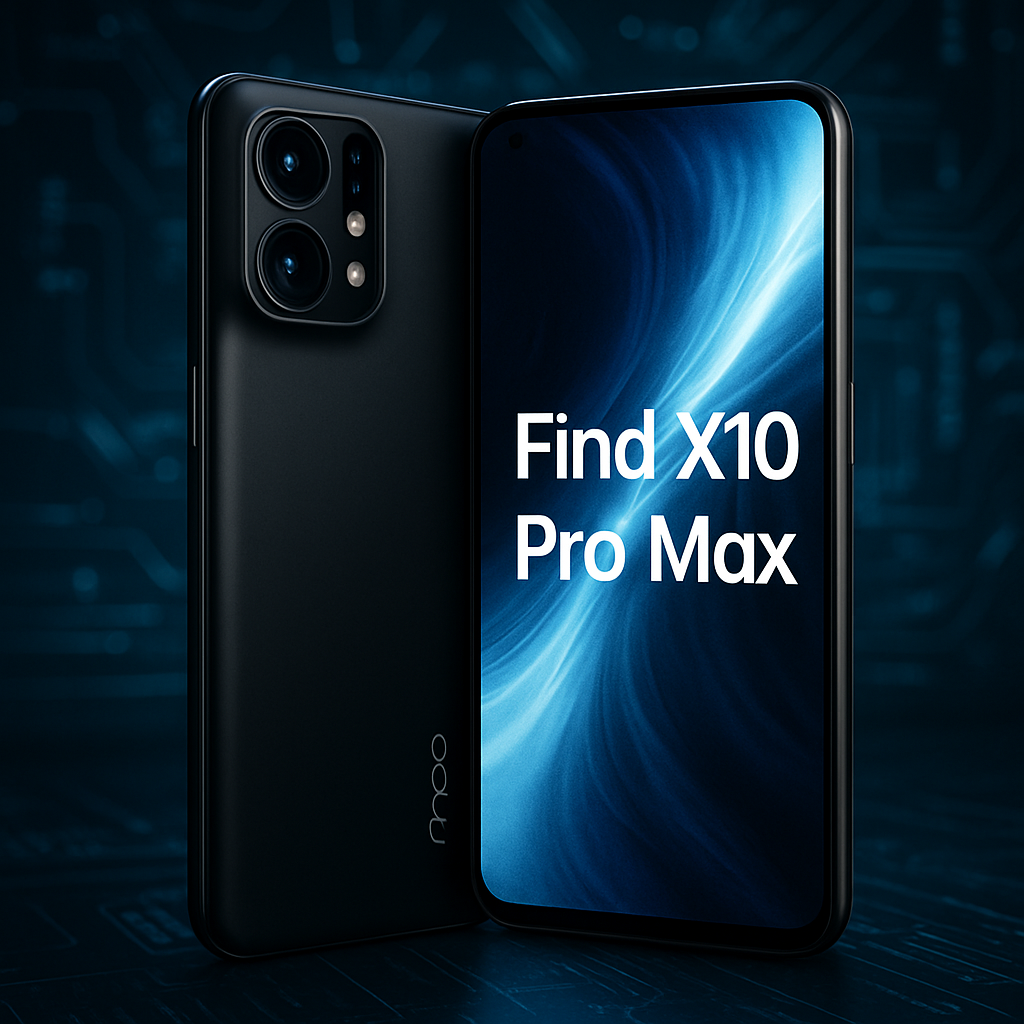
Oppo has officially unveiled its new Find X10 lineup, debuting in China with a global release in the works. The series comprises three models: Find X10 Pro Max, Find X10, and Find X10 E, each targeting different segments but sharing ambitious photography and battery features. The Find X10 Pro Max is the crown jewel, followed by the more moderate Find X10 and the budget-conscious Find X10 E.
Specs Highlights of the Find X10 Lineup
The flagship Pro Max model stands out by using three 200MP sensors across all its rear cameras: a main wide lens (f/1.5, 24mm), an ultrawide (f/2.2, 13mm, 124° field of view), and a telephoto shooter (f/2.1, 70mm, offering 3× optical zoom). It supports 8K video recordings from each rear lens, and there’s a 50MP front-facing camera. Under the hood lies the MediaTek Dimensity 9600 Pro chipset, paired with either 12GB or 16GB RAM and storage ranging from 256GB to 1TB of UFS 4.1. The display is 6.78 inches and matches last year’s size, while battery capacity is a massive 8,000mAh with 80W wired and 67W wireless charging. An in-display fingerprint scanner secures the front. The Pro Max sets its display refresh rate up to 144Hz.
The standard Find X10 model retains the same chipset and battery size, and also features two 200MP rear sensors. Where it differs are the ultrawide lens specs and the telephoto reach.
The Find X10 E targets budget users with a step down to three 50MP rear cameras and a 32MP selfie shooter. Its screen measures similarly large, though with a lower refresh ceiling of 120Hz. The battery here is slightly smaller at 7,025mAh, but charging speeds remain the same as its higher-end siblings.
Pricing, Availability, and What’s Next
In China, the Find X10 Pro Max starts at 7,999 CNY—roughly $1,200 USD by straight conversion—during pre-sale. The other models will be similarly priced lower, though exact global pricing and launch dates are to be confirmed. Oppo has indicated that the series will eventually be available beyond China, but availability in the United States is not expected.
This lineup comes running ColorOS 17 atop Android 17, supporting LPDDR5X RAM and UFS 4.1 storage across all models except for the ‘E’ version, which trades down in camera specs and battery capacity to hit a more accessible price bracket.
What this launch makes clear is Oppo’s commitment to pushing mobile photography, even at flagship levels: every major model except the ‘E’ has at least two 200MP cameras, and only a few phones globally approach that kind of sensor density. The 8,000mAh battery in the Pro Max is among the largest ever in a mainstream premium phone, and charging speeds remain competitive.
What to watch: global release plans (especially outside China), carrier support, and whether Oppo can deliver battery life that matches the massive cell on real-world usage. For photographers and power users, this could be one of the most exciting flagships this year—if Oppo pulls it off.