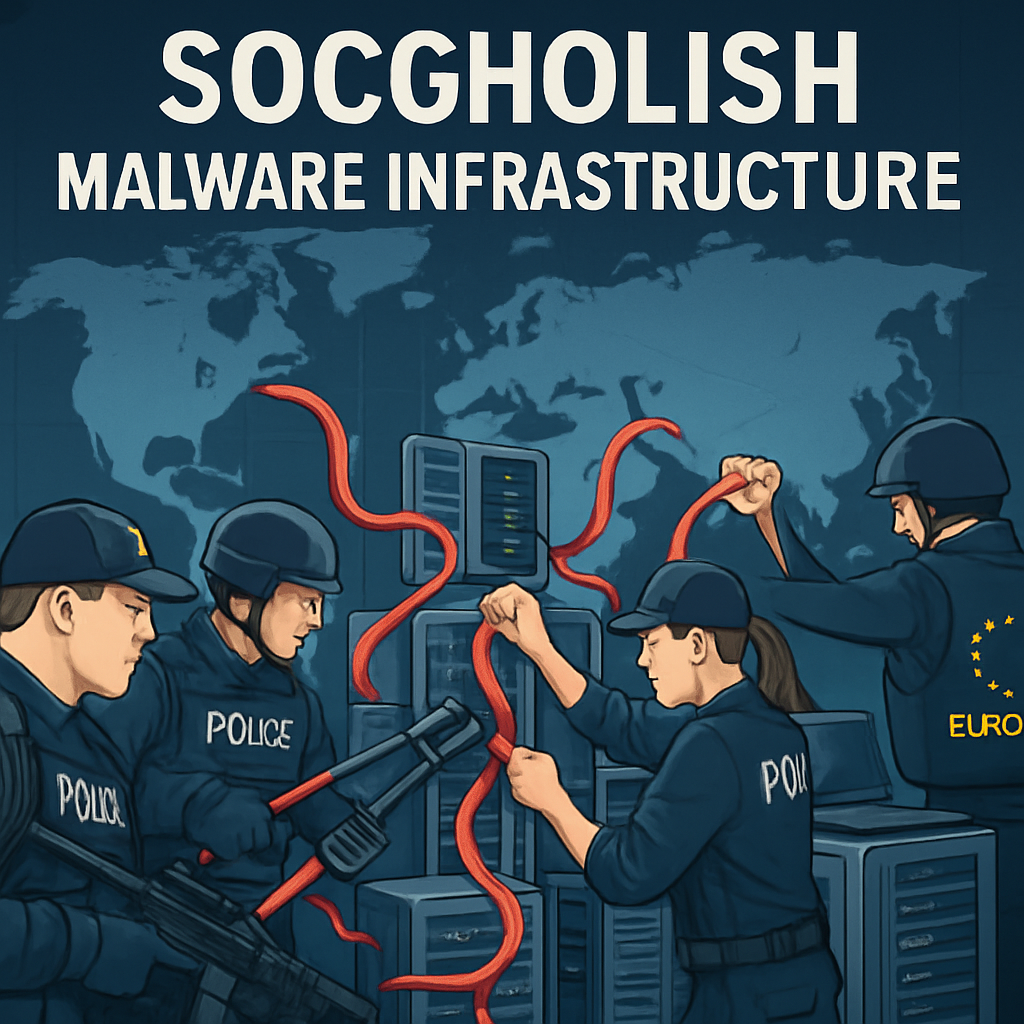
In a significant blow to cybercriminal operations, Dutch law enforcement, in collaboration with agencies from Canada, Germany, and the United States, have successfully disrupted the infrastructure associated with the SocGholish malware. This coordinated effort, part of the ongoing international initiative known as Operation Endgame, led to the takedown of 106 servers and the cleansing of 14,971 infected WordPress websites.
SocGholish, also referred to as FakeUpdates, is a JavaScript-based downloader malware that has been active since 2017. It typically infiltrates systems by masquerading as legitimate software updates for popular browsers like Google Chrome and Mozilla Firefox. Once installed, it serves as a conduit for deploying additional malicious payloads from various threat actors, including Evil Corp, LockBit, RansomHub, Dridex, and Raspberry Robin.
The malware’s distribution method involves compromising legitimate websites, particularly those running WordPress, by injecting malicious JavaScript code. This code then prompts unsuspecting visitors to download and install what appears to be a necessary browser update, thereby initiating the infection chain. The operators behind SocGholish, tracked under aliases such as Gold Prelude, Mustard Tempest, Purple Vallhund, TA569, and UNC1543, have been known to collaborate with traffic distribution system (TDS) operators like TA2726 to enhance their reach and effectiveness.
As part of the recent crackdown, website owners of the nearly 15,000 affected WordPress sites have been notified and advised to update their content management systems, change administrative credentials, and remove any unauthorized accounts. This proactive approach aims to prevent further exploitation and to secure the digital infrastructure against future attacks.
Operation Endgame, launched in 2024, represents a concerted global effort to combat botnets and associated criminal infrastructures. Previous phases of the operation have targeted other significant malware families, including Rhadamanthys Stealer, Venom RAT, and the Elysium botnet, resulting in the dismantling of their networks and the arrest of key individuals involved.
The success of this operation underscores the importance of international cooperation in the fight against cybercrime. By disrupting the infrastructure that supports malware like SocGholish, authorities not only mitigate immediate threats but also send a clear message to cybercriminals about the risks and consequences of their activities. However, the persistent nature of these threats necessitates ongoing vigilance and collaboration among global cybersecurity entities to adapt to evolving tactics and to safeguard digital ecosystems effectively.