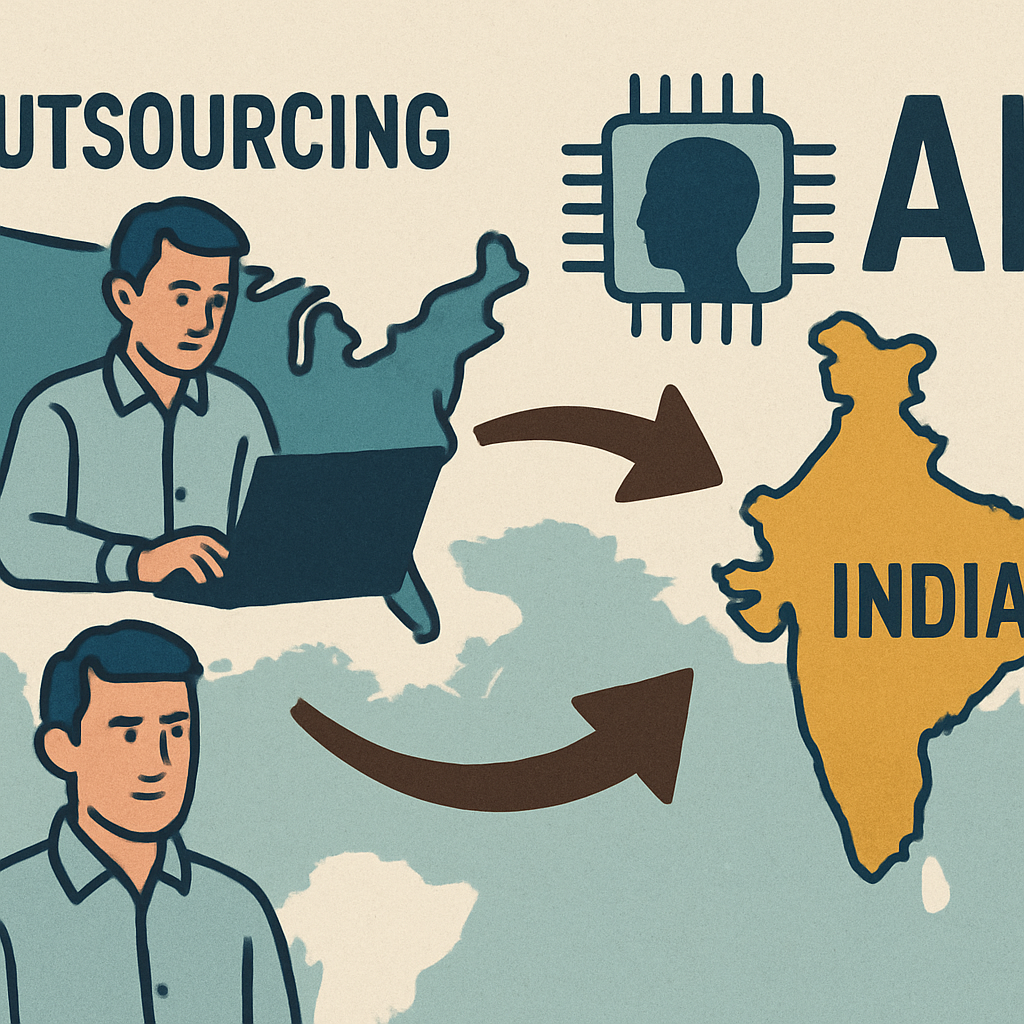
Opendoor, the San Francisco-based online home-buying platform, is closing its India operations less than two years after establishing a presence in the country. CEO Kaz Nejatian announced the decision, emphasizing a shift toward smaller, AI-native teams and bringing operational work back to the U.S., where the company’s customers are located.
Opendoor had built a substantial team in India to manage manual workflows across fragmented systems, employing nearly 250 people in Chennai and Bengaluru since 2024. However, the company has been reducing its global workforce, with employee numbers dropping from 1,470 to 1,042 over the past year, and its non-U.S. staff decreasing from 342 to 184.
While these reductions reflect broader cost-cutting measures amid a challenging U.S. housing market, Nejatian’s comments have sparked discussions about AI’s role in reshaping outsourcing dynamics. Investors and analysts suggest that AI advancements are beginning to challenge the cost-arbitrage model that made India a popular offshoring destination. Phil Fersht, CEO of HFS Research, noted that AI is reducing the need for operational labor, enabling companies to operate with leaner teams regardless of location.
India has evolved into the world’s largest Global Capability Center market, with over 2,100 centers employing approximately 2.36 million people and generating nearly $100 billion in annual revenue. Opendoor’s exit raises questions about the future of such centers as AI continues to automate tasks traditionally outsourced to countries like India.
As AI technologies advance, companies may increasingly opt for in-house, AI-driven operations over traditional outsourcing models. This shift could have significant implications for global labor markets, particularly in countries that have been hubs for outsourced services.
Source: TechCrunch