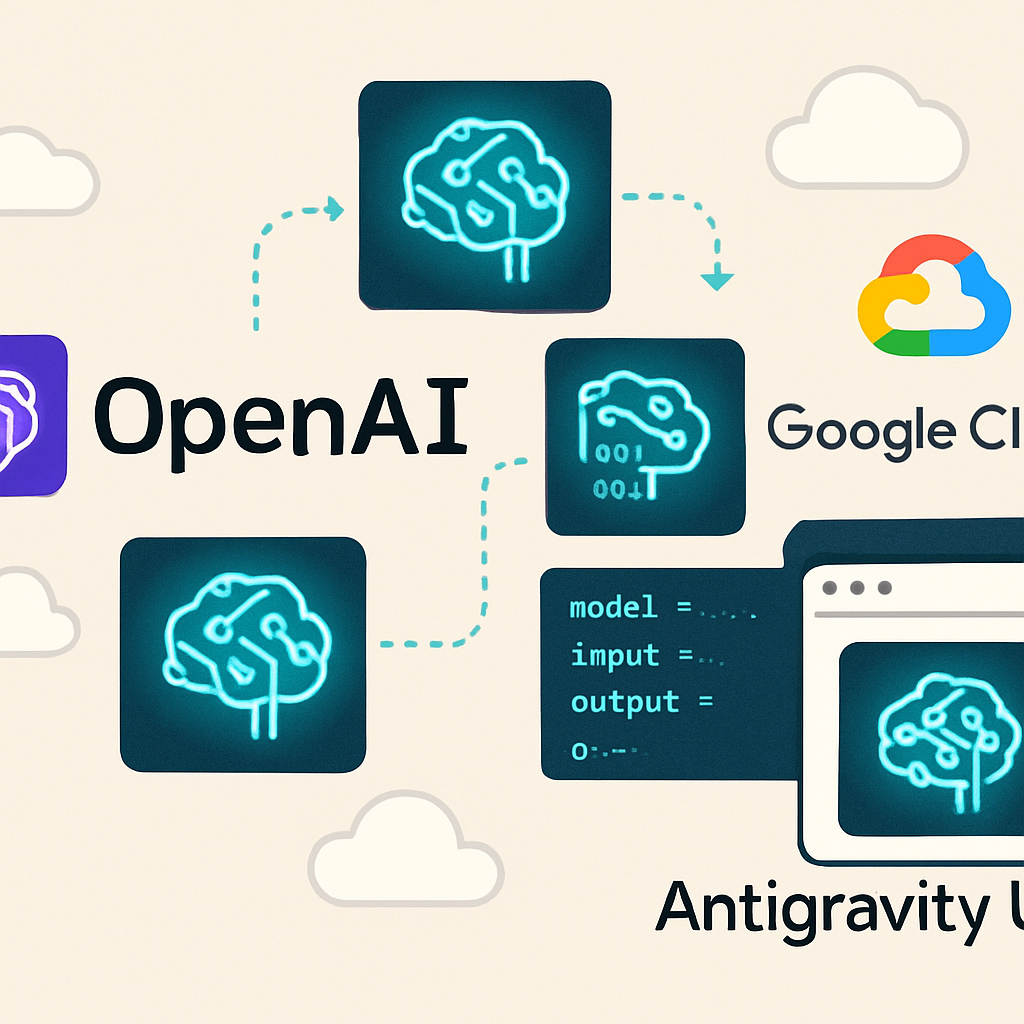
Google and OpenAI are teaming up to bring OpenAI’s GPT models to Google Cloud—and to Google’s AI interface Antigravity. Enterprise users will soon be able to access these fused offerings via Google Cloud’s Model Garden, with transactions handled through the Cloud Marketplace for those who meet spend commitments. The Antigravity integration will come alongside this rollout.
What’s Changing in Model Access
Starting in the coming weeks, OpenAI’s frontier models will be made available to Google Cloud customers. These users will gain the ability to buy access through Model Garden, which already includes Google’s own models along with Anthropic’s Claude. Customers with existing spend commitments in Google Cloud can opt into using OpenAI’s technology within their enterprise stack.
Separately, Antigravity—a tool Google has positioned as a conversational AI experience—will also support OpenAI’s models. Until now, Antigravity has hosted Anthropic’s Claude Opus and Sonnet models, including Sonnet 4.6 for free or trial users, and Opus & Sonnet 5.5 for paid plans. Google hasn’t officially confirmed which specific GPT variants will be supported, but speculation points toward inclusion of GPT-6 Astra and GPT-6.1 Sol.
Strategic Context and Implications
Google Cloud CEO Thomas Kurian says the goal is to give customers a broad set of model options—OpenAI alongside Claude and Gemini—so each organization can pick according to performance, cost, or suitability for the task. This aligns with a growing trend in the enterprise AI space toward model versatility rather than single-vendor lock-in.
This agreement marks a significant shift in how major AI providers are collaborating. Google, which has built out its own AI lineup with Gemini and partner models, is now embracing OpenAI’s frontier models as part of its core infrastructure offerings. For customers, this could mean access to more cutting-edge language models without leaving the Google ecosystem.
For Antigravity users, too, this could expand the kinds of conversational agents available. The Antigravity platform already supports multiple model families, so adding GPT models might lead to richer interactions or more versatile AI behavior for end users.
What to expect moving forward: announcements on which GPT models—likely including Astra and Sol variants—will join the roster, pricing details for integration and usage, and clear guidance on how enterprises can meet the necessary commit-spend requirements in Google Cloud to unlock access.
This development matters because it represents a convergence between leading AI model providers. Enterprises often face trade-offs in choosing between model performance, price, latency, and ecosystem alignment. With OpenAI models hosted within Google Cloud’s Model Garden and chat through Antigravity, many of those trade-offs could tilt in favor of flexibility. Watch for how competitive pricing and performance stack up once the integrations go live.