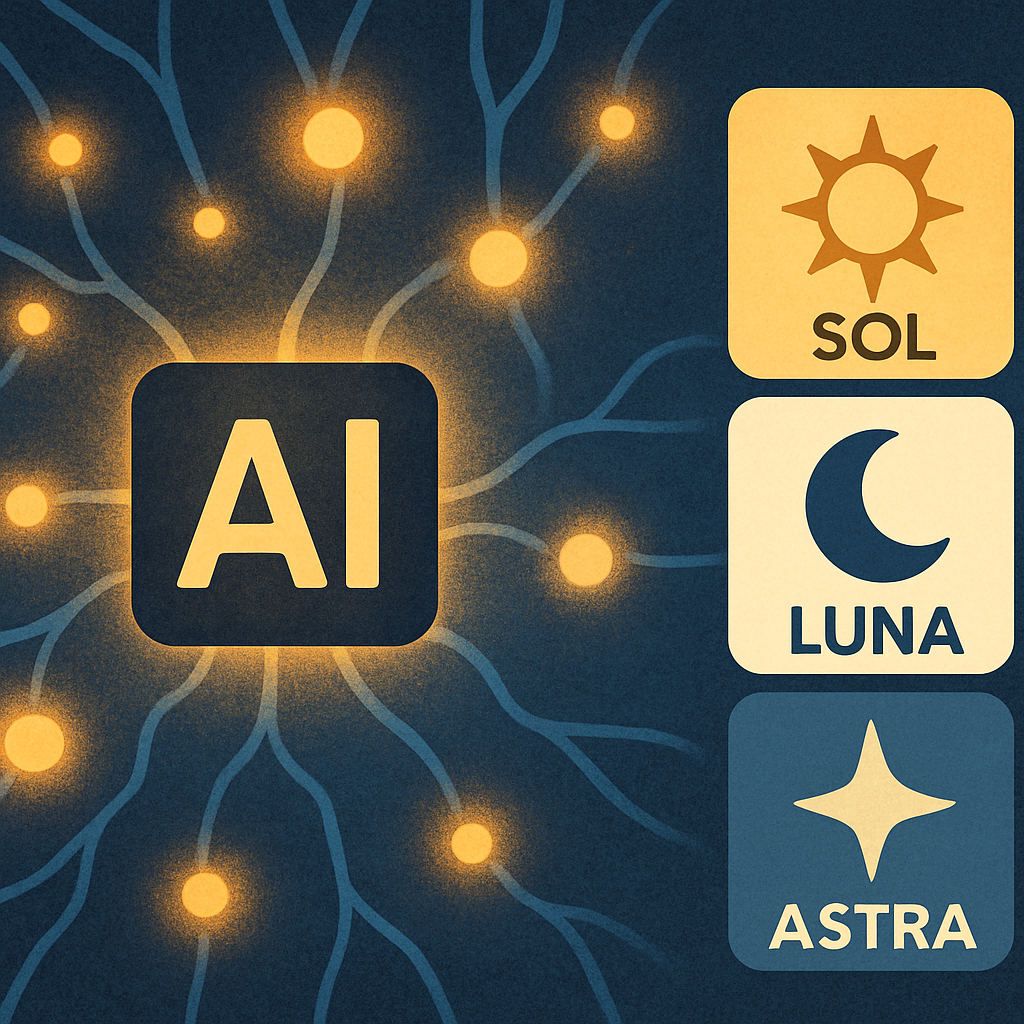
OpenAI has expanded its GPT-6 lineup with the arrival of two new models—GPT-6 Sol and GPT-6 Luna—designed to be both more powerful and more efficient than their predecessors. Announced alongside the already released GPT-6 Astra, these additions aim to deliver advanced capabilities at lower costs, particularly in coding, computer tasks, and handling high-volume workflows. Universally dubbed “Sol” for complex, multi-purpose tasks and “Luna” for more focused, high-throughput use cases, the models are now available to a wide range of users including Paid, Business, Enterprise, and Edu tiers. Free and Go plan holders gain access to Luna via the desktop app, subject to workspace settings and administrative enablement.
What’s New: Efficiency, Pricing and Capabilities
The primary upgrade with Sol and Luna is their token and compute efficiency: both models require fewer tokens for operation than the previous generation’s GPT-5.6 class of similar capacity. Behind the scenes, improvements in inference and caching have helped reduce the cost of serving these models, savings which OpenAI is passing on with a 50 percent drop in API prices versus GPT-5.6 offerings.
This is a big deal for developers leveraging Codex and ChatGPT’s Work mode, especially those executing demanding tasks that span longer durations and higher complexity. While Astra remains the peak performer for heavyweight usage, Sol and Luna balance cost, speed, and capability, making them attractive for broader adoption.
Performance Highlights & Use Cases
In coding scenarios, OpenAI notes that GPT-6 Sol and Luna show “strong performance” accompanied by significantly lower token costs. Sol is positioned for complex codebases and agentic workflows, whereas Luna is optimized for high-volume, repetitive, or narrowly defined computational jobs. Daily token usage metrics from internal OpenAI researcher data show that more ambitious workflows benefit the most from these new models.
When evaluated on offline computer-usage benchmarks like OSWorld 2.0, Sol at “xhigh effort” nearly matches Claude Opus 5’s performance at “medium effort,” while costing substantially less (around 80 percent lower cost per task). Luna (in its max configuration) beats GPT-5.6 Sol (medium) and does so at roughly one-tenth of its cost—making it especially efficient for bursty or repetitive loads.
The rollout is underway as of September 22, 2026. For those with access, the models are available today in ChatGPT Work and Codex for Plus, Pro, Business, Enterprise, and Edu plans. Meanwhile, Luna is accessible via the desktop app for Free and Go users. Full availability depends on OpenAI’s internal deployment and workspace configurations.
Interestingly, there’s no mention of continuing support for a medium-tier “Terra” model amid this update. Observers believe OpenAI is consolidating its GPT-6 lineup into three tiers: Luna for smaller and more focused workloads, Sol for large and complex use, and Astra as the capstone.
Overall, Sol and Luna outpace their GPT-5.6 counterparts on both efficiency and capability while offering significantly lower cost, especially for power users and larger deployments.
What this means going forward: these additions underscore OpenAI’s focus on democratizing access to advanced AI—making high-end performance more accessible by breaking down cost barriers. Watch for how developers adopt these isssue-specific tiers and whether the medium class models like Terra come back or stay retired. Also worth noting: updates in model ecosystem consistency and administrative controls will shape how these tools are used in real teams and across platforms.