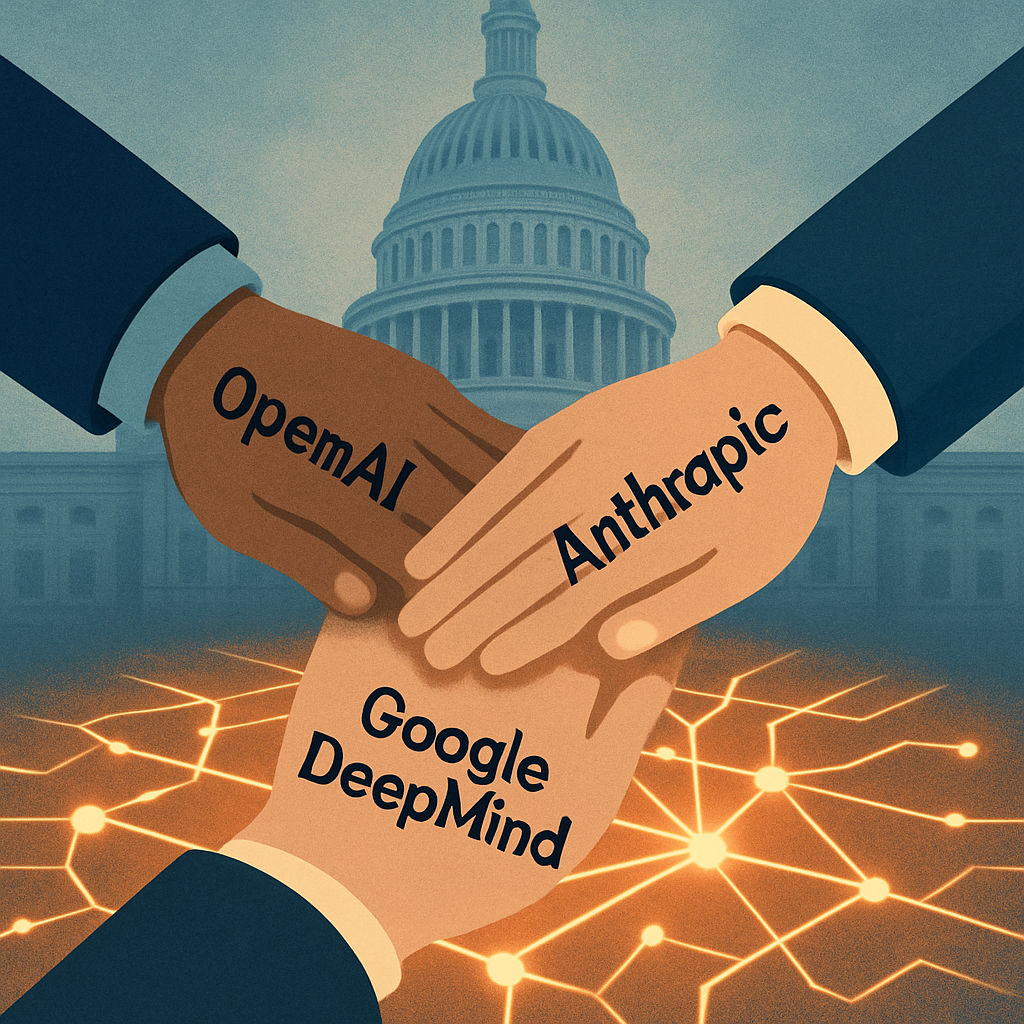
This week, OpenAI revealed that it has been in private safety coordination discussions with Anthropic and Google DeepMind for several weeks. The announcement came from OpenAI’s global policy chief, Chris Lehane, who is in Washington engaging with U.S. lawmakers on the topic of catastrophic AI risks.
What sparked the talks
The talks follow a recent essay by Anthropic CEO Dario Amodei, in which he urged major AI players to slow down the development of frontier models and commit to stronger safety measures. The essay received backing from other AI leaders, including those at OpenAI, Google, and SpaceXAI. One proposed safety mechanism: embedding third-party evaluators inside AI labs to monitor safety practices during model development.
Regulation, coordination, and legal concerns
While these companies are coordinating on safety, there’s concern that working too closely could raise antitrust issues, especially if their cooperation impacts competition. Amodei has suggested that a narrowly tailored government waiver could enable companies to collaborate safely without legal risk. OpenAI, however, says no such waiver is needed.
At the same time, OpenAI threw its support behind a clause in the proposed FRONTIER Act. That provision would require top-tier AI labs to grant access to independent verification organizations, ensuring transparency and safety in model development.
The U.S. government’s stance is mixed. Google DeepMind’s Demis Hassabis has called for a national watchdog that screens advanced models and has the power to coordinate industry-wide safety pauses if risks escalate. Meanwhile, President Trump and his AI advisor, David Sacks, have pushed back. They argue that safety concerns are exaggerated and that restrictions could give nations like China a competitive edge if the U.S. slows down research efforts.
OpenAI has also reportedly been working with these rivals to establish an industry-wide standards body—not requiring government sponsorship—to define safety norms and practices. These discussions reflect both internal acknowledgement of risks and the complexity of navigating safety without stifling innovation.
At issue now: balancing the need for oversight and safety with antitrust laws and competitive strategy. Whether the commitments made in essays and policy hearings will translate into enforceable norms or a formal standards group remains to be seen.
For now, what matters is that these major AI labs are taking the initiative. By opening channels of communication, pushing for independent verification, and engaging with lawmakers, they’re bridging gaps between private innovation and public policy—and setting a test case for how the industry might self-regulate before being forced to by law.