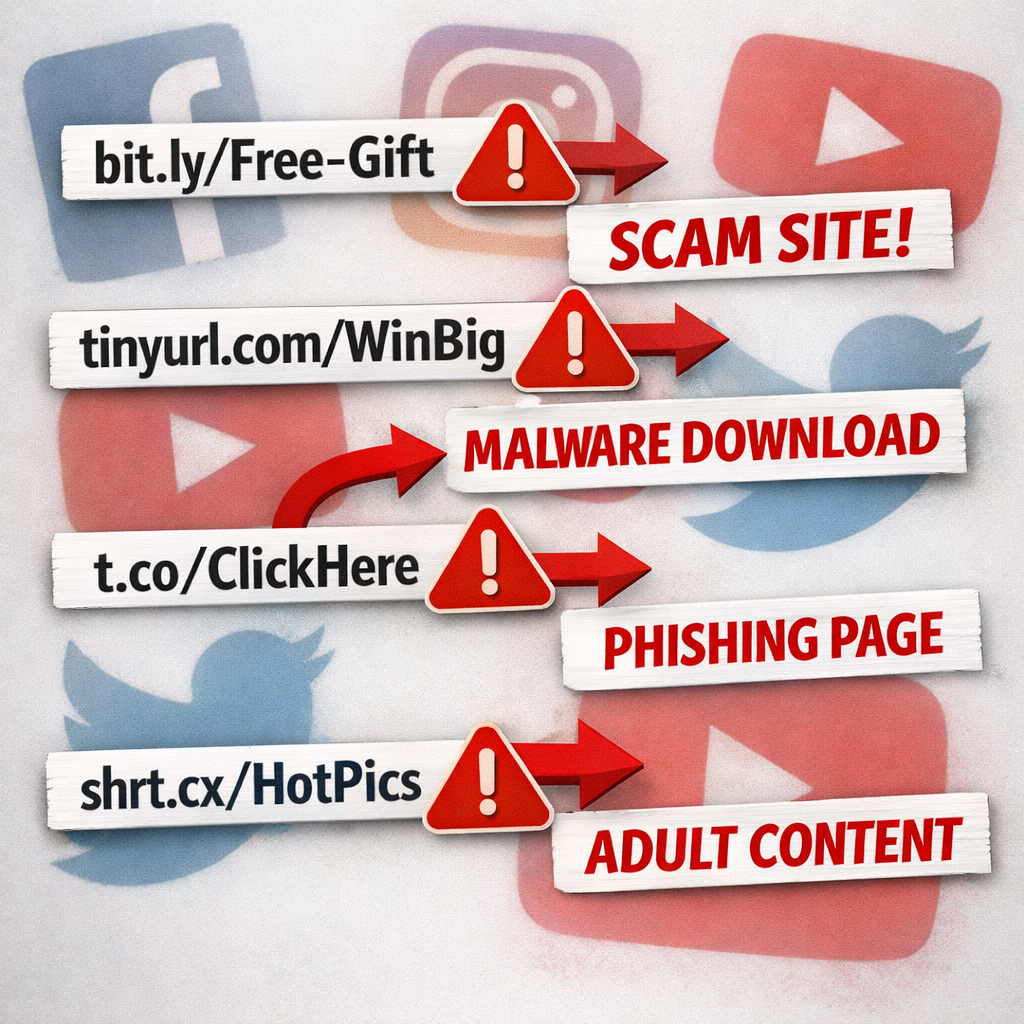
Several old social media posts from well-known names—including Burger King, McDonald’s, Donald Trump, Bill Gates, the FBI, and the Department of Defense—have been discovered redirecting users to unexpected or offensive third-party sites. These posts, dating back to between 2009 and 2014, contained Bitly shortened links that were recently hijacked to send people to unrelated content.
What’s Going On?
The issue doesn’t appear to result from account hacks; rather, it involves misuse of inactive or dormant Bitly links. Criminal actors found a way to repurpose those old links, so even though the posts look untouched and still show familiar names, the URLs at the end lead somewhere entirely different. Bitly has confirmed that some inactive links have been altered without any need to access the original social media accounts.
Examples include a 2011 Burger King post that rerouted to a page about Nazi concentration camps, while another McDonald’s post from the same year was linked to September 11 content. Former President Trump’s posts redirected to a mix of sources—a game, an image of a baby, and controversial wiki pages. A post from the FBI intended to discuss computer infections ended up opening a seal image. No evidence so far suggests these changes were part of phishing or malware campaigns, but the re-directions are troubling nonetheless.
Bitly’s Response & Wider Implications
Bitly has acknowledged a vulnerability that enabled misuse of these inactive links, suspending involved accounts and disabling the affected URLs. Their Trust & Safety team is also reinforcing protections, although the precise root cause has not been fully disclosed. Importantly, Bitly’s official documentation clarifies that links never expire—even old or hidden ones—so long as they’re part of an account, while deleted links return error messages.
Experts warn neglected posts like these create a loophole for misuse that may scale if aided by automation or AI. Owners of high-profile accounts are being urged to audit old content—not just for link integrity but for the destinations they point to. Users are advised to verify where a link goes before sharing personal information, even when it appears under trusted names or from familiar profiles.
Moving forward, organizations need robust operating procedures around link management—especially for link shorteners. Policies should include periodic review of external redirects, an inventory of longstanding content, and checks on link destinations. Given how even inactive links can still be repurposed, the traditional notion of “set it and forget it” content is overdue for reconsideration.
This incident underscores how digital hygiene matters even in archival content. If old Bitly links can be hijacked this way, other platforms with short link services could become targets. The key takeaway: trust in a post’s origin doesn’t guarantee safety of its content. Users, brands, and platforms alike must stay vigilant.
From a broader perspective, this exposes a gap in the way we treat legacy content. Archived posts—especially those with link shorteners—represent battlegrounds for misinformation or even hateful content. It’s not just about protecting one brand or figure; it’s about keeping the integrity of the past intact for all users.