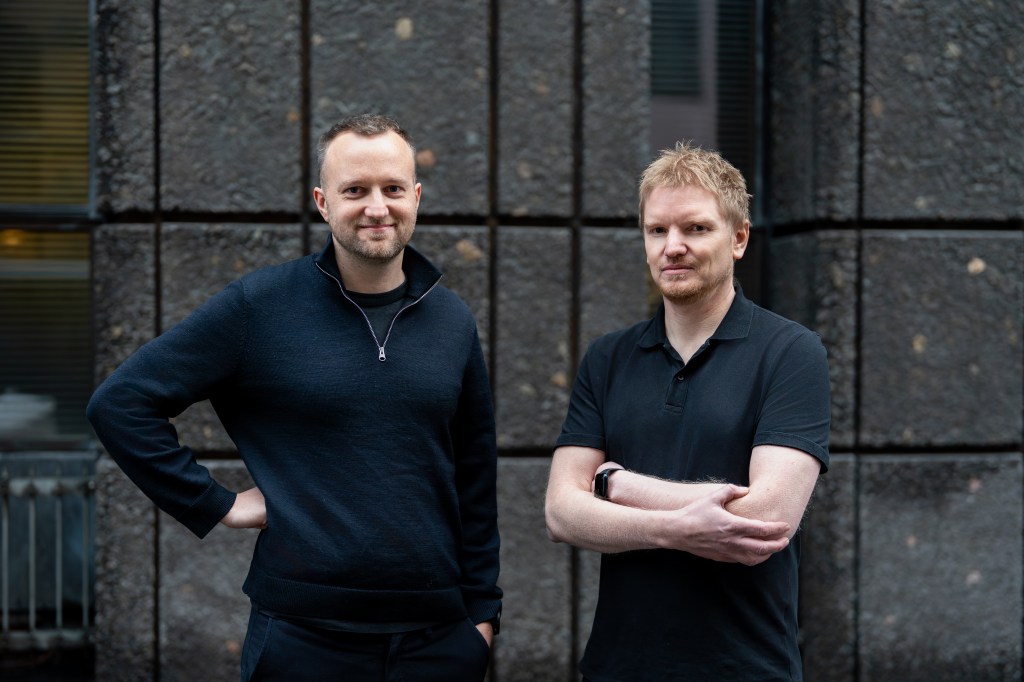
A professor at NYU has raised serious allegations that OpenAI attempted to undercut his research on a Millennium Prize math problem by leveraging internal or leaked information. The dispute centers on claims made by NYU mathematician Tristan Buckmaster, whose collaborative work with Anthropic mathematician Levent Alpöge recently produced three proofs on the long-standing Navier-Stokes existence and smoothness problem — a Clay Mathematics Institute Millennium Prize problem valued at $1 million for a correct solution.
Allegations and OpenAI’s Response
Buckmaster says that while he and Alpöge were putting final touches on their proofs, they discovered that OpenAI had been informed about their work. When contacted, OpenAI claimed to already have a full proof. But subsequent questions about when their investigation began and how much human intervention was involved reportedly met with vague or evasive responses. Buckmaster describes that the OpenAI team used large amounts of computation and claimed their initial prompt arrived only after learning of Buckmaster and Alpöge’s approach.
Leading OpenAI mathematician Sebastian Bubeck has dismissed the allegations as incorrect and inflammatory, saying that academic norms remain important and that he will issue a fuller response soon. Bubeck contests the idea that OpenAI’s effort relied on leaked insights or closely mirrored Buckmaster’s route.
The Math, the Models, and the Stakes
The Navier-Stokes problem is one of seven Millennium Prize problems, asking whether smooth, globally regular solutions always exist for the Navier-Stokes equations in three dimensions. These equations are fundamental to modeling fluid dynamics but pose deep theoretical challenges. A solution would be a major advance for both pure mathematics and physics.
Buckmaster reports that he and Alpöge had quietly adopted a seldom-used path: using a “smooth force” formulation (options c and d in Fefferman’s formal statement) — a direction few others were exploring. The timing of OpenAI reportedly adopting the same route only days after learning of their strategy is at the heart of his concern.
For their work, Buckmaster and Alpöge used several AI tools, notably OpenAI’s Codex and Anthropic’s Claude, though Alpöge’s contribution was personal rather than representing Anthropic. Buckmaster also alleges that OpenAI asked him to remove Alpöge’s name from credit as part of a proposed compromise. He was reportedly warned that going public with the dispute might damage his career; when he resisted, according to Buckmaster, Bubeck said he didn’t have to be nice.
A related concern is data usage: Buckmaster used Codex heavily, and OpenAI’s policy reserves the right to train models on Codex interactions unless users opt out. If OpenAI’s model was influenced by Buckmaster’s outputs in Codex, it could have inadvertently mirrored his discoveries when tackling the same mathematical problem.
Transparency, Trust, and What Comes Next
Buckmaster says he has not seen OpenAI’s proof, and much remains unknown: how their model arrived at any conclusions, whether the data was used, what role human guidance played. He emphasizes that he isn’t claiming intentional wrongdoing but insists the public deserves clarity — especially to counter announcements that may misrepresent what he knows to be false.
This controversy ignites questions about AI’s growing role in foundational mathematics research and the incentives within major AI labs. It tests norms around credit, openness, and the ethics of computational advantage, especially when human researchers rely on models whose internal histories are opaque.
What happens now will be critical: sharp scrutiny of OpenAI’s proof (if released), more detailed disclosure of methods, and possibly broader policy conversations on how to safeguard fairness, attribution, and trust when AI systems participate in high-stakes mathematical work.