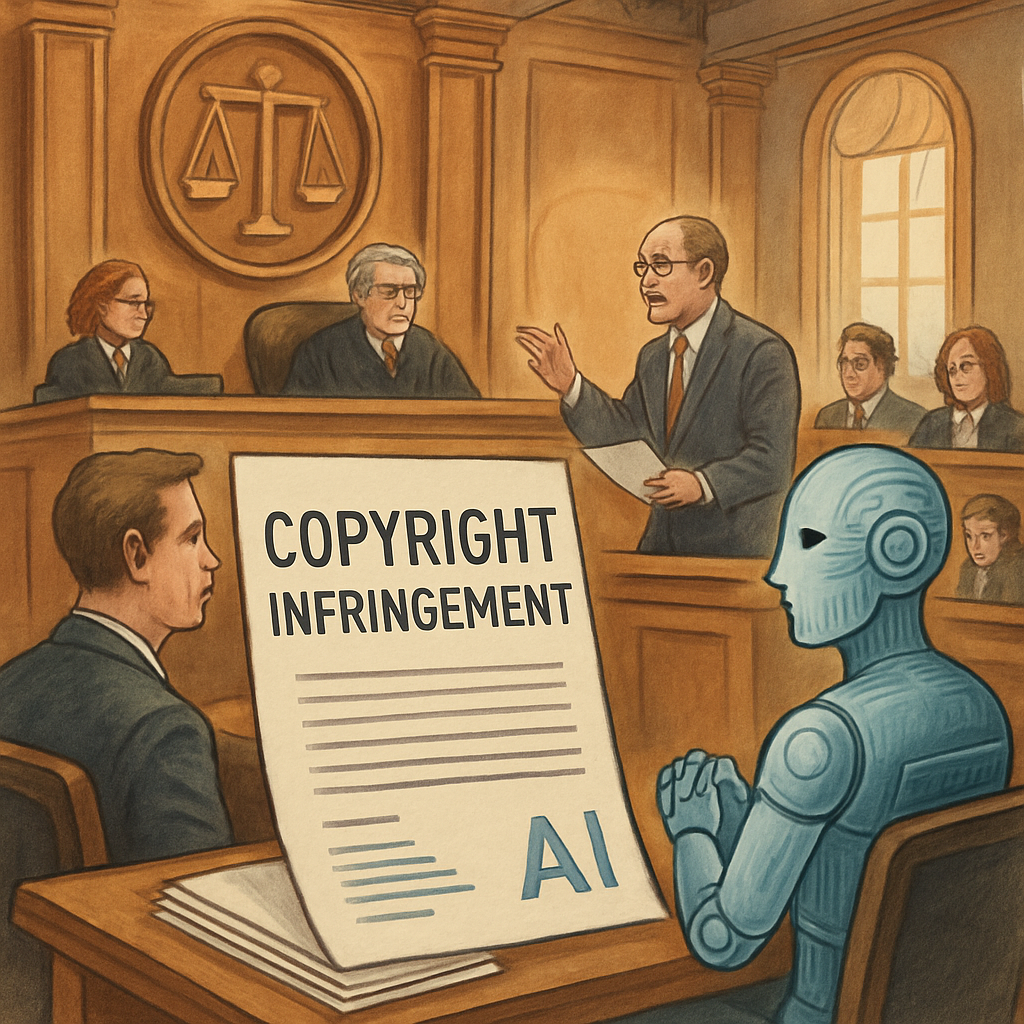
The New York Times and The Daily News have intensified their legal battle against OpenAI, alleging that the company has deliberately concealed evidence in the ongoing copyright infringement lawsuit. The publications claim that OpenAI misrepresented its ability to search customer chat logs and training datasets for their copyrighted content.
Since the lawsuit’s inception, OpenAI has maintained that it lacked the technical capability to search its extensive training corpus and that retrieving ChatGPT conversations would be both technically challenging and raise user privacy concerns. These logs are crucial for the plaintiffs to determine if their copyrighted material was used in training OpenAI’s models and if ChatGPT outputs reproduce their content.
However, during an April court-ordered deposition, OpenAI’s data privacy engineer, Vinnie Monaco, reportedly disclosed that the company had already conducted internal searches within its training data to identify copyrighted journalism. Monaco also revealed that, prior to the lawsuit, OpenAI had compiled a database of approximately 78 million de-identified ChatGPT conversations to assess potential copyright infringements. Additionally, after the lawsuit was filed, OpenAI implemented a ‘Bloom’ filter as part of ‘Project Giraffe’ to detect and record instances where ChatGPT outputs closely mirrored existing content.
These revelations are significant because the plaintiffs had initially requested a sample of 120 million chat logs. OpenAI negotiated this down to 20 million, which they submitted in December. However, the sample was heavily redacted, rendering it ‘unusable,’ according to the court. The plaintiffs also allege that OpenAI deleted billions of ChatGPT outputs after the lawsuit was filed, violating the court’s preservation order, and substituted millions of logs in the provided sample.
In response to these findings, the New York Times and The Daily News are urging the court to sanction OpenAI for allegedly withholding evidence and obstructing the discovery process. They seek to prevent OpenAI from using the 20 million chat log sample as evidence, arguing its unreliability, and to accept as fact that ChatGPT logs would have demonstrated significant reproduction of the plaintiffs’ content. Furthermore, they aim to bar OpenAI from arguing that the provided chat logs don’t show substantial reproduction of copyrighted material.
This development underscores the complexities and challenges in litigating copyright issues in the era of artificial intelligence. As AI models become more sophisticated and their training data more expansive, ensuring transparency and accountability in their development processes becomes paramount. The outcome of this case could set a significant precedent for how AI companies handle copyrighted material and the extent to which they must disclose their training methodologies.