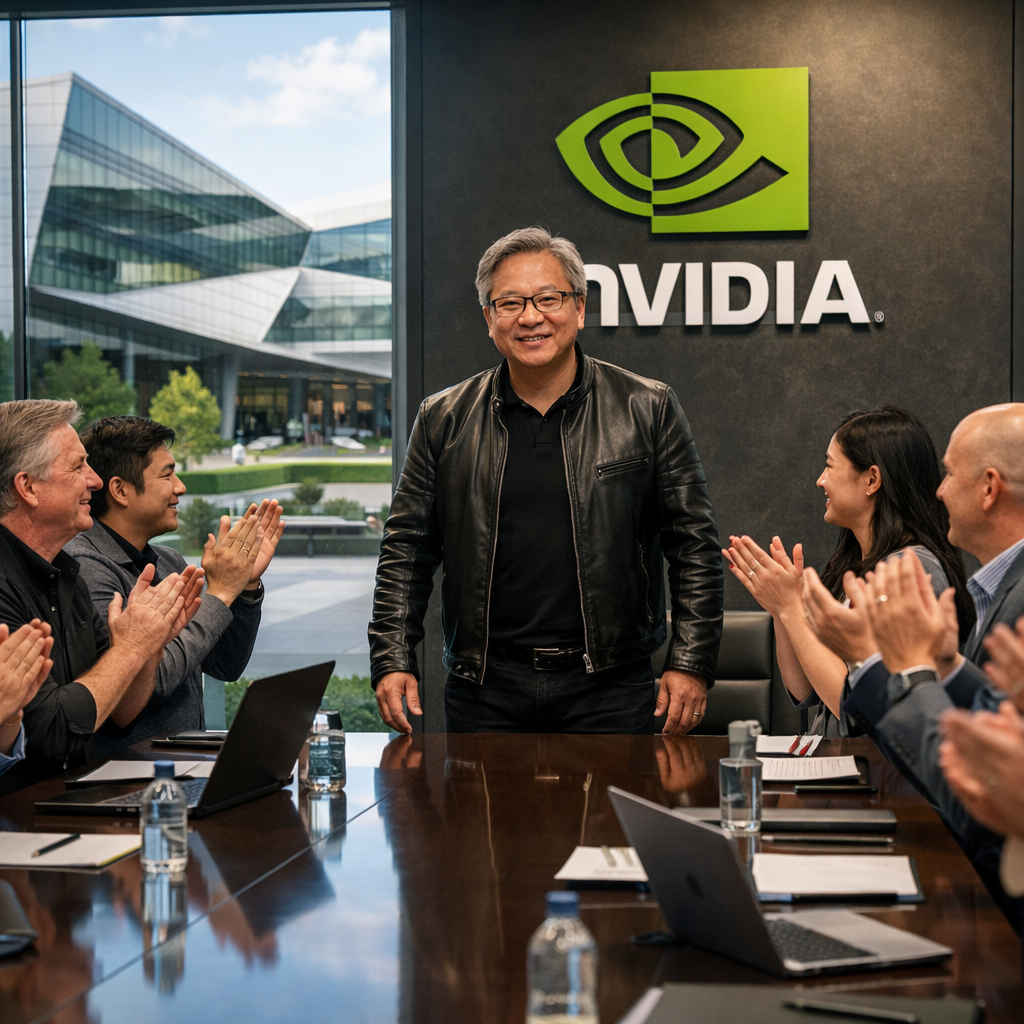
In a stunning turnaround, Nvidia’s board reinstated Jensen Huang as President, Chief Executive Officer, and Board Director effective immediately, following a unanimous vote and input from senior U.S. government officials. The decision comes 11 days after Huang resigned amid revelations of extramarital affairs, including with a woman suspected of espionage ties to China — allegations that triggered national security concerns and political scrutiny. The reinstatement was publicly announced on November 23, 2026.
Huang’s resignation, which took effect on November 12, led to an interim leadership period under Colette Kress, who had been serving as Chief Financial Officer. During that gap, the board had originally committed to not reinstating him. The reinstatement reverses that stance, with board chair Harvey C. Jones emphasizing that Huang demonstrated sufficient candor during discussions and was deemed capable of continuing to lead the company.
Key Commitments & Structural Changes
To address the fallout and the questions raised by Huang’s conduct, Nvidia’s board has set in motion several governance reforms. These include establishing a committee of independent directors to oversee ongoing investigations into foreign intelligence and cybersecurity risks related to Huang’s actions. A separate National Security and Export Control Committee has also been formed to scrutinize trade compliance and national security implications.
Another major change: the company has begun a search for its first Chief Compliance Officer, who will report directly to the Nominating and Corporate Governance Committee rather than to the CEO. These moves come amid broader investigations involving the Securities and Exchange Commission, the Justice Department, and Congressional oversight expected in the coming months. Huang has publicly declared his full cooperation with all investigations.
Market Fallout and Political Backdrop
The uncertainty surrounding Huang’s departure and Nvidia’s governance rippled through financial markets. Nvidia shares plunged sharply in the days following the resignation, driven by concerns about its leadership, national security risks, and the potential regulatory backlash. Upon news of reinstatement, the stock jumped more than 25–30% in premarket and early trading.
Politically, the saga has drawn bipartisan attention. President Donald Trump publicly endorsed Huang’s return, claimed to have directly intervened with Nvidia’s board, and cited assurances that Huang’s reappointment posed no national security risk. Democrats and some Republicans, however, have criticized the board’s decision, arguing that investigations are still unresolved and calling for accountability over both trade practices and the handling of intelligence concerns. Congressional hearings are now expected.
Despite the resignation, Huang remains at the center of multiple probes. One alleged affair was with a businesswoman under suspicion of cooperation with Chinese intelligence; another involved an employee who reported directly to him. The board’s newly formed committees aim to root these issues out and prevent recurrence.
With the board’s full backing and structural safeguards being enacted, Nvidia is steering through one of its gravest leadership crises. Huang’s reinstatement underscores not just his personal influence but raises broader questions about corporate governance, national security, and the role of government in enforcing both.
What this Means: This episode reveals how intertwined Big Tech, government oversight, and AI-scale influence have become. For Nvidia, the cost of these events will be measured in trust as much as in stock price or market share. Investors, regulators, and employees will all be watching whether the promised reforms — transparency, compliance, accountability — are equally real. The next few weeks and months will determine whether Huang’s comeback is legitimized, or whether lingering oversight and ethical questions hamper Nvidia’s standing in the AI industry.