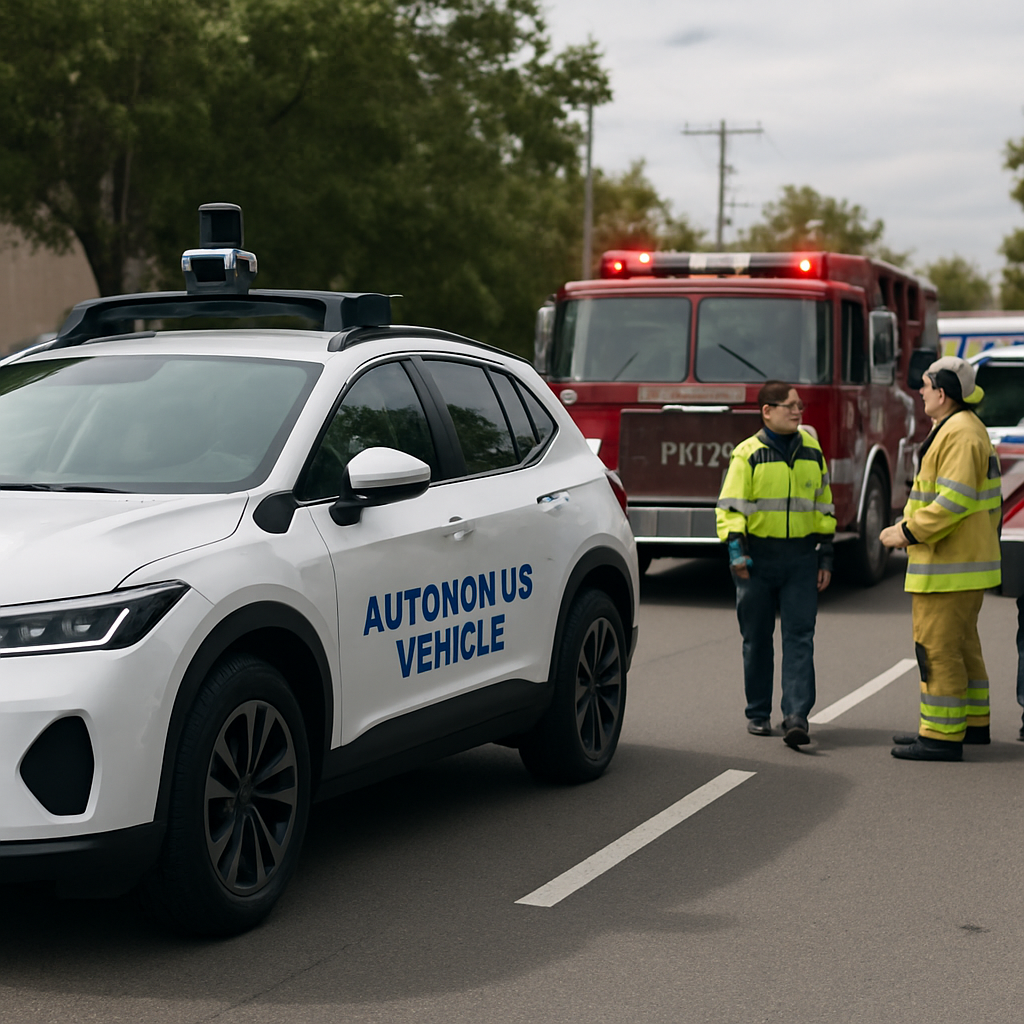
The National Highway Traffic Safety Administration (NHTSA) has issued a directive to autonomous vehicle (AV) developers, emphasizing the critical need for their vehicles to effectively detect and respond to emergency situations involving first responders and law enforcement. This move underscores the agency’s commitment to ensuring public safety as AV technology becomes more prevalent.
In a recent communication, NHTSA Administrator Jonathan Morrison highlighted that the inability of AVs to appropriately handle such scenarios is a significant functional deficiency. He stressed that emergency scenes are common occurrences and should not be considered rare or extreme cases. Consequently, the NHTSA is calling on AV developers and operators to prioritize addressing this issue immediately.
While the directive was sent to all AV developers listed in the Department of Transportation’s Standing General Order, it appears to be particularly pertinent to companies like Waymo. Operating the largest robotaxi fleet in the United States, with services in cities such as Los Angeles, Phoenix, and San Francisco, Waymo has faced multiple incidents involving first responders. Notably, during a recent July 4 fireworks event in San Francisco, several Waymo vehicles reportedly ran out of power amid heavy traffic, necessitating towing and raising concerns about their impact on public transit and emergency services.
In response to these challenges, San Francisco Supervisor Bilal Mahmood has announced plans to submit a letter of inquiry to examine how autonomous vehicles affect public transit services and emergency responders, particularly in light of the disruptions observed during the July 4 event.
The NHTSA’s directive carries significant weight, but it remains to be seen what tangible consequences AV developers might face if they fail to comply. The agency has set a deadline for companies to present solutions by the end of the month, signaling the urgency of the matter.
In a related development, the federal government has updated its 2026 Regulatory Plan and Unified Agenda, proposing changes to Federal Motor Vehicle Safety Standards (FMVSS). These amendments aim to accommodate the unique designs of autonomous vehicles, such as those being developed by Tesla and Zoox, which lack traditional features like steering wheels and pedals required in human-driven cars.
As the autonomous vehicle industry continues to evolve, ensuring that these technologies can safely and effectively interact with emergency situations is paramount. The NHTSA’s recent actions highlight the importance of addressing these challenges promptly to maintain public trust and safety.